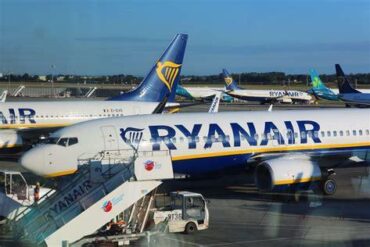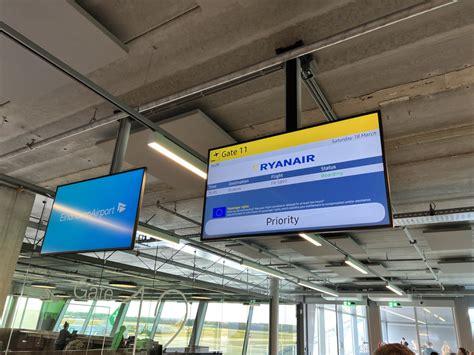
Ryanair, Europe’s leading low-cost carrier, has been dealt a rare regulatory blow after losing two prized evening landing slots at Eindhoven Airport due to a pattern of delayed arrivals. The Dutch slot coordinator, Airport Coordination Netherlands (ACNL), stripped the airline of its rights to these time-sensitive slots during the 2026 summer season, marking a stern warning to carriers operating in capacity-constrained airports.
The revoked slots in question are for flights arriving on Monday and Thursday evenings around 8:00 PM, previously serving routes from Sofia (SOF) and Pisa (PSA). According to ACNL, Ryanair’s consistent tardiness—averaging more than an hour late in some cases—disrupted the delicate scheduling ecosystem at the Netherlands’ second-busiest airport.
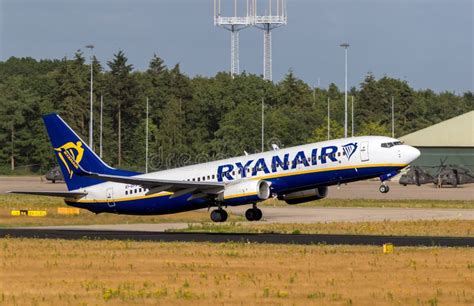
Dutch Regulator Takes Rare Step to Enforce Slot Discipline
Between June and August 2025, ACNL recorded over 30 instances of Ryanair flights arriving late during these specific slot windows. Eindhoven, which operates under strict curfew and noise regulations, cannot afford such deviations, especially in the late evening when infractions ripple across the schedule.
What makes this move particularly noteworthy is its unprecedented nature—complete revocation of existing slots is not a common measure. ACNL had reportedly warned Ryanair in advance and hinted at a “deliberate” pattern of poor on-time performance, signaling a growing intolerance for schedule non-compliance in slot-scarce environments.
Ryanair Fires Back: Blames European ATC Delays
In a swift rebuttal, Ryanair labeled the decision “irrational and disproportionate”, asserting that air traffic control (ATC) delays—not airline operations—were the root cause of its late arrivals. In an official statement, the airline emphasized that its flights were being penalized for delays exceeding just 15 minutes, which it claims is unreasonable given industry norms across Europe.
“ACNL are penalising airlines for ATC delays that push flights just 15 minutes over their scheduled arrival time,” a Ryanair spokesperson stated, suggesting that the thresholds used in the Netherlands diverge sharply from broader European standards.
The airline has since lodged appeals with both the European Commission and local Dutch courts, seeking to overturn the ACNL ruling. A local court, however, has already ruled in favor of ACNL, stressing that equitable distribution of limited slots takes precedence over individual airline preferences.
Strategic Implications Amid Ryanair’s Broader Network Retrenchment
While the loss of two slots is operationally disruptive, the sting is softened by Ryanair’s wider pullback across European markets. Facing escalating airport fees and taxes, the Irish carrier has recently axed 800,000 seats from its German schedule, 1.2 million seats from Spain for Summer 2025, and significantly scaled back operations in France.
Still, Eindhoven represents a symbolic setback. Ryanair has been a cornerstone of the airport’s success since the 1990s, at times operating over 50% of total flights, and currently remains one of its three dominant carriers alongside Transavia and Wizz Air. Together, these airlines account for more than 90% of Eindhoven’s traffic.
The revoked slots—held by Ryanair for years—are now open to bids from rival airlines, raising competitive stakes at an airport already stretched in terms of capacity. Eindhoven’s status as a low-cost travel hub makes every slot a valuable commodity.
The Bigger Picture: A Battle Over Accountability
At the heart of the dispute lies a fundamental question: Who bears responsibility for systemic delays? Ryanair’s appeal strategy places blame on Europe’s fragmented ATC infrastructure, a claim not without merit. The continent has long struggled with congestion, staffing issues, and cross-border coordination in its skies.
However, regulators like ACNL argue that airlines must adjust schedules based on realistic operational data, especially when occupying high-demand evening slots. The enforcement action sends a clear message to all carriers: punctuality is non-negotiable when operating in slot-coordinated airports under curfew constraints.
Whether the European Commission sides with Ryanair remains to be seen. Regardless of the outcome, the case underscores a growing regulatory push to balance airline growth with operational accountability, especially at key secondary airports across Europe. For Ryanair, a carrier built on volume, speed, and efficiency, the challenge lies in maintaining its edge while navigating a tightening regulatory landscape.