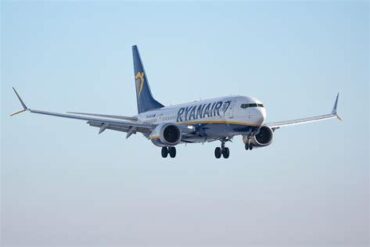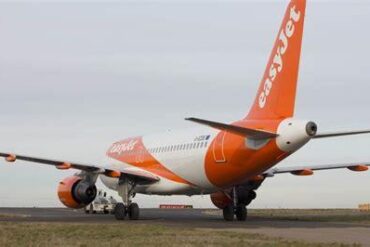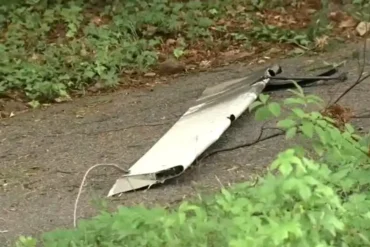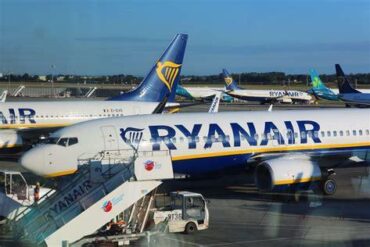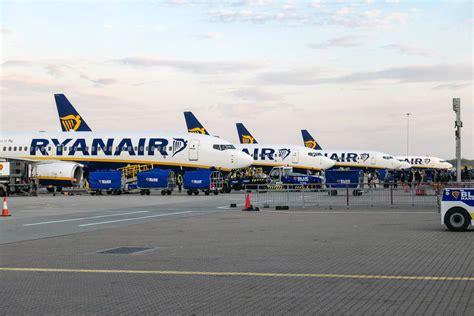
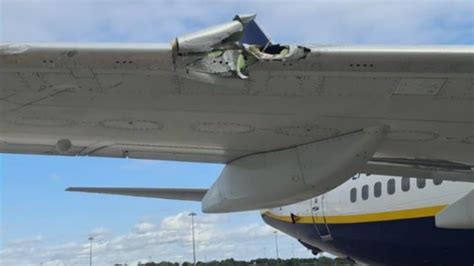
A Ryanair flight arriving from London Stansted to Kalamata International Airport in Greece ended with an unexpected aviation safety incident, highlighting renewed concerns over the capability of regional airports to manage peak travel volumes. On June 18, 2025, as the summer tourism season enters its most intense phase, the Ryanair-operated Boeing 737 MAX made safe touchdown, only to suffer wingtip damage while taxiing to its designated stand.
Routine Flight Takes A Troublesome Turn On The Ground
Flight FR6080 had taken off under routine conditions from London, with its descent and landing at Kalamata unfolding without incident despite mild turbulence en route. Upon landing, as passengers anticipated disembarkation under the balmy Greek sun, the aircraft unexpectedly struck a fixed barrier positioned on the airport’s taxiway. The result: visible damage to the aircraft’s wingtip, a section critical for aerodynamic balance and fuel efficiency.
The moment was jarring not for its severity, but because taxiing—arguably the least hazardous phase of a commercial flight—is rarely the scene of such mechanical trauma. The aircraft clipped the obstacle while maneuvering to its assigned stand, underlining infrastructural limitations at smaller European airports grappling with surging traffic.
No Casualties, But Plenty Of Questions
Thankfully, all passengers and crew emerged unharmed, and there were no immediate ripple effects in the form of cancelled flights or significant delays. Emergency protocols were promptly initiated by Kalamata airport authorities, and the affected aircraft was towed away for inspection. However, the lingering question remains: How did a modern jet equipped with advanced avionics come into contact with a stationary object on the tarmac?
At the time of reporting, Ryanair had not issued a formal comment, and the Hellenic Civil Aviation Authority (HCAA) has remained silent on whether an official probe is forthcoming. Typically, such occurrences warrant an internal investigation involving both the airline and ground operations personnel, especially when mechanical damage occurs.
The Role Of Regional Airport Infrastructure In The Incident
Kalamata International Airport, situated in southern Greece, has increasingly positioned itself as a gateway to the Peloponnese peninsula, a region growing in popularity among British tourists seeking alternatives to more congested hotspots like Santorini or Mykonos. However, unlike Athens or Thessaloniki, Kalamata’s facilities remain relatively modest, and the airport’s taxiway layout leaves little room for error during high-traffic operations.
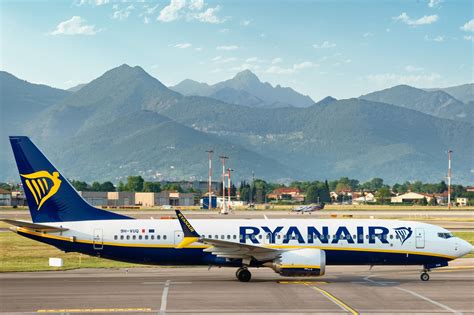
This episode exposed potential lapses in ground traffic coordination and taxi route design, particularly under seasonal pressure. Aviation safety analysts point to a combination of narrow taxiways, possible signage misinterpretation, and stressed ground personnel as possible contributors.
The Boeing 737 MAX: High-Tech Aircraft Meets Low-Tech Challenge
The aircraft in question, a Boeing 737 MAX, belongs to the latest generation of narrow-body jets equipped with cutting-edge avionics, obstacle detection systems, and integrated cockpit navigation aids. However, no level of on-board sophistication can substitute for proper ground infrastructure, visual guidance, and communication with air traffic control.
Wingtip collisions, though statistically rare, are well-documented in global aviation safety records, especially in environments with limited apron space or temporary taxi reroutes. They often arise from misjudgments in wing clearance or unnoticed obstructions—scenarios made more plausible during high-traffic periods.
Tourism Boom Puts Operational Strain On Greek Airports
The timing of the incident is notable. June signals the beginning of Europe’s peak holiday wave, and Greece ranks among the top travel destinations for UK tourists. Ryanair alone connects dozens of UK cities to Greek locales, and its aggressive scheduling increases aircraft movement density at modest-sized airports.
Experts caution that airfield congestion and aging airport layouts could become systemic challenges for the Greek aviation sector, particularly at regional points of entry that weren’t originally designed for such load. In Kalamata’s case, the airport handled just over 330,000 passengers in 2019, but post-pandemic travel recovery has pushed numbers toward historic highs, creating logistical bottlenecks.
Investigative Silence Breeds Speculation
The absence of a public statement from the HCAA, even several days post-incident, raises concerns among aviation observers. Transparency is vital when dealing with infrastructure-related mishaps, as even minor events can have implications for insurance, aircraft certification, and crew retraining.
Ryanair, known for its strict cost controls and lean operations, has not disclosed whether the damaged 737 MAX was pulled from service, sent for repair, or temporarily grounded pending inspection. Standard operating procedure requires a comprehensive structural analysis—particularly of the wing box and fuel systems—to rule out subsurface fractures that could impair flight safety.
Lessons For Air Safety Oversight
This incident feeds into a broader discussion about air safety governance in high-demand regions. Bodies like the European Union Aviation Safety Agency (EASA) and International Civil Aviation Organization (ICAO) emphasize the importance of scalable airport infrastructure, adaptable taxi procedures, and regular ground crew audits to minimize the risk of runway incursions and ground collisions.
It’s likely that Kalamata—and by extension, other mid-tier Mediterranean airports—will need to revisit their safety risk assessments, especially if they continue to attract rising volumes of inbound traffic without commensurate investments in ground layout modernization.
Beyond The Headlines: Implications For Passengers
Although the average traveler might never hear about this specific incident unless delays or injuries occur, episodes like the Kalamata wing strike carry hidden implications. Passenger safety depends not only on aircraft airworthiness and pilot competence but also on airfield design and ground crew vigilance. While aviation remains the safest mode of travel by statistical standards, lapses in infrastructure can create rare but avoidable complications.
The Ryanair episode is unlikely to deter travelers from flying into Kalamata this season, but it will surely prompt internal policy reviews within airline risk management teams. Summer 2025 may see a heightened emphasis on visual taxi guidance, stricter marshalling procedures, and tighter communications protocols.
A Wake-Up Call For Smaller European Airports
Ultimately, this incident serves as a cautionary tale for secondary European airports. As low-cost carriers funnel increasing numbers of tourists into regional gateways, it is imperative that these facilities evolve beyond their provincial designs. Scenarios once considered rare are now potential inevitabilities unless infrastructure modernization keeps pace with traffic volume.
Ryanair, as one of the most operationally efficient airlines in Europe, has long pushed the boundaries of rapid-turnaround flying. Yet even the most efficient system can falter when physical infrastructure becomes the bottleneck. In this context, Kalamata’s ground incident marks more than a blip on the radar—it represents an infrastructural friction point in an otherwise efficient aviation ecosystem.
Until a full review is published or the HCAA issues official findings, aviation insiders will watch closely. For now, Flight FR6080’s jarring conclusion underscores the thin margin between normalcy and disruption in today’s high-traffic, high-pressure air travel environment.