The Airbus A321XLR has been marketed, debated, and often misunderstood as a narrowbody built to blur the line between short-haul efficiency and long-haul ambition. For many airlines, the aircraft symbolizes transatlantic dreams and thin long-range routes that widebodies cannot economically serve. For Wizz Air, however, the reality is far less romantic—and far more pragmatic. According to CEO József Váradi, the XLR is not a passport to risky long-haul adventures but a financially disciplined optimization tool that can quietly outperform older aircraft even on short sectors.
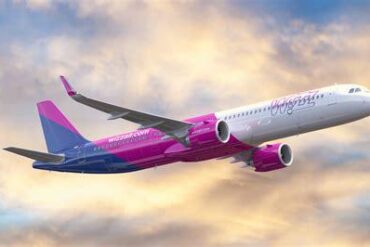
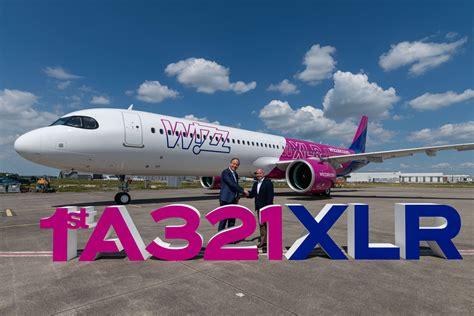
That philosophy explains why Wizz Air’s once-ambitious XLR plans have been sharply revised. The group originally ordered 47 Airbus A321XLRs, a number that suggested a fundamental reshaping of its network. Over time, that figure was cut dramatically, with most frames converted to standard A321neos. Today, the airline has confirmed that it will operate no more than 11 XLRs, and possibly as few as six, depending on whether remaining orders are retained or sold.
The downsizing is not an admission of failure. Instead, it reflects a sober reassessment of where the aircraft truly adds value within an ultra-low-cost carrier model that lives and dies by unit costs.
From Ambition to Precision: Why Wizz Air Scaled Back the XLR
Several factors drove Wizz Air’s retreat from a large XLR fleet. The closure of its Abu Dhabi-based operation removed the strategic need for extended-range narrowbodies connecting Europe to the Gulf. At the same time, broader network experimentation revealed that many ultra-long routes simply did not deliver the consistency or margins required for Wizz Air’s cost discipline.
According to ch-aviation data, the group currently has six A321XLRs. Three are allocated to Wizz Air UK, though only two are operational, while another three sit with Wizz Air Malta but remain parked in Bydgoszcz, Poland. Industry chatter in late January suggested the remaining five aircraft on order could be sold, which would cap the fleet at six. If not, Wizz Air could still reach 11 XLRs by the end of summer—but even that would represent a niche role rather than a core strategy.
This recalibration underscores a central theme of Váradi’s leadership: flexibility without financial bravado.
Where the XLR Actually Flies: Two Routes, One Core Market
In operational terms, Wizz Air’s use of the A321XLR is strikingly conservative. On a true longer-range basis, Wizz Air UK deploys the aircraft on just two routes: London Gatwick to Jeddah and London Gatwick to Medinah. These are the airline’s longest and second-longest routes, with maximum block times approaching seven hours.
Saudi Arabia has become the cornerstone of XLR deployment, and the results have exceeded expectations. Speaking during the airline’s 2025 financial year earnings presentation, Váradi confirmed that both routes are performing significantly better than forecast. Demand has been strong enough that Jeddah is scheduled to increase to two daily flights from Gatwick, supported in part by funding from the Saudi Air Connectivity Program.
Outside these missions, the XLR behaves like any other narrowbody in the fleet. Data from Flightradar24 shows it operating shorter European sectors, such as Gatwick–Prague, in between long flights. This pattern boosts aircraft utilization, spreads fixed ownership costs, and keeps the economics aligned with Wizz Air’s relentless focus on cost per available seat mile.
The Misconception Váradi Wants to Kill
Váradi’s most revealing comments cut directly against popular industry narratives. “There is a bit of a misconception about the XLR,” he explained. “You think that the XLR has to be long-haul, but it doesn’t have to be.”
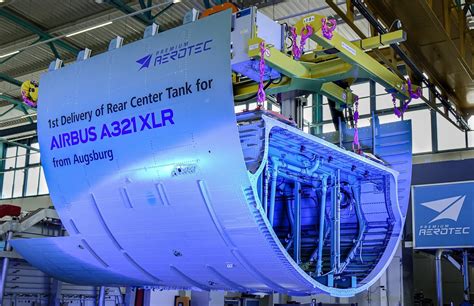
From his perspective, the A321XLR’s real advantage lies in unit economics, not range. Compared with the older A321ceo, the XLR is simply a better machine. Operated in Wizz Air’s dense, all-economy 239-seat configuration, it delivers lower costs even on short- and medium-haul routes. While it carries a small weight penalty versus the A321neo due to its rear center fuel tank, Váradi described that disadvantage as marginal in real-world operations.
This mirrors strategies seen at carriers such as Aer Lingus, Iberia, and TAP Air Portugal, which regularly rotate their long-range narrowbodies onto short European sectors. The aircraft earn their keep every day, not just on marquee routes.
No “Stupid Decisions”: Discipline Over Range
Perhaps the most telling remark from Váradi was also the bluntest. Wizz Air, he said, does not need to make “stupid decisions” simply because it owns a long-range aircraft. The airline has no intention of forcing the XLR into marginal routes or chasing prestige destinations like scheduled services to the United States. A recent U.S. application, he clarified, was driven purely by World Cup-related opportunities, not a strategic pivot.
The message is consistent and unambiguous. The XLR will be used as an A321neo when that makes sense, and as an XLR only when the commercial case is compelling from day one. Profitability is not a goal to be discovered over time; it is a prerequisite for launch. While Wizz Air is known for aggressive route churn, Váradi made clear that financial performance sets hard limits, unless offset by substantial external support such as government-backed connectivity programs.
A Narrowbody With a Narrow Role—By Design
In the end, Wizz Air’s approach strips the A321XLR of its hype and treats it as a tool, not a statement. Whether the fleet settles at six aircraft or grows to 11, the XLR will remain a specialized asset, deployed sparingly and rotated intelligently. That restraint may disappoint those hoping to see ultra-low-cost carriers rewrite the long-haul rulebook, but it perfectly fits Wizz Air’s DNA.
The surprise, then, is not that Wizz Air scaled back its XLR ambitions. The surprise is how calmly, deliberately, and unapologetically it did so—proving that in aviation, range is optional, but economics are not.