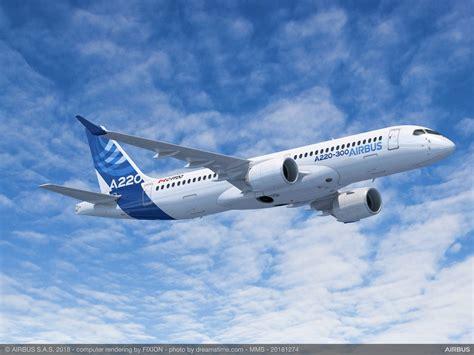
The modern airline industry is no longer driven purely by size. For decades, carriers believed profitability depended on cramming as many passengers as possible into larger aircraft while maximizing hub connectivity. That philosophy shaped fleets around the world, favoring aircraft like the Boeing 737 and Airbus A320 families as the backbone of short- and medium-haul operations. Yet the post-pandemic aviation market exposed a harsh reality: flexibility matters more than sheer scale. Airlines suddenly needed aircraft capable of operating profitably on thinner routes, adapting to volatile demand, and reducing operating costs without sacrificing passenger comfort.
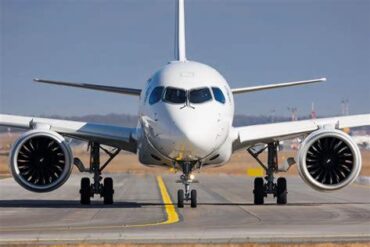
Into this environment stepped the Airbus A220, an aircraft that has quietly transformed from a financially troubled Canadian project into one of the most strategically important narrowbody jets in commercial aviation. Originally developed by Bombardier as the CSeries, the aircraft was designed with a radically different philosophy from older narrowbody aircraft. Rather than adapting legacy airframes with incremental upgrades, Bombardier engineered the jet from a clean sheet, optimizing every element around efficiency, range, operating economics, and passenger experience.
That decision changed everything.
Today, the A220 is redefining what airlines expect from short-haul operations. It combines the economics of a regional jet with the range and comfort traditionally associated with larger mainline aircraft. The result is an aircraft capable of opening entirely new markets, reshaping airline network strategies, and dramatically reducing operational risk on routes that previously struggled to make financial sense.
Airlines are increasingly discovering that the A220 is not simply another narrowbody competitor. It represents a structural shift in airline economics itself.
The aircraft delivers approximately 25% lower fuel burn and CO₂ emissions compared to older-generation jets while offering significantly lower trip costs. That combination has become extraordinarily valuable in an era defined by volatile fuel prices, environmental pressure, and unpredictable passenger demand. More importantly, the A220 allows airlines to precisely match aircraft size to actual market demand instead of oversupplying routes with excess capacity.
In practical terms, that means airlines can now profitably operate routes that would have been economically impossible a decade ago.
The A220’s importance extends far beyond fuel savings. It is fundamentally altering how airlines think about fleet planning, network development, and frequency strategies. Instead of concentrating passengers through congested hubs, airlines can increasingly connect secondary cities directly using smaller, ultra-efficient aircraft capable of long-range operations.
That shift is rewriting the traditional economics of short-haul and medium-haul flying.
After years of dominance by aging narrowbody designs first conceived in the 1960s and 1980s, the A220 represents one of the few genuinely next-generation aircraft programs to enter commercial service. Its advanced materials, geared turbofan engines, optimized aerodynamics, and passenger-focused cabin design place it in an entirely different technological category from many legacy competitors still flying today.
And the market is responding accordingly.
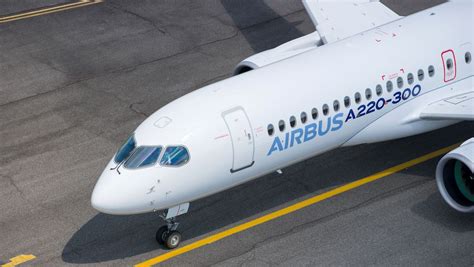
From Bombardier CSeries To Airbus A220 Dominance
The story of the A220 is one of the most dramatic turnaround stories in modern aerospace history. When Bombardier first conceived the CSeries program in the early 2000s, the company recognized a growing gap in the market. Airlines were operating aging regional jets and inefficient narrowbody aircraft that burned too much fuel and carried either too many or too few passengers for emerging route structures.
Bombardier aimed directly at that gap.
The company envisioned an aircraft optimized for the 100-to-150-seat segment, delivering the economics of a larger narrowbody while preserving the flexibility of a regional aircraft. It was an ambitious strategy that placed Bombardier into direct competition with aerospace giants Airbus and Boeing.
The challenge was enormous.
Developing a clean-sheet commercial aircraft requires billions of dollars in investment, years of certification work, and immense industrial capability. Bombardier pushed ahead anyway, formally launching the program in 2008. The smaller CS100 completed its maiden flight in September 2013, followed by the larger CS300 in February 2015.
Technologically, the aircraft was a major achievement. Financially, however, the program became increasingly difficult for Bombardier to sustain. Production delays, cost overruns, and intense competitive pressure placed the company under severe strain. Boeing further complicated matters by filing a controversial dumping complaint against the CSeries program in the United States, escalating pressure on Bombardier during a critical phase of market expansion.
The turning point arrived in October 2017.
Airbus agreed to acquire a 50.01% stake in the program at no financial cost, leveraging its global sales network, manufacturing scale, and supply-chain expertise to rescue and commercialize the aircraft. In July 2018, the CSeries officially became the Airbus A220.
That rebranding marked far more than a simple name change.
It transformed the aircraft from an underdog project into a global competitor backed by one of the world’s most powerful aerospace manufacturers. Airbus later increased its ownership stake to 75% following Bombardier’s exit in 2020, cementing the aircraft’s future within the Airbus portfolio.
The timing proved almost perfect. Airlines emerging from the Covid-19 pandemic increasingly demanded aircraft with lower operating costs, smaller capacity, and greater flexibility. The A220 matched those requirements with remarkable precision.
Unlike older narrowbody aircraft derived from decades-old designs, the A220 was engineered entirely around modern efficiency standards. Its Pratt & Whitney PW1500G geared turbofan engines, lightweight aluminum-lithium fuselage, advanced fly-by-wire controls, and carbon composite wing allowed it to outperform competitors across multiple economic categories simultaneously.
Suddenly, Airbus possessed an aircraft capable of attacking a market segment neither the A320neo nor Boeing 737 MAX fully optimized.
And airlines noticed.
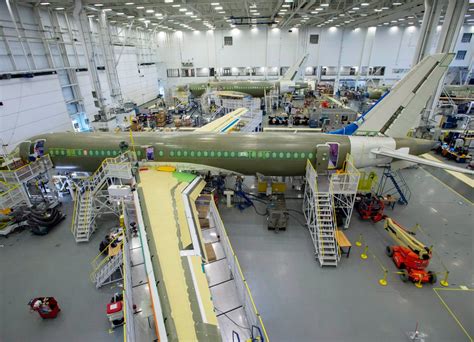
Why The Airbus A220 Delivers Industry-Leading Fuel Efficiency
Fuel has always represented one of the largest expenses in commercial aviation. Even marginal improvements in efficiency can save airlines millions of dollars annually across large fleets. The A220 does not offer marginal improvements. It offers a substantial leap.
Airbus advertises the A220 at approximately 120 passenger miles per gallon, outperforming several larger narrowbody competitors including the Boeing 737 MAX 8 and Airbus A321neo. Real-world operational data has reinforced those claims, demonstrating exceptionally low fuel burn across both short and medium-haul sectors.
The secret lies in the aircraft’s integrated design philosophy.
Rather than modernizing an older platform, Bombardier optimized every structural and aerodynamic element from the beginning. Around 40% of the airframe uses advanced materials including composites and titanium, significantly reducing overall weight. Its highly efficient wing design minimizes drag while maximizing aerodynamic performance across varying flight profiles.
Most importantly, the Pratt & Whitney PW1500G geared turbofan engines fundamentally alter the efficiency equation.
Traditional turbofan engines force fan speed and turbine speed into a compromise relationship. Geared turbofan technology separates those rotational speeds using a reduction gearbox, allowing each component to operate at optimal efficiency independently. The result is dramatically lower fuel consumption, reduced emissions, and substantially lower noise levels.
That technological leap gives the A220 a major advantage on shorter routes where efficiency losses during climb cycles traditionally hurt narrowbody economics.
The environmental implications are equally significant.
As governments and regulators intensify pressure on airlines to reduce emissions, the A220 offers carriers a relatively low-risk pathway toward sustainability targets. The aircraft produces approximately 25% lower CO₂ emissions compared to previous-generation aircraft while also reducing nitrogen oxide emissions and community noise footprints.
The aircraft is additionally certified for operations using up to 50% Sustainable Aviation Fuel (SAF), further enhancing its environmental credentials.
For airlines, these advantages are not merely public-relations talking points. They directly affect profitability.
Lower fuel burn reduces exposure to oil-price volatility. Reduced emissions may help carriers avoid future environmental penalties or taxes. Lower noise profiles improve access to airports with stricter operational limits. Every efficiency gain compounds into long-term economic value.
That is precisely why the A220 has become so attractive to airlines seeking stable operating economics in an increasingly unpredictable global market.
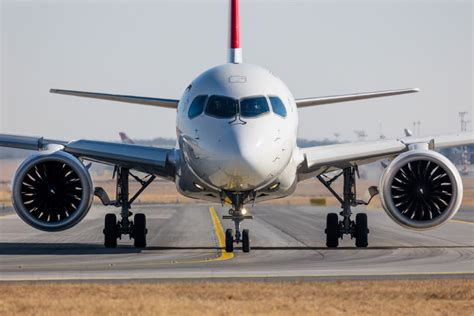
The A220 Cabin Experience Is Redefining Narrowbody Comfort
Passenger comfort rarely dominates discussions about airline economics. Yet in highly competitive markets, cabin experience increasingly influences airline strategy, customer loyalty, and route profitability.
The A220 excels here as well.
One of the aircraft’s most overlooked advantages is that it was not constrained by legacy cabin architecture. Older narrowbody aircraft were originally designed decades ago when passenger expectations were entirely different. The A220, by contrast, was designed around modern traveler preferences from the outset.
The difference is immediately noticeable onboard.
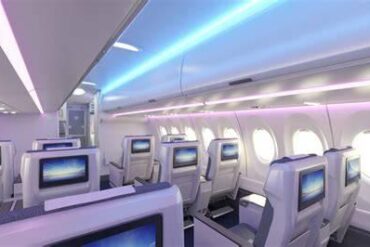
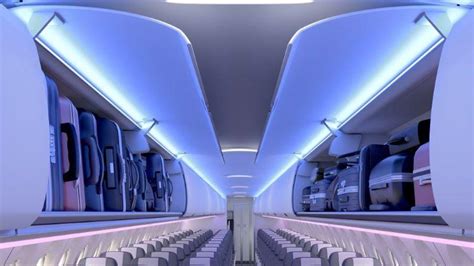
The cabin features wider economy seats, larger windows, taller ceilings, and significantly more overhead storage space than many competing aircraft. Its unique 2-3 seating configuration reduces the number of middle seats while giving most passengers either a window or aisle position.
That seemingly simple layout dramatically improves passenger perception.
Unlike many regional aircraft that feel cramped and restrictive, the A220 cabin feels unusually spacious for its size category. Wide aisles improve boarding efficiency while also making in-flight movement easier during service periods. Advanced LED ambient lighting enhances the cabin atmosphere, while lower engine noise creates a noticeably quieter travel environment.
These elements matter more than airlines often admit publicly.
Business travelers increasingly value frequency and convenience over aircraft size. The A220 enables airlines to offer more daily departures using smaller aircraft without sacrificing comfort. Instead of operating a single large departure, airlines can spread capacity across multiple flights, giving passengers greater schedule flexibility.
This frequency-driven model is particularly effective for corporate travel markets where time efficiency matters enormously.
Passengers benefit from reduced overnight stays, improved connection opportunities, and more direct routes between secondary cities. Airlines benefit from higher aircraft utilization and more efficient capacity management.
The A220 therefore enhances both customer experience and revenue strategy simultaneously.
That dual advantage is rare in commercial aviation.
How The Airbus A220 Makes Long Thin Routes Profitable
Perhaps the A220’s greatest economic breakthrough lies in its ability to transform “long thin” routes into viable business opportunities.
Historically, airlines faced a painful dilemma when evaluating secondary city pairs. Large narrowbody aircraft like the Boeing 737 or Airbus A320 often carried too much capacity for modest-demand routes. Yet smaller regional aircraft lacked sufficient range or efficiency to operate those routes economically.
The result was market inefficiency.
Passengers frequently endured indirect connections through major hubs because airlines could not profitably sustain nonstop service between smaller cities. Many potentially valuable routes remained entirely unserved.
The A220 changes that equation completely.
With seating capacities typically ranging between 100 and 150 passengers and ranges exceeding 3,300 nautical miles, the aircraft can economically connect city pairs previously considered marginal or impossible. Airlines can break even with fewer passengers while still maintaining attractive operating margins.
That capability is strategically transformative.
Instead of forcing traffic through congested hubs, airlines can increasingly develop direct point-to-point networks. Secondary cities gain new nonstop connectivity. Passengers save time. Airlines diversify revenue streams while reducing dependence on major hubs vulnerable to congestion and disruption.
Several airlines have already built major strategic advantages around this concept.
airBaltic operates an all-A220 fleet, leveraging the aircraft’s economics to connect smaller European markets efficiently. JetBlue Airways has used the A220 to modernize domestic operations while opening new city pairs with lower trip costs. Qantas similarly sees value in deploying the aircraft across thinner regional markets.
The economics become especially compelling when airlines analyze risk exposure.
A larger aircraft with too many empty seats quickly destroys profitability. The A220 dramatically lowers that risk threshold. Airlines can experiment with new routes more aggressively because financial exposure is substantially reduced.
Over time, successful thin routes can mature into stronger markets, allowing airlines to increase frequencies or eventually upgrade aircraft size if demand warrants.
In this sense, the A220 does more than reduce costs. It actively enables network growth strategies previously considered too risky or unprofitable.
Operating Costs, Maintenance Advantages, And Fleet Economics
Beyond fuel efficiency, the A220 offers another critical advantage: lower overall operating costs.
Airbus estimates the aircraft delivers approximately 25% lower operating costs per seat compared to older-generation aircraft. Those savings emerge from multiple sources simultaneously.
Fuel savings obviously play a major role, but maintenance efficiency is equally important. The aircraft requires less frequent inspections than many competitors, reducing downtime while improving fleet utilization. Airbus cites maintenance intervals of roughly 1,000 flight hours for A-checks and 8,500 hours for C-checks.
Those extended intervals matter enormously to airline economics.
Every hour an aircraft spends on the ground undergoing maintenance represents lost revenue potential. By minimizing downtime, airlines maximize daily utilization while reducing labor and support costs.
The A220 also benefits from simplified next-generation systems architecture that improves operational reliability and reduces maintenance complexity over time.
Capacity economics further strengthen the business case.
Compared to certain competitors in its category, the A220 can provide additional seating flexibility that translates into millions of dollars in extra long-term revenue potential over a typical operational lifespan.
However, the aircraft has not been entirely free from challenges.
The Pratt & Whitney geared turbofan engine family has experienced durability and inspection issues affecting multiple aircraft programs worldwide, including the A220. Some operators have faced temporary groundings and increased maintenance burdens related to engine inspections.
These issues have complicated the aircraft’s cost advantage in certain operational scenarios.
Yet the broader trajectory remains highly positive. As engine modifications and reliability improvements continue, the A220 is steadily maturing into a more stable and predictable operational platform. Most airlines still view its long-term economic potential as exceptionally strong despite short-term technical setbacks.
That confidence explains why order books continue expanding.
The Airbus A220-500 Could Transform The Market Again
The next phase of the A220 story may prove even more disruptive.
Industry attention increasingly focuses on the proposed A220-500, a stretched variant that could significantly expand the family’s market reach. The aircraft would likely accommodate between 160 and 180 passengers in standard configurations while preserving the A220’s core efficiency advantages.
Such a variant would directly pressure both the lower end of the Airbus A320neo market and Boeing’s smaller 737 variants.
Strategically, the A220-500 could become one of Airbus’s most powerful competitive weapons.
Many airlines increasingly seek aircraft offering lower trip costs than larger narrowbodies while still delivering strong seat economics. The A220-500 appears uniquely positioned to satisfy that demand.
Importantly, Airbus would achieve this without launching an entirely new aircraft program. The company could leverage existing A220 infrastructure, production lines, pilot commonality, and supplier networks while expanding the family upward into a larger market segment.
That creates enormous industrial and economic leverage.
Airbus has reportedly explored alternative engine options for the stretched variant, potentially including participation from CFM International alongside Pratt & Whitney. A dual-engine strategy could reduce operational risk while addressing airline concerns surrounding geared turbofan durability.
Still, Airbus remains cautious.
Company leadership has repeatedly emphasized that the current priority involves making the existing A220 program consistently profitable while stabilizing high-rate production. Only after those objectives are secured will a formal launch decision likely occur.
If approved, however, the A220-500 could fundamentally reshape the lower end of the single-aisle market during the 2030s.
And that possibility should concern Boeing enormously.
Why The Airbus A220 Is Reshaping The Future Of Commercial Aviation
The Airbus A220 has evolved from a risky aerospace gamble into one of the most strategically important aircraft in the global aviation industry. Its success demonstrates that the future of airline profitability no longer depends solely on larger aircraft or higher passenger volumes. Instead, flexibility, efficiency, and precision network planning are becoming the dominant economic drivers.
The A220 embodies that transformation perfectly.
It allows airlines to operate thinner routes profitably, increase frequencies intelligently, reduce fuel consumption dramatically, and offer passengers a superior onboard experience simultaneously. Few aircraft programs in recent decades have combined those advantages so effectively.
More importantly, the aircraft arrives at precisely the right historical moment.
Airlines are under pressure from rising environmental regulation, volatile fuel prices, labor shortages, infrastructure congestion, and shifting passenger demand patterns. Traditional fleet strategies built around oversized capacity and hub concentration increasingly appear outdated in many markets.
The A220 offers an alternative model.
Instead of maximizing size, it maximizes efficiency. Instead of forcing passengers through major hubs, it enables direct connectivity. Instead of exposing airlines to excessive financial risk on marginal routes, it lowers break-even thresholds and improves flexibility.
That combination explains why the aircraft has become increasingly central to airline fleet planning worldwide.
What began as Bombardier’s ambitious attempt to disrupt the narrowbody market has ultimately become one of Airbus’s most valuable strategic assets. The A220 is no longer simply competing within the short-haul sector.
It is actively redefining the economics that govern it.