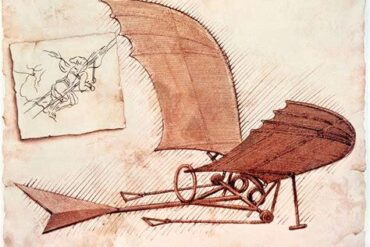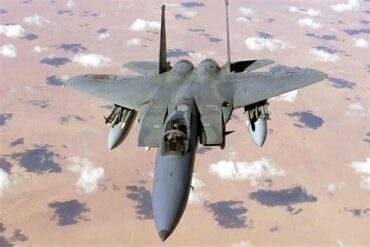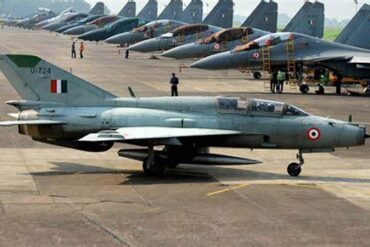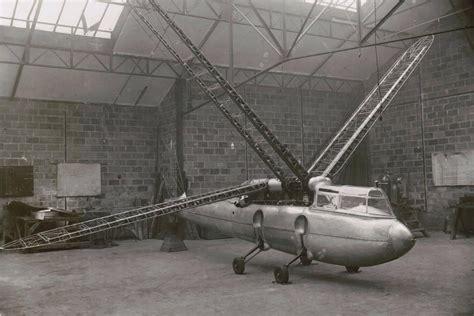
In the vast and hostile deserts of Arrakis, few machines symbolize survival, precision, and majesty like the ornithopter. Often questioned by those familiar with the sleek lethality of jet-like VTOL (Vertical Take-Off and Landing) aircraft, ornithopters appear almost whimsical, reminiscent more of dragonflies than fighter jets. However, when we examine the unique conditions of the Dune universe—environmental, technological, cultural, and narrative—it becomes abundantly clear why ornithopters are not just practical, but superior for this world.
Environmental Demands: Why Jets Fail on Arrakis
Arrakis is an unforgiving environment. With its extreme temperatures, thin atmosphere, and constant risk of sandworm attacks, conventional jet aircraft would quickly succumb to the planet’s unique hazards. Jet engines, reliant on air intake and prone to sand ingestion, would choke in the endless dunes. Moreover, the hot desert air significantly reduces lift and thrust efficiency for traditional jet propulsion systems. In contrast, ornithopters use flapping-wing mechanics to generate lift and thrust, which is more adaptive in Arrakis’s thinner atmosphere.
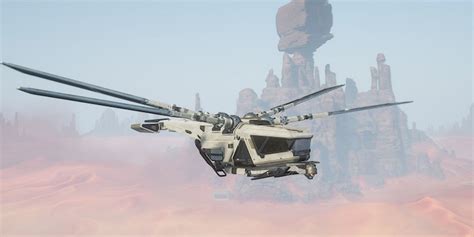
This mode of propulsion not only avoids sand intake but also provides smoother navigation through dust storms and turbulent air layers. Additionally, ornithopters generate less downwash than rotors or jet exhausts, minimizing surface disturbance and avoiding excessive heat plumes that might attract the attention of sandworms. Their wide wing spans further optimize lift without relying on high-speed airflow over fixed surfaces, making them uniquely well-suited for hovering, gliding, and abrupt maneuvers in low-density air.
Tactical Versatility: The Helicopter-Dragonfly Hybrid
The ornithopter is not meant to replace high-speed aerial insertion vehicles like the one flown by Duncan Idaho, but to fulfill an entirely different operational role. Analogous to a Blackhawk helicopter rather than an F‑35, the ornithopter is a tactical utility platform: a gunship, scout, transport, and surveillance craft rolled into one. Its mechanical complexity is balanced by extreme agility, allowing for 9g turns, instant deceleration, and hovering precision—features unmatched by conventional jets.
Synthetic-muscle actuation systems enable these feats with fewer moving parts than traditional engines or rotor assemblies. This design provides both durability and maintainability, especially crucial in remote outposts or during prolonged desert campaigns where resupply is impossible. The ornithopter’s ability to land on rocky outcroppings, take off in narrow canyons, or hover just above sand dunes makes it indispensable for reconnaissance, infiltration, and close air support.
Holtzmann Fields and Anti-Gravity Constraints
While much of the Imperium’s technology uses Holtzmann-derived suspensor fields—anti-gravity devices—these are strategically and economically rationed. Ornithopters reserve suspensor use for stabilization, not lift, allowing them to operate with minimal Holtzmann field emission. This is not merely an efficiency measure: suspensors and certain Holtzmann effects provoke sandworms, which sense and attack rhythmic vibrations and exotic fields.
This necessitates a form of propulsion that is both non-rhythmic and low-signature. The flapping motion of ornithopter wings, though visible, creates irregular vibrations that are less detectable by the worm’s subterranean sensors. In many cases, ornithopters land or glide using terrain features to mask their movement, allowing for safer missions near worm-infested zones.
Compact Design for Shield Wall Deployment
The layout of Arrakis’s strategic infrastructure—particularly shield wall bases—imposes significant constraints on takeoff and landing. Flat, safe terrain is rare; jet-like aircraft requiring long runways are unfeasible in these areas. Ornithopters can land on uneven plateaus, hover within canyon fortresses, and fly through narrow passages without compromising structural integrity or exposing themselves to surface threats.
This agility is not merely a tactical luxury; it is essential to mission viability. During sieges or extraction missions, ornithopters can maneuver within confined spaces, land vertically under fire, and retreat rapidly without sacrificing control. Jets, even VTOL-capable ones, lack the multi-directional finesse and terrain adaptability that ornithopters exhibit.
Technological Plausibility Within Dune’s Framework
Frank Herbert’s universe is not driven by our Earth-based technical evolution. The Butlerian Jihad—a historical war against thinking machines—resulted in a cultural aversion to computers and automation, forcing human ingenuity to evolve along very different lines. Pilots are trained through intensive cognitive conditioning, and many ships are operated manually or via semi-organic mechanisms.
This backdrop allows for machines like ornithopters, which rely on biomechanical integration, human dexterity, and organic motion systems. Flapping-wing vehicles would be impractical in modern aerospace due to airframe vibration and wingtip shockwaves, but the Dune universe’s access to advanced materials and non-Earth-like engineering paradigms overcomes these limitations. Carbon composites, synthetic muscles, and precision joint articulation make large-scale ornithopters feasible and efficient.
Aesthetic and Symbolic World-Building
Herbert’s decision to use ornithopters is not only rooted in narrative function but also in aesthetic philosophy. The flapping-wing vehicle evokes a quasi-Edwardian elegance, suggesting a world where technology serves feudal power rather than commercial utility. The nobility of Dune travels in ornithopters as a visual symbol of majesty, grace, and dominance, much like knights once rode armored horses.
This imagery reinforces the broader themes of Dune: a universe where power is symbolic, where military vehicles must project prestige, and where technology serves myth. A streamlined jet may be efficient, but it lacks the visceral grandeur of an ornithopter’s soaring wings silhouetted against twin moons and golden dunes.
Performance Capabilities Grounded in Lore
Inspired by the flight of dragonflies, ornithopters combine rotorcraft agility with propeller-driven range. Their capacity for tight turns, abrupt stops, and silent glides allows them to operate both offensively and defensively with precision. Whether conducting high-altitude surveillance or landing silently near a sietch, they exhibit unparalleled versatility.
Key performance advantages:
- Capable of 9g maneuvering without structural compromise
- Use of synthetic muscle actuation systems for responsive flight
- Immediate vertical takeoff and landing on rugged terrain
- Low acoustic and vibrational signature compared to jets
- Operable without need for air-intake propulsion, eliminating clogging risks
Even their maintenance systems are designed for field adaptability. Where jets require calibrated instruments, ornithopters can be partially repaired by trained personnel using modular wing units and redundant control cables, emphasizing operational longevity over raw speed.
Conclusion: Ornithopters Are Not Just a Choice, They Are a Necessity
To question why ornithopters are used instead of jet-like aircraft on Arrakis is to misunderstand the interplay between technology, environment, and narrative within the Dune universe. Jets may seem faster or more advanced by modern standards, but they are ill-suited to the realities of a world dominated by sand, worms, and mysticism.
Ornithopters do not merely operate within the rules of this world—they define them. They are the perfect synthesis of form and function, symbol and system, soaring not just through the skies of Dune, but through the very heart of its storytelling.