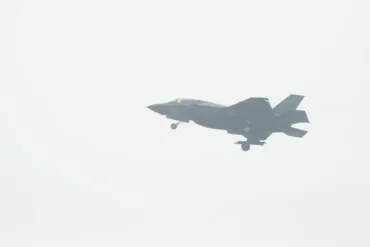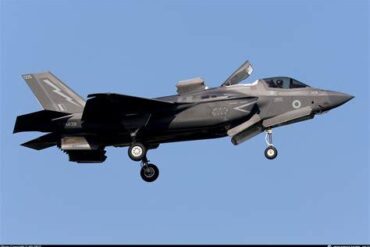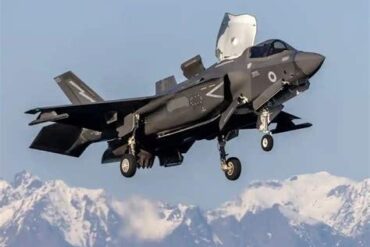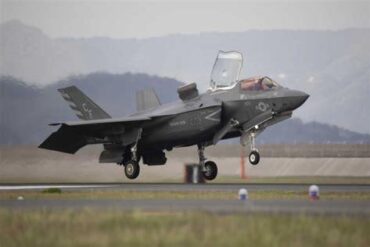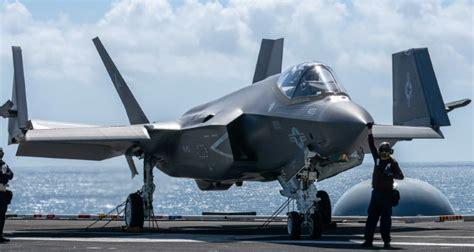
After more than three weeks of growing curiosity and widespread speculation, a Royal Air Force (RAF) team of elite engineers has finally arrived in Kerala, India, to assess and attempt repairs on a grounded F-35B Lightning II stealth fighter jet. The British aircraft, which made an emergency landing at Thiruvananthapuram International Airport on June 14, 2025, has remained stationary on the tarmac due to unresolved technical issues. The high-profile arrival of the RAF technical team underscores the complexity and urgency of the situation.
The Touchdown in Thiruvananthapuram
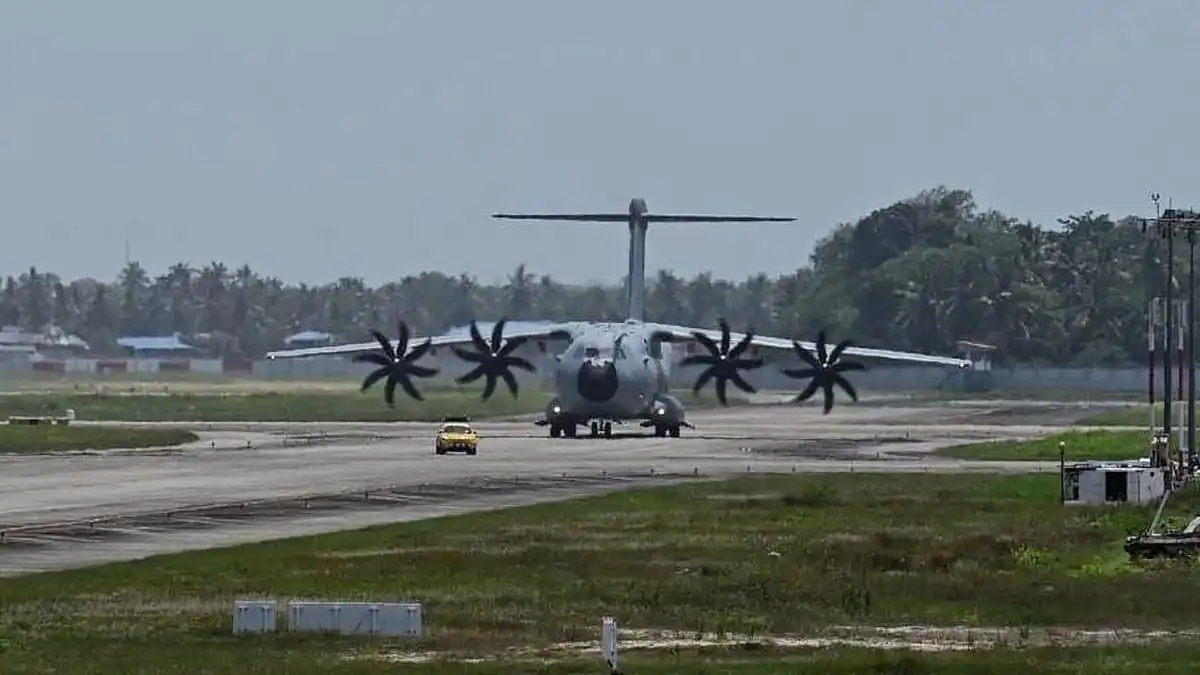
On July 6, 2025, at exactly 12:46 p.m., an RAF aircraft landed at the international terminal of Thiruvananthapuram Airport, delivering a team of 17 engineers—a joint delegation from the United Kingdom and the United States. These professionals hail from RAF Brize Norton—the largest RAF base in the UK located in Oxfordshire—and the United States, where Lockheed Martin, the manufacturer of the F-35B, is headquartered.
According to flight tracking records, the aircraft followed a calculated multi-leg journey. After departing Brize Norton on July 4, it made a stopover at RAF Akrotiri in Cyprus, a key strategic military base in the Mediterranean. From there, it proceeded to Seeb International Airport in Oman before finally making its way to the southern Indian city of Thiruvananthapuram. Despite the long route, the engineering team wasted no time and began initial assessments on the jet within hours of arrival.
A Combat Jet Stranded Abroad: The Timeline
The incident that led to the RAF jet being grounded in India unfolded on June 14, when the F-35B—the short takeoff and vertical landing (STOVL) variant of the fifth-generation stealth fighter—made an emergency landing at Thiruvananthapuram International Airport. Official reports later confirmed that the fighter encountered severe technical issues following a weather-related diversion while transiting across the Indian Ocean.
Initial efforts by the onboard crew to rectify the issue proved ineffective. Given the sensitive nature of the aircraft’s design, including its classified avionics and stealth systems, local engineers lacked the clearance and expertise required to safely inspect or repair the jet. That scenario created a prolonged stalemate, giving rise to social media memes and speculative debates within Indian and global defense circles.
Grounded at Bay No. 4: Security and Secrecy
Currently, the F-35B is stationed at Bay Number 4 of the domestic terminal apron of the airport, under strict security. Local authorities, in coordination with British diplomatic and defense representatives, have maintained a tight perimeter around the jet to prevent unauthorized access or imagery. The grounded aircraft has turned into a symbol of international military cooperation, albeit under unusual circumstances.
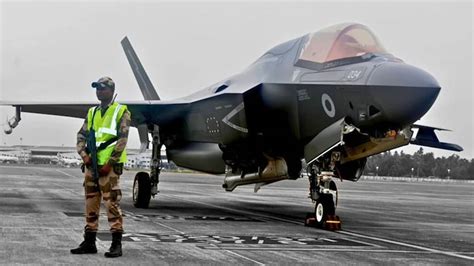
While official details on the nature of the damage remain classified, multiple defense analysts have speculated the issue could involve critical flight control systems or propulsion mechanisms unique to the STOVL configuration of the F-35B. Any malfunction in the jet’s vectored-thrust engine or lift-fan components would demand specialized diagnostic tools and highly trained personnel—hence the RAF’s decision to dispatch experts from home soil.
Multi-Tiered Repair Strategy in Motion
Sources familiar with the ongoing operation indicate that the RAF engineering team will adopt a three-phase approach:
- On-site diagnostics and repair: The first and preferred strategy is to perform necessary diagnostics and repairs directly at the location where the jet is currently parked.
- Transfer to airport hangar: If on-site fixes are deemed unfeasible, the aircraft may be carefully towed to a secure hangar within the airport complex. This option would require extensive planning to mitigate risks of further damage.
- Partial dismantling and airlift: As a last resort, engineers may recommend disassembling the jet—removing the tail, wings, and other components—and airlifting it either to the UK or to Lockheed Martin’s facility in the US for full-scale servicing.
A final decision on the appropriate course of action will be made only after the team completes its initial inspection phase, expected within a few days.
Local and International Media Frenzy
Since the jet’s emergency landing, the F-35B has captured the imagination of local media outlets in India, with daily coverage on its status and speculation over whether it might take off again from Indian soil. The story has also dominated social media platforms, spawning an endless stream of memes and commentary ranging from humor to informed analysis.
While the UK government and RAF officials have maintained a low profile, a spokesperson noted that they remain “optimistic about restoring the aircraft to active duty” after repairs and mandatory safety checks are completed. This statement, while reassuring, has not silenced discussions around the implications of having a cutting-edge NATO stealth jet grounded for weeks in a non-allied country.
Diplomatic Undertones and Strategic Optics
Though the primary focus remains technical, the F-35B situation has also triggered diplomatic ripples. The UK’s swift deployment of a dedicated engineering team signals the importance it places on recovering one of its most advanced multirole fighter jets. The Indian government, for its part, has cooperated fully—ensuring that the incident does not become a diplomatic irritant or trigger concerns over military technology leakage.
The Indian Air Force and Ministry of Civil Aviation have both provided logistical assistance, from securing airspace during the RAF flight’s arrival to coordinating with airport authorities and customs for rapid clearance. Defense experts suggest that such crisis collaboration could open doors for deeper UK-India defense ties in the future, especially with India’s growing interest in acquiring next-generation aircraft.
The F-35B: A Flying Marvel Now Grounded
At the center of this saga is the Lockheed Martin F-35B Lightning II, a technological marvel considered one of the most advanced jets in modern warfare. The F-35B’s distinguishing feature is its ability to perform vertical landings and short takeoffs, making it indispensable for operations from aircraft carriers and forward bases without long runways.
Key features of the F-35B include:
- Stealth technology enabling radar evasion
- Sensor fusion for integrated battlefield awareness
- Pratt & Whitney F135 engine capable of generating 40,000 lbs of thrust
- STOVL capabilities via a shaft-driven lift fan system
Despite its sophistication, the F-35B has also drawn criticism over its maintenance complexity and high operating costs, which now appear evident in its unexpected grounding far from any allied repair base.
What Lies Ahead
As the RAF team begins its technical evaluations, the stakes are high—not just in terms of restoring one valuable asset, but in preserving the operational and strategic integrity of one of the West’s most powerful air fleets. Each passing day adds weight to the decision whether to attempt repair in Kerala or to transport the aircraft elsewhere.
India’s role in facilitating this mission may also be remembered as an unofficial test of its global readiness to engage with next-gen defense platforms, even if only as a host for an emergency operation.
For now, all eyes remain on Bay No. 4 at Thiruvananthapuram International Airport—where a jet built for silent missions and battlefield supremacy lies silently grounded, awaiting a decision that will shape the outcome of this unprecedented episode in modern military aviation.