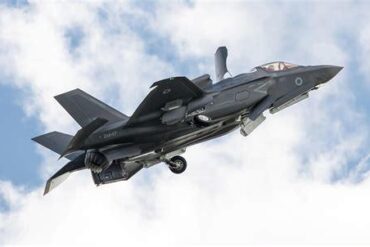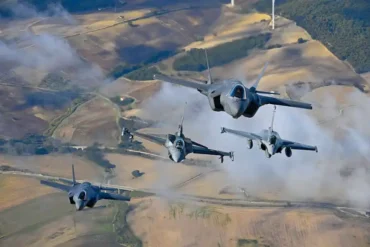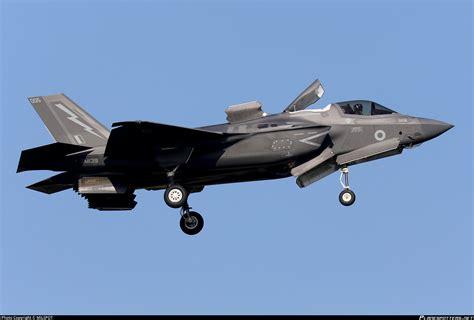
With the arrival of two new F-35B Lightning II fighters at RAF Marham, the Royal Air Force (RAF) has taken another significant step in expanding its fleet of advanced fifth-generation combat aircraft. The fighters, which touched down in the United Kingdom after a transatlantic journey from Lockheed Martin’s production facility in Fort Worth, Texas, reflect the UK’s sustained commitment to maintaining a cutting-edge air combat capability.
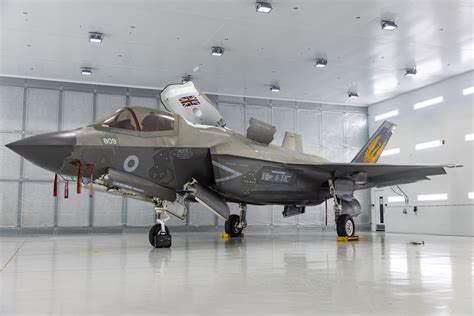
The Arrival of New Units at RAF Marham
The two newly arrived F-35B Lightning II jets represent a strategic enhancement to the UK’s aerial warfare capabilities. This delivery, supported by a Voyager refueling aircraft during its transatlantic flight, underscores the RAF’s ongoing focus on readiness and rapid power projection. These aircraft join an expanding fleet that is central to the UK’s long-term defense strategy, aimed at sustaining advanced airpower across multiple domains.
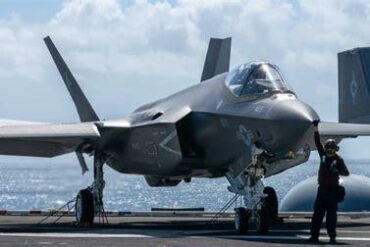
The addition of these fighters to RAF Marham marks another milestone in the Royal Air Force’s phased expansion of its F-35B fleet. The F-35B, known for its short takeoff and vertical landing (STOVL) capabilities, provides a significant tactical advantage in both land-based and maritime operations. It is a critical component of the UK’s defense posture, operating from Queen Elizabeth-class aircraft carriers and forward air bases, offering unparalleled flexibility in a range of combat scenarios.
The Strategic Importance of the F-35B Lightning II
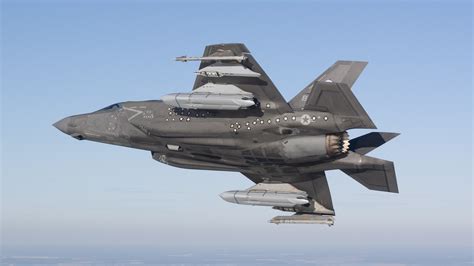
The F-35B is a cornerstone of the UK’s modern air force. As a fifth-generation multirole fighter, it is designed to perform a wide array of missions, including air superiority, close air support, intelligence gathering, and electronic warfare. Its advanced stealth technology and integrated sensor suite enable it to operate undetected in hostile environments, providing the UK with a decisive edge in contested airspace.
Key Features of the F-35B Lightning II
- Stealth Design: Low radar cross-section and infrared signature.
- Integrated Sensor Fusion: Comprehensive situational awareness with advanced radar and sensor systems.
- Supersonic Speed: Capable of speeds over Mach 1.6.
- STOVL Capabilities: Vertical landing and short takeoff from aircraft carriers.
- Network-Centric Warfare: Seamlessly integrates with other platforms and joint forces for coordinated operations.
Operational Milestones and Global Deployments
The Royal Air Force’s commitment to the F-35B program has evolved through several critical milestones. The first F-35B jets arrived at RAF Marham in June 2018, forming the backbone of 617 Squadron ‘The Dambusters’. This historic squadron, renowned for its daring World War II missions, now leads the UK’s frontline F-35B operations. In 2019, 207 Squadron, the UK’s Operational Conversion Unit (OCU) for the F-35B, was also established at Marham, ensuring pilots and ground crew receive state-of-the-art training on this advanced platform.
In December 2023, 809 Naval Air Squadron, known as ‘The Immortals’, was reactivated at Marham, further enhancing the UK’s maritime strike capabilities. This squadron’s integration into the F-35B program symbolizes the increasing importance of carrier-based air power in Britain’s defense strategy.
Carrier Strike and the HMS Prince of Wales Deployment
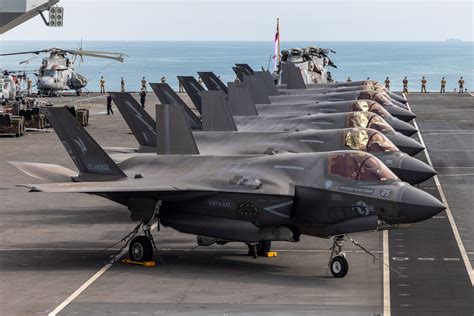
A significant demonstration of the UK’s expanding F-35B fleet was the recent deployment aboard the HMS Prince of Wales. During Operation Highmast, the UK’s largest naval deployment to the Indo-Pacific in recent years, two F-35B squadrons from the Royal Navy and Royal Air Force embarked on the carrier, highlighting the operational flexibility and reach of the UK’s air power.
This deployment underscored the seamless integration of the F-35B into joint maritime operations, enabling rapid power projection from sea to land. Group Captain Butcher, commander of the Lightning Air Wing, noted, “…We are on track to achieve full operating capability for the F-35 in the UK, with the ability to deploy two squadrons from the maritime operating base…”.
Challenges and Future Expansion
Despite its success, the UK’s F-35B program has not been without challenges. Early budgetary constraints led to a scaled-back initial fleet size, with the number of confirmed orders reduced from the originally planned 138 units to 74. However, in 2024, the UK Government reaffirmed its commitment to the full acquisition plan, signaling its intent to build a robust fifth-generation air force capable of meeting future security challenges.
The addition of these two new jets at RAF Marham is a clear indication that the UK remains committed to maintaining a technologically superior and globally deployable air force, even as it navigates the complex realities of defense budgeting and geopolitical uncertainty.
Conclusion
The Royal Air Force’s continued expansion of its F-35B Lightning II fleet marks a significant investment in the future of British air power. As these cutting-edge aircraft continue to integrate into the Royal Air Force and Royal Navy strike forces, the UK will remain at the forefront of modern aerial combat, ready to respond to evolving threats around the world. This commitment reflects the strategic importance of maintaining a formidable, flexible, and technologically advanced air force in the 21st century.