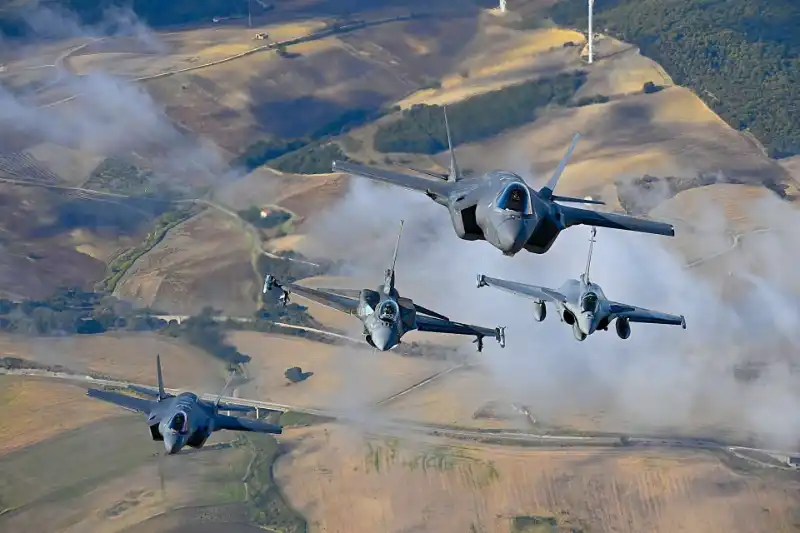
On 7 November 2025, the United Kingdom affirmed its enduring role in European security by deploying cutting-edge air power under Operation Highmast during Exercise Falcon Strike 2025, hosted in Italy. This critical multinational drill not only tests combat readiness in contested air environments, but also forges deeper integration across NATO’s fifth-generation forces—a key pillar of modern Allied deterrence strategy.
Running from 3 to 14 November, Falcon Strike 2025 is centred at Amendola Air Base, drawing more than 1,000 personnel and over 50 aircraft from Italy, the UK, France, the United States, and Greece. The UK’s involvement is notably robust, reflecting its operational maturity in fifth-generation capabilities and carrier-enabled force projection.
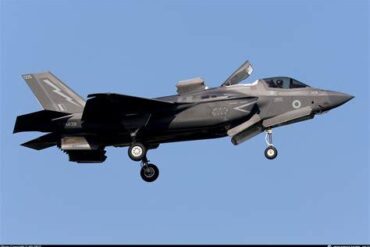
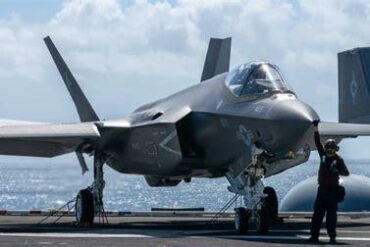
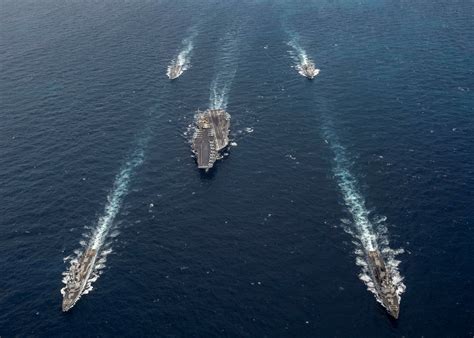
At the core of the UK deployment is a multi-domain air package, comprising RAF F-35B Lightning II jets, Voyager air-to-air refuelling aircraft, and the Royal Navy’s Carrier Strike Group. This force architecture simulates high-tempo scenarios including maritime strike, dynamic targeting, and composite air operations, while aligning with NATO’s evolving command and control (C2) frameworks.
The F-35B Lightning II stands as a force multiplier. Engineered with sensor fusion, low observability, and interoperable datalinks, it acts as a mobile ISR (intelligence, surveillance, reconnaissance) and targeting hub. When paired with the Voyager tankers, UK F-35Bs extend their reach and loitering capacity, allowing persistent presence in key operational theatres. These aircraft coordinate suppression of enemy air defences (SEAD) and maritime strikes, feeding fused intelligence to fourth-generation assets within NATO.
This exercise also highlights Britain’s strategic evolution in carrier aviation. From trial phases on Queen Elizabeth-class carriers to full-spectrum operational deployments, the UK has matured its logistics, weapons integration, and mission data reprogramming capabilities. Operation Highmast brings a global dimension—testing supply chain agility, crew rotations, and munitions management across operational theatres while ensuring seamless NATO interoperability.
Three core strategic advantages emerge from Britain’s Falcon Strike posture:
- Theatre-Level Impact: Massed F-35B operations from sea platforms enhance Allied airpower without overburdening land bases, complicating adversary targeting models.
- Accelerated Training via LVC: The Live-Virtual-Constructive (LVC) framework at Salto di Quirra enables compressed learning cycles, immersing pilots in advanced red-air and integrated air defence system (IADS) scenarios without full live replication costs.
- Resilient Operations through ACE: Agile Combat Employment (ACE) drills—dispersed across Italian bases and maritime locations—build UK resilience, ensuring airpower delivery despite disruption or attack.
Strategically, the UK’s participation signals more than readiness; it demonstrates force mobility and rapid NATO integration. With previous F-35B deployments spanning from the Indo-Pacific to the Mediterranean, Britain showcases its ability to project sovereign and interoperable airpower across continents. Italy’s geographic position strengthens this axis, serving as a southern NATO hub with reach into the Balkans and Black Sea.
The logistical and industrial undertones are equally important. By aligning with Allied partners on maintenance infrastructure, data-driven diagnostics, and resilient supply chains, the UK is investing not only in immediate readiness, but in long-term sustainment of fifth-generation capabilities.
As Falcon Strike 2025 concludes, the UK solidifies its ability to generate and sustain carrier-based fifth-generation airpower, both independently and as part of NATO’s collective defence apparatus. The exercise proves that the RAF and Royal Navy can integrate seamlessly within high-end coalition operations, adapt to dynamic threats, and reinforce Europe’s security architecture at a pivotal time.
This deployment reaffirms Britain’s position at the forefront of NATO air strategy, delivering combat-ready, sovereign capabilities where they count most—across the contested skies of Europe’s southern flank.