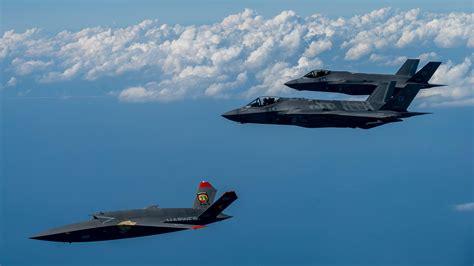
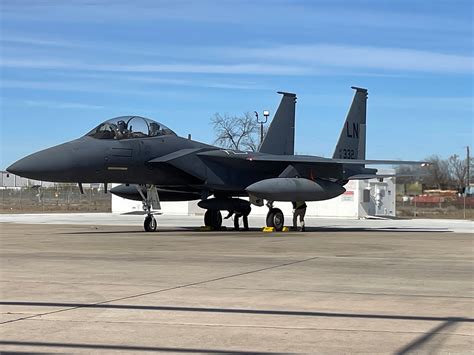
The U.S. Air Force has crossed a transformative threshold in modern warfare by successfully validating human-machine teaming between legacy fighter aircraft and autonomous drones. In a milestone flight test held at Eglin Air Force Base, Florida, fighter pilots in F-16C Fighting Falcon and F-15E Strike Eagle aircraft took command of XQ-58A Valkyrie drones during a live air combat demonstration. This exercise marks one of the most complex and promising demonstrations of autonomous collaborative platforms (ACPs) to date.
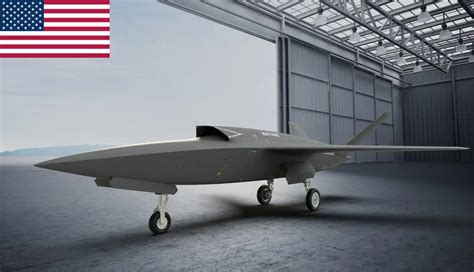
XQ-58A Valkyrie: The Vanguard of Autonomous Combat
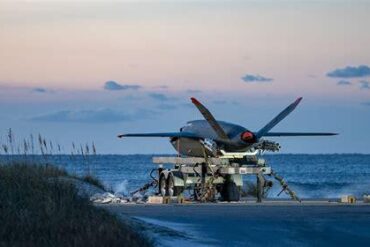
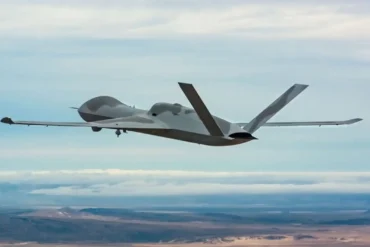
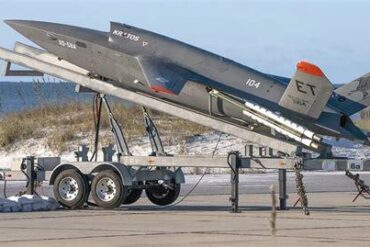
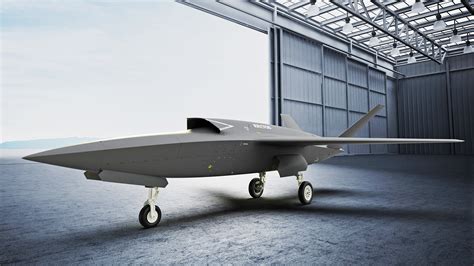
Developed by Kratos Defense & Security Solutions in partnership with the Air Force Research Laboratory (AFRL), the XQ-58A Valkyrie is a stealthy, runway-independent unmanned aerial vehicle (UAV) designed to operate in high-threat environments. It was introduced under the Low-Cost Attritable Aircraft Technology (LCAAT) initiative to produce an affordable yet capable platform for modern air warfare.
Conceived for survivability, the Valkyrie employs a stealth-optimized airframe, allowing it to penetrate contested zones without detection. It boasts a top speed exceeding 1,050 km/h, a combat radius over 3,000 kilometers, and supports modular payloads of up to 272 kilograms. These can include precision-guided munitions, electronic warfare systems, and advanced sensor arrays, giving it flexible multi-mission capability.
One of its most significant design features is the ability to launch without a runway, using rocket-assisted takeoff, and recover via parachute landing, granting the flexibility to operate from remote or improvised locations. This runway independence is a tactical asset in scenarios where infrastructure is degraded or under threat.
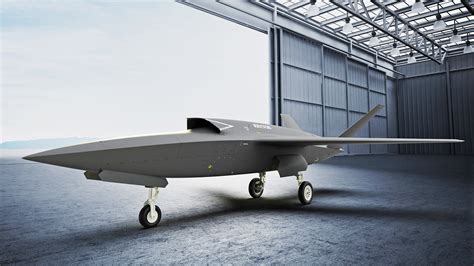
Demonstration Details: A Leap in Tactical Integration
During the July 2025 exercise, each fighter pilot was assigned two Valkyrie drones. The pilots controlled them in real time during simulated air combat scenarios, illustrating a critical leap forward in command-and-control (C2) autonomy. The objective: to assess whether pilots can effectively direct multiple drones under combat conditions without cognitive overload.
This test formed part of a broader Air Force strategy to validate the human-machine teaming (HMT) concept, a doctrine that combines the strategic mind of a pilot with the computational speed and risk-tolerance of autonomous platforms. The exercise is a step toward disaggregated airpower, where drones can absorb early attacks, provide decoys, extend sensor range, and attack or jam enemy systems—without risking a human pilot.
The ability to command multiple autonomous drones represents a seismic shift in air warfare philosophy. Rather than fielding a few high-value jets, the Air Force envisions swarms of low-cost attritable aircraft that can overwhelm adversaries, saturate defenses, and persist in denied airspaces.
Strategic Importance: Shaping the Future of Air Combat Doctrine
The significance of this successful test extends beyond tactical experimentation. According to General Ken Wilsbach, Commander of Air Combat Command, it reflects a firm commitment to maintain air dominance in an era of peer-level competition. Wilsbach emphasized that integrating operator-driven tactics with machine-enabled execution is the key to surviving and winning in fast-evolving conflict scenarios.
Backing this development is the Department of Defense’s Rapid Defense Experimentation Reserve (RDER) program. It accelerates promising technologies and bridges gaps between innovation and operational readiness. The current trials are a joint endeavor between AFRL, Air Force Test Center, Air Combat Command, and even the U.S. Navy, underscoring cross-service commitment to HMT integration.
Cognitive Load and Autonomy: Balancing Man and Machine
Central to the test’s success was the Valkyrie’s ability to conduct semi-autonomous operations. Once commanded, the drone could execute complex mission profiles—whether surveillance, jamming, or strike missions—with minimal supervision. This reduces pilot workload, allowing them to focus on high-level tactical decisions while the drones execute pre-programmed behaviors or adapt to combat stimuli.
This capability is not just a technological breakthrough; it’s a human factors revolution. Prior HMT tests often stumbled when operators became overwhelmed managing multiple platforms. The recent trial suggests that the Valkyrie’s AI integration and intuitive control interfaces allow human pilots to remain effective even while commanding multiple unmanned teammates.
XQ-58A Capabilities: A Force Multiplier in Every Domain
The Valkyrie is engineered to support diverse mission profiles across the air, electronic, and information warfare spectrum:
- Forward reconnaissance deep into hostile territory, relaying real-time ISR (Intelligence, Surveillance, Reconnaissance)
- Electronic attack to degrade enemy radars and communications
- Precision strike capabilities with internal weapons bay
- Decoy functions to draw enemy fire or sensors away from manned aircraft
Its internal mission computer and open-systems architecture allow for software updates and new payload integrations without expensive redesigns. In future configurations, the Valkyrie may even integrate AI-based target recognition and dynamic battlefield learning, enhancing its utility as a reactive combat element.
From Proof to Doctrine: The Long-Term Vision
Brigadier General Jason E. Bartolomei, commander of AFRL, framed the demonstration as more than just a test—it’s a proving ground for the future force design of the Department of Defense. The data harvested from this exercise will shape how future combat systems are built, deployed, and integrated across domains.
Rather than replacing manned aircraft, drones like the Valkyrie act as “loyal wingmen,” extending the capabilities and survivability of traditional platforms. In the context of multi-domain operations (MDO), this opens the door to highly synchronized missions across air, sea, land, cyber, and space.
As adversaries like China and Russia continue advancing hypersonic weapons, integrated air defenses, and electronic warfare arsenals, the U.S. must evolve beyond conventional force structures. By investing in systems like the XQ-58A, the U.S. Air Force is ensuring that it retains decisive overmatch across future battlefields.
A New Tactical Paradigm in the Skies
The successful integration of the XQ-58A into live air combat operations represents a paradigm shift in tactical planning. In a conflict scenario, drone swarms could:
- Saturate enemy air defenses
- Extend the sensor range of manned fighters
- Serve as expendable strike assets
- Persist in high-risk zones
All while manned aircraft remain in stand-off ranges or command-and-control roles, preserving expensive and irreplaceable assets.
This construct, referred to by the Air Force as “combat teaming at scale,” is the embodiment of modern military transformation. It enables dynamic force employment, adaptive kill chains, and resilient mission execution even when traditional command structures are disrupted.
Conclusion: Autonomous Edge in an Era of Great Power Competition
With the successful teaming of F-16 and F-15E fighters with the XQ-58A Valkyrie, the U.S. Air Force is setting a benchmark for what 21st-century air combat will look like. The era of autonomous, networked, and highly dispersed air forces is no longer theoretical—it’s actively unfolding.
This exercise reaffirms America’s edge in adaptive warfare, leveraging speed, scale, and machine intelligence to reshape conflict in its favor. As the Department of Defense continues refining this capability, the lessons from Eglin will reverberate across strategy circles, acquisition programs, and future combat planning for years to come.