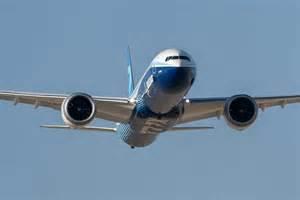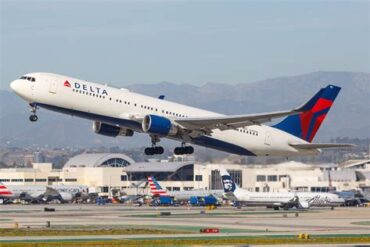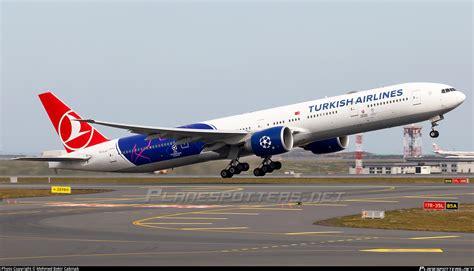
Turkish Airlines operates one of the most unusual Boeing 777 aircraft flying anywhere in the world today. While the carrier’s fleet includes more than 40 Boeing 777-300ERs, one aircraft stands apart from all the others. Registered as TC-LKF, this unique jet features an astonishing 492-seat configuration, making it one of the highest-capacity Boeing 777 passenger aircraft ever placed into regular commercial service.
What makes the aircraft even more fascinating is that Turkish Airlines frequently deploys it on domestic routes that last less than an hour. Seeing a giant long-haul widebody carrying nearly 500 passengers between Turkish cities on flights shorter than many airport layovers naturally raises a question: why would an airline use such a massive aircraft on such short sectors?
The answer lies in a combination of fleet economics, inherited aircraft characteristics, network strategy, and the extraordinary passenger flows that pass through Istanbul every day.
A Boeing 777 That Breaks the Rules
Most airlines configure their Boeing 777-300ER fleets to balance premium revenue and economy-class capacity. The aircraft is widely regarded as a flagship long-haul jet, often featuring spacious business-class cabins and a significant number of premium seats.
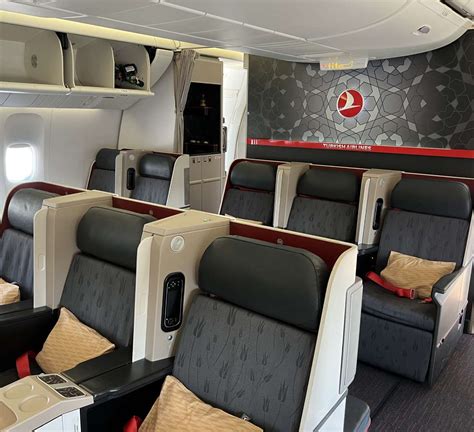
Turkish Airlines typically operates two main Boeing 777-300ER layouts. One version offers 49 business-class seats and 300 economy seats for a total of 349 passengers. Another carries 400 passengers with 28 business-class seats and 372 economy seats.
TC-LKF is dramatically different.
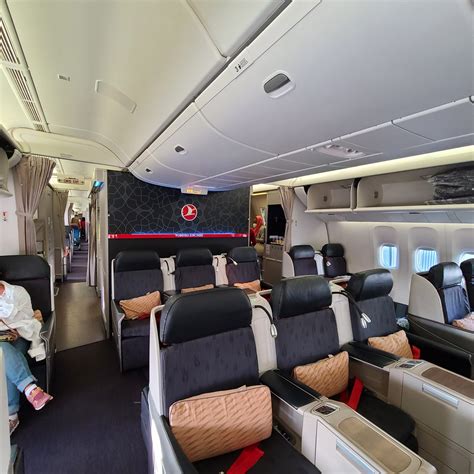
Instead of prioritizing premium travel, the aircraft is configured with only 14 business-class seats and a staggering 478 economy seats, creating a total capacity of 492 passengers. That figure places it in a category rarely seen among Boeing 777 operators.
The aircraft’s capacity is so remarkable that it rivals, and in some cases exceeds, the seating offered by many Airbus A380 operators. Several airlines fly their A380 fleets with fewer passengers than Turkish Airlines’ lone high-density Boeing 777.
Rather than functioning as a traditional flagship aircraft, TC-LKF serves as a specialized capacity tool designed to move the maximum number of passengers possible.
After all, when nearly 500 travelers need to be transported on a single flight, cabin luxury becomes less important than seat availability.
The Extraordinary History Behind TC-LKF
The aircraft’s unusual layout was not created by Turkish Airlines.
TC-LKF originally entered service in 2007 with Emirates, where it operated as a conventional long-haul Boeing 777-300ER. During its years with the Dubai-based carrier, the aircraft served international routes in a more traditional premium-heavy configuration.
Its story took an unexpected turn when it later joined Russian charter airline Royal Flight.
Unlike major network carriers, charter airlines often prioritize maximum passenger volume. Their business models revolve around transporting large groups of holiday travelers, frequently working alongside tour operators during peak travel seasons.
To support that mission, the aircraft underwent a substantial cabin transformation. Premium seating was drastically reduced while economy capacity was significantly increased.
The result was the ultra-dense 492-seat layout that still exists today.
Subsequent disruptions affecting the Russian aviation market led to periods of inactivity. The aircraft spent extended time in storage facilities in both Spain and Turkey, moving in and out of service as market conditions changed.
When Turkish Airlines acquired the aircraft in 2024, it inherited not only the airframe but also its highly specialized cabin configuration. Rather than spending millions on an immediate cabin redesign, the airline chose to place the aircraft into service largely unchanged.
The decision instantly created one of the most distinctive Boeing 777s operating anywhere in the world.
Why Operating a Single Unique Aircraft Makes Sense
Airlines generally avoid maintaining one-off configurations.
Standardization reduces maintenance complexity, simplifies crew training, streamlines scheduling, and lowers operational costs. Every deviation from fleet commonality introduces additional challenges.
On paper, operating a single Boeing 777 with a dramatically different cabin layout appears inefficient.
In reality, TC-LKF provides Turkish Airlines with a capability unavailable elsewhere in its fleet.
The aircraft effectively acts as a high-capacity surge asset. Whenever passenger demand spikes on specific routes, the airline can deploy nearly 500 seats without introducing an entirely new aircraft type.
This becomes especially important because Turkish Airlines has never embraced the Airbus A380. While many major global airlines use the superjumbo to accommodate massive passenger volumes, Turkish Airlines has instead built its long-haul strategy around the Boeing 777, Boeing 787 Dreamliner, and Airbus A350.
TC-LKF allows the carrier to capture some of the capacity advantages associated with larger aircraft while avoiding the infrastructure, training, and operational requirements that come with operating a fleet of A380s.
Why a 492-Seat Boeing 777 Flies Routes Under One Hour
At first glance, deploying one of the world’s highest-capacity aircraft on flights lasting less than 60 minutes seems wasteful.
However, these short sectors serve a critical purpose within Turkish Airlines’ broader network strategy.
Recent operations have frequently placed TC-LKF on routes linking Istanbul Airport (IST) with Izmir Adnan Menderes Airport (ADB) and Antalya Airport (AYT). Flight times regularly range between 44 and 57 minutes.
Passengers boarding these flights are often surprised to find themselves stepping onto a widebody aircraft commonly associated with intercontinental travel.
Yet the aircraft’s mission extends far beyond transporting local passengers between Turkish cities.
Istanbul functions as one of the world’s largest connecting hubs, linking Europe, Asia, Africa, the Middle East, and the Americas. Every day, tens of thousands of travelers arrive in Istanbul before continuing onward to destinations throughout Turkey.
As a result, domestic flights frequently carry a mixture of local travelers and international connecting passengers.
The challenge for Turkish Airlines is not simply filling seats between Istanbul and Antalya. The challenge is moving enormous numbers of passengers efficiently through its hub system.
A nearly 500-seat aircraft allows the airline to consolidate traffic into fewer departures while maintaining connectivity throughout its network.
High-Demand Religious and Tourism Markets
The aircraft’s deployment is not limited to domestic operations.
TC-LKF has also appeared on services to Jeddah and Medina, two destinations that generate exceptionally high passenger volumes due to religious travel.
Pilgrimage traffic associated with Umrah and Hajj creates periods when airlines need every available seat. During these peaks, an aircraft capable of carrying nearly 500 passengers becomes an extremely valuable asset.
Tourism-driven markets produce similar opportunities.
Destinations such as Antalya attract large numbers of visitors during holiday seasons. Rather than increasing frequencies dramatically, Turkish Airlines can sometimes achieve greater efficiency by deploying a larger aircraft.
This approach maximizes airport slot utilization while lowering seat costs across high-demand routes.
A Boeing 777 Unlike Any Other in Turkish Airlines’ Fleet
TC-LKF represents a rare example of an airline embracing an inherited aircraft configuration because it solves a specific operational challenge.
Its unconventional history, exceptionally dense seating arrangement, and deployment on surprisingly short routes have transformed it into one of the most talked-about Boeing 777s currently flying.
While most widebody aircraft are designed around passenger comfort and premium revenue generation, this Boeing 777 was built for a different mission entirely: moving as many people as possible, as efficiently as possible.
For Turkish Airlines, that mission often means sending a 492-seat long-haul giant on flights lasting less than an hour. It may look unusual from the passenger cabin, but from a network planning perspective, it is a highly effective solution that turns a one-of-a-kind aircraft into a powerful strategic asset.