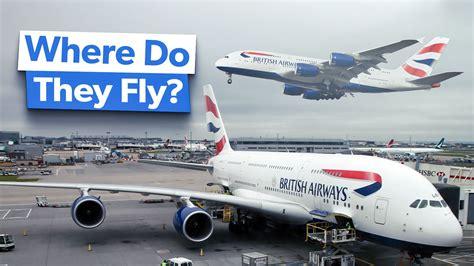
The global Airbus A380 network continues to fascinate aviation enthusiasts, not for its volume but for its quirks. As the double-deck giant settles into a more refined post-pandemic role, a quiet group of under-the-radar routes persists—superjumbo operations so infrequent that many travelers never realize they exist. In December, only a handful of airport pairs will see fewer than ten A380 departures, creating a rare snapshot of the world’s least-served superjumbo flights.
These routes stand out not because of neglect, but because of strategic decisions from the ten airlines that still operate the A380: All Nippon, Asiana, British Airways, Emirates, Etihad, Korean Air, Lufthansa, Qantas, Qatar Airways, and Singapore Airlines. According to Cirium Diio, these carriers will fly the type across 88 airport pairs and 93 routes worldwide—a testament to the aircraft’s enduring appeal even as airlines diversify their long-haul fleets.
Yet amid these global deployments lie the anomalies: six routes in December with no more than nine departing A380 flights. All involve carriers from East Asia or Australia, with only two classified as long-haul. These lightly served links offer a revealing look into seasonal demand, fleet constraints, and strategic experimentation.
Rare East Asian A380 Segments With Minimal December Service
Korean Air and Asiana dominate the list of ultra-rare A380 segments, primarily within Northeast Asia. These are routes where demand is high year-round, yet A380 appearances are fleeting—often limited to a few strategically selected days.
Korean Air’s twice-weekly Seoul Incheon–Tokyo Narita service headlines the list with nine departures. Despite such modest A380 activity, the airline operates a dense Seoul–Tokyo schedule overall. When all aircraft types are included, the carrier runs four daily flights to Narita, one daily service to Haneda, and three more linking Seoul’s downtown Gimpo Airport with Tokyo Haneda. This creates a robust eight-flight-per-day ecosystem served by everything from the 737-800 to the 787-10. The rare A380 outings are therefore not operational necessities; they are deliberate choices.
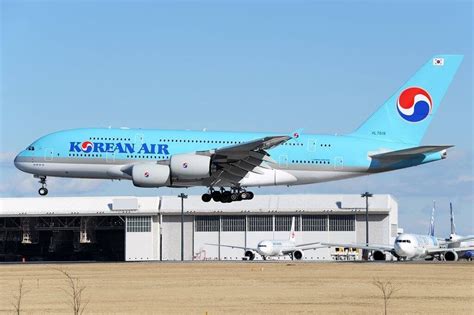
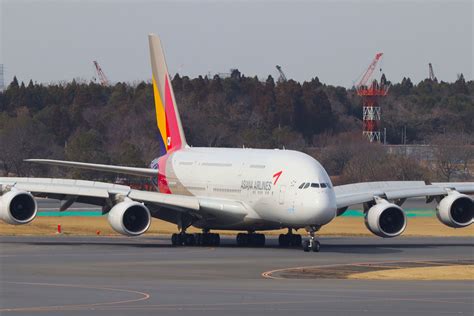
Even more unusual is the one-off Korean Air A380 rotation from Seoul to Taipei Taoyuan on December 7. A single superjumbo appearance on such a heavily trafficked regional corridor underscores the flexibility airlines maintain during fleet reshuffling periods. A similarly exclusive event occurs with Asiana’s one-day A380 flight between Seoul and Tokyo Narita on December 19—a farewell echo of the airline’s gradually shrinking A380 footprint.
Meanwhile, the Seoul–Hong Kong corridor will see only three A380 flights from Korean Air in early December. This is a fraction of what was once a routine superjumbo deployment, reflecting shifting demand patterns and the carrier’s evolving fleet utilization strategy.
The World’s Shortest A380 Passenger Service
Among all these lesser-served routes, one holds a global distinction: the shortest commercial A380 passenger flight operating in December. The 680-nautical-mile Seoul Incheon–Tokyo Narita sector connects two megacities with a combined metro population exceeding 60 million. Despite its modest length, the route remains commercially significant and operationally strategic.
Korean Air’s nine-flight A380 schedule—its highest A380 frequency to Narita since December 2012—brings the superjumbo back into a corridor dominated by premium demand and fierce competition. The Thursday and Saturday KE703/KE704 rotations highlight a brief window during which the aircraft’s exceptionally high capacity becomes advantageous.
Qantas And The Long-Haul Outliers
Only two of December’s least-served A380 routes classify as long-haul, both operated by Qantas. These rare operations form the opposite end of the spectrum compared to the East Asian short-hauls.
The most prominent is Melbourne–Los Angeles, a 6,883-nautical-mile ultra-long-haul connection that ranks as the world’s sixth-longest nonstop A380 flight. This distance surpasses even several of Emirates’ flagship long-range A380 missions, as well as Qantas’s own Sydney–Dallas super-long-haul. Qantas has flown the A380 between Victoria and California since 2008; once daily, the route now operates just twice weekly.
The Thursday and Saturday departures of QF94 from Melbourne, followed by the noon-hour return of QF93 from Los Angeles, illustrate a schedule meticulously designed to balance crew efficiency, aircraft turnaround, and transpacific demand.
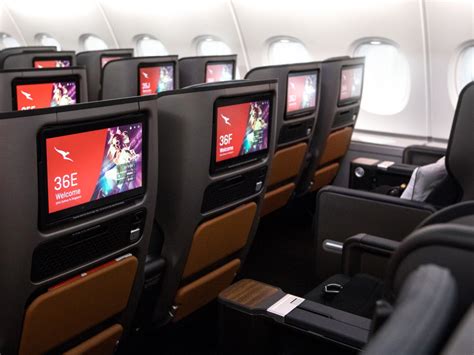
Even rarer is the one-way A380 movement from Singapore back to Melbourne on December 1. This short-lived deployment is the result of a special operational window from November 24 to December 1, when Qantas temporarily added A380 capacity to cater to peak demand between Changi and its Victoria hub. Although brief, this move places the route among the least-served superjumbo segments of the entire month.
What These Rare A380 Flights Reveal About Global Aviation Trends
The world’s least-served A380 routes in December are not random anomalies; they represent a precise interplay of seasonal demand, slot availability, fleet constraints, and long-term network planning. East Asian carriers use these flights as tactical levers—deploying the superjumbo only when passenger loads peak or when operational requirements mandate aircraft rotation. Qantas, in contrast, uses the A380 as a long-range workhorse, activating it selectively when ultra-long-haul markets require maximum capacity.
These unusual A380 routes also underscore a broader truth: even in a world increasingly dominated by fuel-efficient twin-engine jets, the A380 retains a uniquely strategic role. Its immense capacity and unmistakable passenger appeal ensure that, although scarce, these special flights remain vital components of airline networks.
The result is a December map filled with strange contrasts—ultra-short hops, ultra-long hauls, and unexpected one-off deployments—all stitched together by the world’s last remaining superjumbo operators.