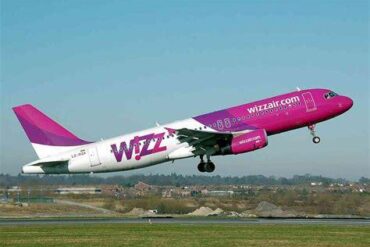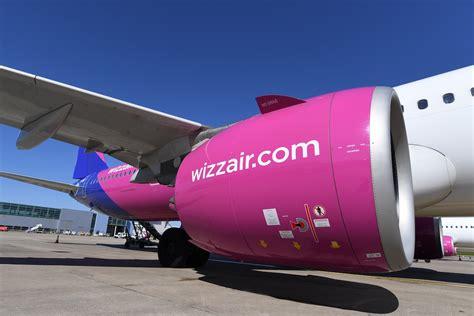
Wizz Air has taken a significant step toward entering the transatlantic aviation market after U.S. regulators approved the airline to operate flights between the United Kingdom and the United States. Yet the authorization comes with a crucial limitation: the airline may only run charter services, not regular scheduled passenger flights.
This regulatory decision, granted by the U.S. Department of Transportation (DOT) in early March 2026, gives Wizz Air UK its first official gateway into the American market. The approval allows the ultra-low-cost carrier to transport organized groups—such as sports teams, corporate delegations, or fan travel groups—rather than individual ticket-buying passengers.
While the announcement signals the airline’s growing long-haul ambitions, the current authorization is more of a strategic test than a full-scale market launch. For now, travelers hoping for cheap Wizz Air tickets to New York or Orlando will need to wait.
US Regulators Grant Wizz Air UK Charter Authorization
The approval follows a regulatory review process under the UK-US Open Skies aviation agreement, which allows airlines from both countries to operate flights across the Atlantic subject to official clearance. Wizz Air UK submitted its application months earlier, and the proposal underwent standard scrutiny, including a window for public comments and objections.
After the evaluation process concluded, the Department of Transportation authorized Wizz Air UK to conduct charter flights linking the United Kingdom and the United States. These operations are limited to specific contracted services rather than open commercial bookings.
This distinction is critical. Charter flights operate differently from standard airline routes. Instead of selling individual seats directly to consumers, entire aircraft are typically booked by organizations or travel coordinators. Airlines then transport the entire group according to a predefined itinerary.
For Wizz Air, this approach provides a controlled entry point into one of the world’s most competitive aviation markets. It allows the carrier to gain experience with long-haul operations, transatlantic logistics, and regulatory compliance without immediately challenging major network airlines on scheduled routes.
FIFA World Cup Travel Drives Early Demand
One of the primary motivations behind Wizz Air’s charter strategy is the massive surge in international travel expected during the FIFA World Cup hosted across North America.
European football supporters often travel in large organized groups when their national teams compete abroad. The United States—set to host numerous matches—will likely see tens of thousands of visiting fans arriving from across Europe.
Charter flights are uniquely suited to this type of demand. Instead of relying on traditional airline schedules, football clubs, national associations, and supporter groups can arrange dedicated flights tailored to match schedules and travel plans.
Yvonne Moynihan, Managing Director of Wizz Air UK, highlighted the opportunity created by the new authorization:
“Receiving approval to operate between the UK and the United States is a huge milestone for our company. It opens the door to incredible opportunities, particularly for European football teams and supporters travelling across the Atlantic this summer. We are ready to deliver exceptional charter experiences and bring fans closer to the action in the United States.”
In practical terms, these services could transport entire squads, media staff, sponsors, and fan delegations on a single aircraft, simplifying logistics for high-profile events.
The Airbus A321XLR Makes Low-Cost Transatlantic Flights Possible
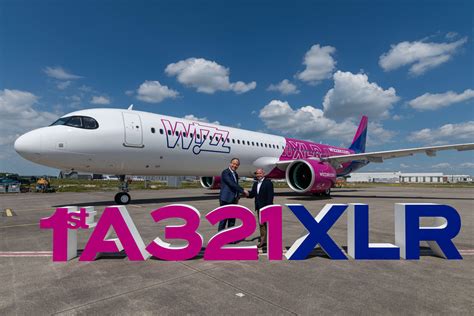
A key piece of Wizz Air’s strategy lies in the aircraft it intends to deploy: the Airbus A321XLR, one of the most anticipated narrowbody jets in modern aviation.
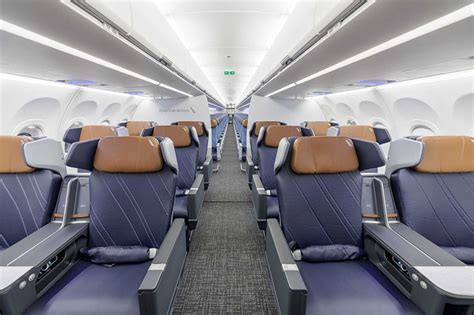
The A321XLR—short for Extra Long Range—is designed specifically to open routes previously considered impractical for single-aisle aircraft. With a maximum range of roughly 4,700 nautical miles, the aircraft can comfortably connect many European cities with destinations across the eastern United States.
For ultra-low-cost carriers like Wizz Air, the aircraft changes the economics of long-haul flying.
Traditional transatlantic services rely on widebody aircraft such as the Boeing 787 Dreamliner or Airbus A350, which carry far more passengers but also involve significantly higher operating costs. The A321XLR, by contrast, allows airlines to operate longer routes with fewer seats and dramatically lower fuel consumption.
This smaller capacity is particularly advantageous for charter services. It means Wizz Air can profitably transport mid-sized travel groups without needing to fill a 300-seat widebody jet.
The aircraft effectively bridges the gap between short-haul low-cost operations and intercontinental travel, giving budget airlines new strategic flexibility.
A Carefully Controlled Entry Into the US Market
Wizz Air’s cautious approach reveals a broader strategic calculation. Rather than immediately launching scheduled flights across the Atlantic—a move that would require major investment and risk—the airline is testing the market through targeted charter operations.
This approach offers several advantages.
First, it allows the airline to evaluate real operational costs on long-haul routes, including fuel consumption, crew scheduling, and turnaround logistics at U.S. airports.
Second, charter contracts provide guaranteed revenue before flights even operate, reducing financial uncertainty compared with selling seats individually.
Third, the airline avoids direct competition with major transatlantic carriers such as British Airways, Virgin Atlantic, United Airlines, and Delta Air Lines, all of which dominate scheduled service between Europe and North America.
By focusing on event-driven travel demand, Wizz Air can carve out a niche market where competition is less intense.
Wizz Air’s Long-Term Transatlantic Ambitions
Founded in 2004, Wizz Air has grown into one of Europe’s largest ultra-low-cost airlines, building its network primarily around short- and medium-haul routes across Central and Eastern Europe.
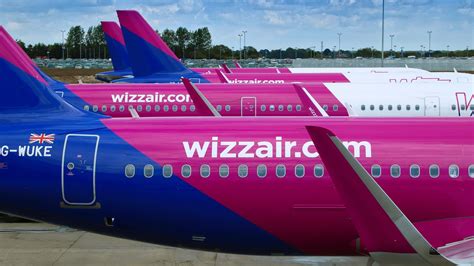
The airline’s success has been built on a high-efficiency operating model, using a single aircraft family and maintaining low fares through strict cost control. Until recently, that model was largely confined to flights within Europe and nearby regions.
However, aircraft like the A321XLR are gradually changing the boundaries of what low-cost airlines can attempt.
Across the industry, several carriers are exploring narrowbody long-haul routes as a way to expand internationally without acquiring expensive widebody fleets. For Wizz Air, charter operations to the United States represent an ideal testing ground.
The airline now has a regulatory foothold in the U.S. market, operational experience flying across the Atlantic, and potential relationships with major event organizers. If these early charters prove profitable, the company could eventually consider applying for approval to operate scheduled commercial routes.
For now, though, the reality remains straightforward: Wizz Air’s newly approved flights are not a consumer travel revolution just yet.
Individual passengers cannot book these services, and the airline has not announced plans for regular ticketed routes between Europe and the United States.
Still, the approval represents something important in aviation strategy: the first step onto a very long runway.