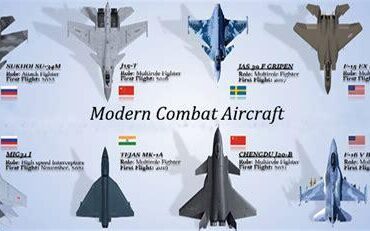
Lockheed Martin has unveiled AI Fight Club, a bold new initiative to test and refine artificial intelligence algorithms for military applications across air, land, sea, and space. This digital combat simulation platform, announced on June 3 by John Clark, Lockheed’s Senior Vice President of Technology and Strategic Innovation, aims to catalyze the adoption of AI-driven warfare solutions by providing a government-grade, high-stakes proving ground for algorithmic development.

A Virtual Battlefield for Next-Gen Warfare
Set against a backdrop of global AI militarization—particularly from nations like China, which are rapidly investing in autonomous weapon systems—Lockheed Martin’s AI Fight Club is a strategic move to maintain the United States’ technological edge in defense.
Rather than merely serving as an internal test bench, the platform opens the door to startups, small tech firms, and non-traditional defense players, providing them with access to a scalable digital testbed calibrated to Department of Defense (DoD) standards. These are companies that might otherwise lack the infrastructure or capital to demonstrate their technologies within the strict frameworks required by military contracts.
As Clark put it, “AI is infiltrating every domain of warfare—from satellite surveillance to autonomous maritime defense. It’s imperative that we build an ecosystem where these technologies can be stress-tested in real-world scenarios without compromising national security.”
Elevating Small Innovators in a Defense-Dominated Field
The traditional defense industry has long been dominated by a handful of giants, making it difficult for smaller, agile startups to break through. Lockheed Martin’s approach with AI Fight Club shifts that paradigm, offering a frictionless point of entry to cutting-edge defense innovation.
Participants will be able to plug into Lockheed’s robust virtual test infrastructure using government-approved simulation models. These scenarios will replicate real-world, high-risk situations: satellite tracking in contested space zones, amphibious landings under AI-assisted threat identification, and AI-based homeland defense coordination under electronic warfare conditions.
Data, Feedback, and IP Protection Inside the Arena
Lockheed Martin emphasizes a core tenet of the Fight Club ethos: what happens inside stays inside. Intellectual property developed or used within the virtual arena remains protected, with Lockheed offering clear assurances that proprietary algorithms will not be exposed or repurposed without consent.
At the same time, Clark notes, researchers will be allowed to publish and present results outside the arena. This dual-layered approach—private testing with public research opportunities—creates a bridge between military-grade development and broader scientific advancement. It also opens doors for collaboration between academia, government, and industry, while ensuring sensitive defense projects are securely sandboxed.
Real-Time Matchups and Government Interaction
Unlike traditional defense contracting processes, which often rely on paperwork and demos, AI Fight Club will feature real-time head-to-head competitions between AI models. Teams will go beyond simulations, placing their algorithms directly against one another in complex, evolving mission scenarios.
Clark confirmed that U.S. government representatives will observe the trials, offer feedback, and possibly influence design modifications. This iterative, in-the-loop approach ensures that outcomes are not only benchmarked but also aligned with military operational needs.
Separating Substance from Hype in AI Defense
Clark was clear on one of the project’s fundamental objectives: distinguishing credible AI solutions from vaporware. In his words, “We’re going to use AI Fight Club as a mechanism to help vet those technologies—to separate glossy marketing brochures from deployable, robust AI.”
The implications of this are twofold. For vendors, it means that marketing buzzwords won’t cut it—only tested, performance-based results will attract interest. For the Department of Defense, it provides a trusted filtration layer that helps validate which emerging technologies are truly mission-ready.
Given that Lockheed Martin channels around 60% of its $70+ billion in annual sales to its suppliers, the AI Fight Club could very well become a launchpad for small players to enter the military tech supply chain. Exceptional performers may receive follow-up contracts, collaborations, or even integration into future Lockheed systems.
Platform Structure and Timeline
Over the next three months, Lockheed Martin will be finalizing the platform’s architecture based on early interest and technical requirements. This structure will define key aspects like:
- The criteria for participation and algorithm submission
- The nature and intensity of simulation scenarios
- Data security protocols and intellectual property boundaries
- Feedback mechanisms from government liaisons
- Evaluation rubrics aligned with national defense priorities
The first official AI Fight Club competitions are scheduled for Q4 2025, giving potential participants just a short runway to prepare their algorithms for combat.
Broader Implications: The New Arms Race in Code
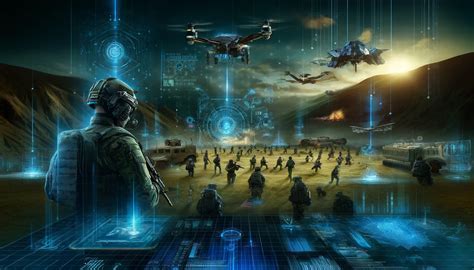
The AI Fight Club underscores a larger trend in modern warfare: the shift from hardware dominance to algorithmic supremacy. Where past arms races were defined by the number of missiles or tanks a country could field, the new race is focused on how well algorithms can adapt, predict, evade, and dominate in contested domains.
Lockheed Martin’s platform doesn’t just serve U.S. interests—it sends a signal to global defense stakeholders: algorithmic agility, not just brute force, will define 21st-century battles.
The potential applications are immense. Imagine an AI capable of orchestrating drone swarms, rerouting under cyberattack, or re-prioritizing surveillance assets in real time. These are the very possibilities that Fight Club seeks to validate—not in sterile labs, but in fluid, high-fidelity virtual combat environments.
Conclusion: Engineering the Future of Conflict
Lockheed Martin’s AI Fight Club may sound like a headline pulled from science fiction, but its goals are rooted in pressing geopolitical realities. The U.S. cannot afford to be reactive in the AI arms race. By launching a flexible, scalable, and inclusive platform, Lockheed is setting the stage for algorithmic warfare to be tested, trusted, and tactically deployed.
With autonomous systems expected to dominate future conflicts—from surveillance constellations in low Earth orbit to AI-assisted battlefield coordination—the demand for verifiable, scalable AI will only grow. AI Fight Club, if successful, could establish a new standard for military AI readiness, opening doors to a future where digital intelligence is as critical as physical firepower.
And in this next-generation battlefield, it won’t just be about who has the fastest jet or the biggest satellite. It will be about whose algorithm learns faster, adapts quicker, and outsmarts the enemy—line by line, code by code.