The United States government has initiated a sweeping transformation in military strategy and defense manufacturing by prioritizing domestic drone production as the cornerstone of future combat readiness. This bold move, officially launched on July 11, 2025, through a directive signed by Defense Secretary Pete Hegseth, eliminates years of policy gridlock that restrained the rapid adoption of American-made unmanned aerial systems (UAS). It also aligns with a broader executive mandate from President Donald J. Trump to reindustrialize the nation’s defense sector and mitigate foreign dependencies.

Strategic Realignment: A Three-Pronged Overhaul of U.S. Drone Warfare
At the heart of this defense overhaul lies a three-pronged strategy that fundamentally redefines how drones are produced, deployed, and utilized in combat scenarios. Secretary Hegseth’s comprehensive roadmap focuses on:
- Boosting Domestic Production: The Pentagon is now expediting the approval and procurement of hundreds of drones built by U.S. firms. This shift eliminates reliance on foreign suppliers, addresses cybersecurity vulnerabilities, and promotes a resilient domestic supply chain capable of supporting mass-scale production.
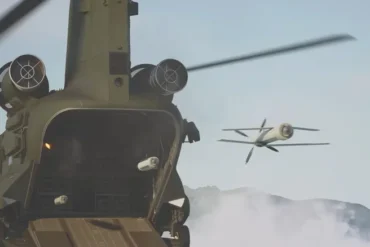
- Accelerated Battlefield Integration: Emphasizing low-cost, AI-driven drones, the DoD will arm frontline units with systems designed for ISR (intelligence, surveillance, reconnaissance), precision targeting, loitering munitions, and swarm tactics. These platforms are optimized for decentralized, scalable operations that can adapt to squad-level missions or division-wide coordination.
- Doctrinal Transformation: Beyond technology, the policy aims to reshape training paradigms across all branches of the military. Starting in 2026, drone-centric warfare simulations—incorporating electronic warfare, swarm engagements, and autonomous coordination—will become core components of joint-force and Army exercises.
Learning from Ukraine: Why the Future is Unmanned
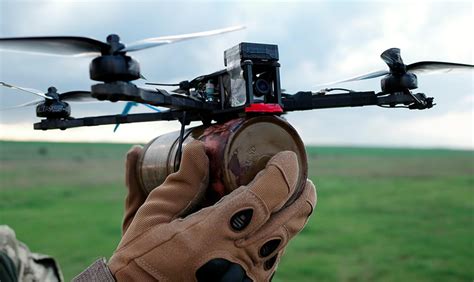
The Pentagon’s doctrinal pivot is deeply influenced by real-world lessons from the Russia-Ukraine conflict, where drones have shifted from auxiliary tools to central combat assets. In Ukraine, both sides have used commercial quadcopters, loitering munitions, and FPV (first-person view) suicide drones to deadly effect—neutralizing tanks, disrupting command nodes, and striking deep behind enemy lines. These cost-effective, tactical innovations have underscored the limitations of conventional, high-cost systems.
In response, the U.S. military now acknowledges that platforms like the MQ-9 Reaper and RQ-7 Shadow, while still operationally significant, are too expensive and vulnerable for future high-intensity conflicts. Instead, the new vision calls for agile, modular, and AI-enabled drones capable of swarming, evading air defenses, and operating autonomously or semi-autonomously across vast, contested battlefields.
Industrial Renaissance: American Companies at the Helm
The policy shift has triggered a surge in innovation across the American defense industrial base. Pioneering firms such as Anduril Industries, AeroVironment, Skydio, Shield AI, and General Atomics are aggressively developing next-gen UAS systems. Their efforts include:
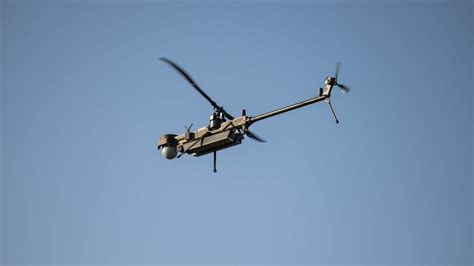
- Future Tactical Unmanned Aircraft System (FTUAS) – An Army-led program to replace aging RQ-7 Shadows with vertical takeoff and landing (VTOL) drones designed for contested airspace.
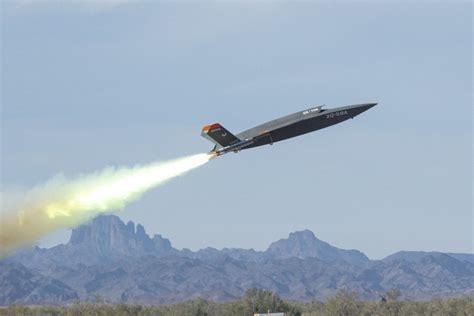
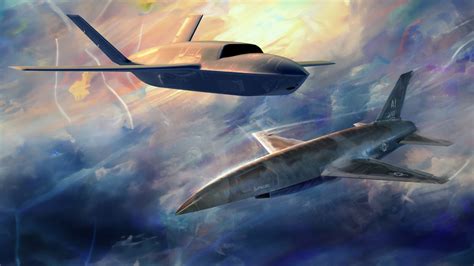
- Collaborative Combat Aircraft (CCA) – A critical component of the Air Force’s NGAD (Next Generation Air Dominance) initiative, enabling AI-powered drones to fly alongside manned fighters.
- OFFSET & AMASS (DARPA) – Swarm-centric research programs focused on autonomous drone coordination for urban combat and massed electronic warfare scenarios.
These programs represent a technological fusion of robotics, machine learning, and miniaturization, ensuring that the next generation of American drones is cheaper, smarter, and more lethal.
Breaking Bureaucracy: Streamlining Procurement and Budgeting
A significant barrier to U.S. drone dominance has historically been regulatory inertia—lengthy approval cycles, fragmented budgeting, and risk-averse procurement policies. Secretary Hegseth’s memorandum slashes through these constraints by redirecting funds from the Department of Government Efficiency to fast-track drone acquisition and development. With a renewed “Buy American” mandate, the Pentagon now has greater autonomy and incentive to fund experimental platforms, prototype rapidly, and scale production without foreign interference.
This realignment also lowers the cost and time barriers for defense contractors, particularly small and mid-sized innovators who previously struggled to break into the defense procurement pipeline. By simplifying the contracting process and offering multibillion-dollar opportunities across the services, the government is unleashing a competitive, innovation-rich ecosystem tailored for battlefield-scale drone warfare.
Training for Tomorrow: Integrating Drones into the Warfighter’s Mindset
According to Hegseth, “We’ll train as we expect to fight.” This means embedding drones not just into supply chains and command doctrines, but also into every layer of combat readiness. Starting with squad-level ISR drills and escalating to full-scale force-on-force exercises, U.S. troops will operate in environments saturated with unmanned platforms.
These training efforts will include:
- Simulated drone-on-drone engagements, allowing soldiers to develop counter-UAS tactics.
- Electronic warfare scenarios, where communication jamming and signal spoofing affect drone performance.
- Swarm coordination drills, where AI-enabled drones work collaboratively to overwhelm and outmaneuver enemy positions.
The U.S. military’s emphasis on such realism is a direct response to the emerging threat spectrum, where state and non-state adversaries are fielding increasingly sophisticated drone arsenals.
The Business of War: A Golden Era for Drone Manufacturers
For the U.S. defense sector, this transformation is more than strategic—it’s economically seismic. By removing bureaucratic bottlenecks and mandating domestic sourcing, the Department of Defense is injecting billions in capital into the American drone industry. The result is a booming marketplace where demand is soaring for:
- Attritable drones: Affordable units that can be deployed in large numbers with the expectation of loss.
- ISR networks: Drones linked in real-time for persistent battlefield intelligence.
- Air-launched effects (ALEs): UAVs deployed from manned platforms to extend sensor and strike range.
- Drone-manned teaming solutions: Integrating uncrewed assets alongside human operators for tactical flexibility.
These systems are not theoretical. Commanders across the Army, Navy, Air Force, and Marine Corps are already revising force structure plans to accommodate drone-centric architectures, preparing to fight in a battlespace shaped not by tanks and jets alone, but by speed, stealth, and swarm logic.
Beyond the Horizon: What Unmanned Dominance Really Means
What’s emerging is not just a modernization of military tools—it is a systemic shift in the art of warfare. The institutionalization of lessons learned from Ukraine, fused with the unique scale and innovation of the American defense sector, creates a future where the U.S. holds decisive unmanned superiority.
This is not an isolated pivot. It’s a global signal.
From deterrence posture in the Indo-Pacific to quick-reaction force capability in Eastern Europe, American forces equipped with autonomous, networked, and attritable drones will be able to project power faster, fight smarter, and absorb losses more sustainably than any peer adversary. Moreover, as U.S. contractors shape international drone norms through foreign military sales and joint development projects, the new doctrine of unmanned dominance will become an exportable model.
In essence, drones are no longer just tools of the future—they are the future. And with this sweeping policy change, the United States is staking its claim as the unquestioned global leader in unmanned warfare for decades to come.