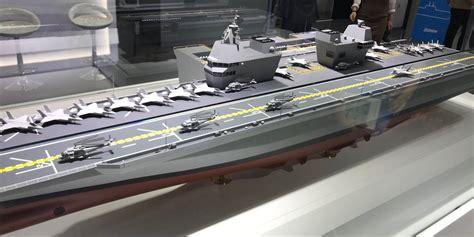
South Korea has made a pivotal shift in its naval strategy by shelving its ambitious light aircraft carrier project in favor of developing a drone-centric command ship, aligning its maritime doctrine with the realities of modern and future combat environments. This landmark decision, announced on May 11, 2025, by the Yonhap News Agency, represents a broader rethinking of naval power projection where unmanned aerial vehicles (UAVs) are prioritized over manned fighter jets.
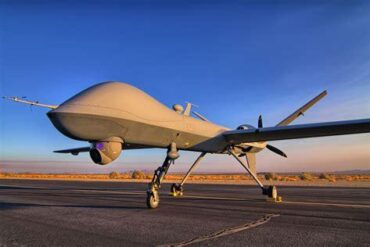
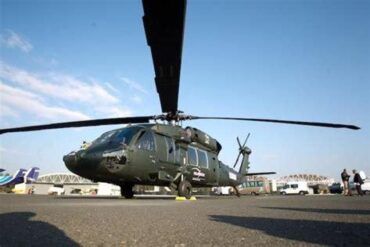
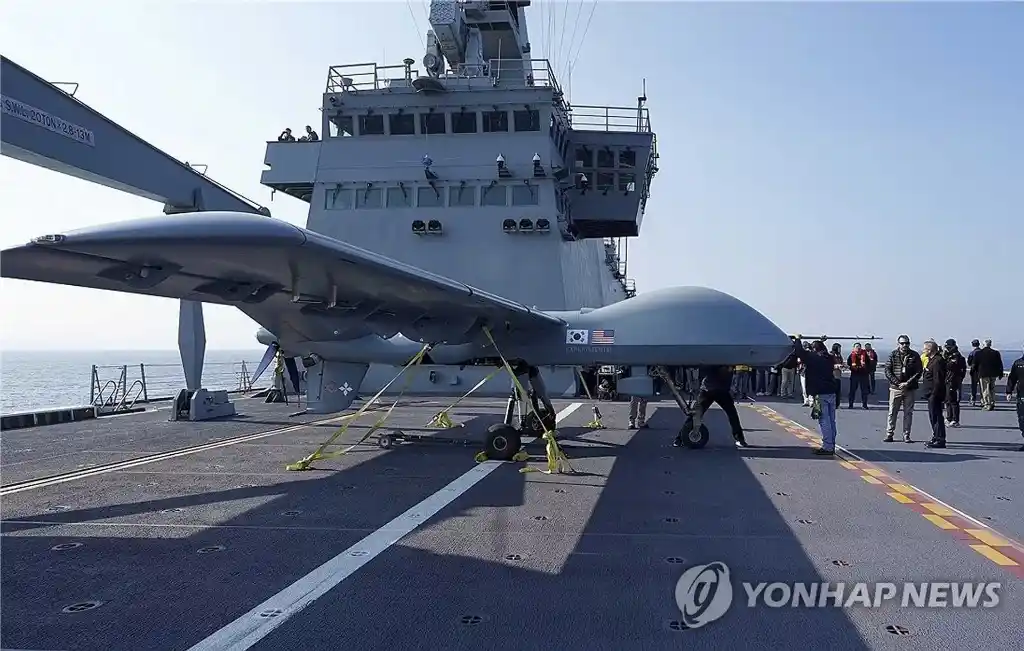
The move effectively halts the Multipurpose Large Transport Ship-II program—once a hallmark of the Moon Jae-in administration—and redirects resources toward a new platform: the Multipurpose Manned and Unmanned Force Command Ship. This new ship will carry a powerful mix of combat drones, reconnaissance UAVs, loitering munitions, and rotary-wing aircraft, optimized for high versatility and survivability in dynamic maritime theaters.
Strategic Recalibration Rooted in Battlefield Realities
The decision comes amid a global reappraisal of how military forces project air power. Recent conflicts, particularly the Russia-Ukraine war, have illustrated the unparalleled value of UAVs in contested spaces. From surveillance and target acquisition to precision strikes and psychological warfare, drones have emerged as force multipliers—especially for nations seeking cost-effective yet potent combat solutions.
South Korean defense planners are no exception. Observing how UAVs have reshaped battlefield outcomes in Eastern Europe, Seoul has concluded that the future of maritime dominance lies in unmanned platforms that are cheaper to field, easier to maintain, and less vulnerable to anti-air threats. The high financial and operational demands of a fleet of F-35B STOVL jets, originally envisioned to operate from the light carrier, were no longer seen as a sustainable path.
The Aircraft Carrier That Might Have Been
Under the now-defunct plan, the Republic of Korea Navy (ROKN) intended to construct a 30,000-ton, 260-meter-long light aircraft carrier capable of embarking up to 20 F-35Bs. The program was to be completed by 2033, representing a massive investment in fifth-generation stealth fighter capability.
The full projected cost of the carrier program stood at nearly 7 trillion won, encompassing 2.5 trillion won for ship construction and 4.5 trillion won earmarked for aircraft acquisition. Each F-35B would have cost between 150 and 200 billion won, excluding maintenance, logistical, and training expenses. Even as the project received initial approval under a formal requirement resolution, it gradually lost traction with the rise of the Yoon Suk-yeol administration, which viewed the carrier’s strategic value with increasing skepticism.
Rise of the Drone Command Ship: Capabilities and Design Philosophy
In contrast, the newly proposed command ship will retain similar size and displacement characteristics but adopt a radically different mission architecture. This vessel will serve as the nerve center for combined manned and unmanned operations, capable of launching:
- Fixed-wing UAVs for surveillance and strike missions
- Rotary-wing combat drones for ship protection and coastal attacks
- Loitering munitions for high-value target elimination
- Amphibious and attack helicopters for limited manned support roles
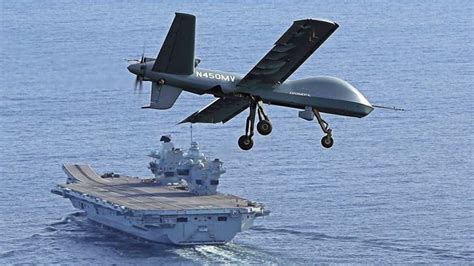
The emphasis is clearly on mission flexibility and rapid deployment, enabling the ship to conduct independent operations in contested zones without the vulnerabilities associated with a carrier air wing.
Financial Efficiency and Strategic Prudence
By transitioning away from a traditional carrier model, South Korea expects to save multiple trillions of won over the life cycle of the program. These savings are not merely in capital expenditures, but in logistics, maintenance, fuel, and pilot training—all of which are dramatically reduced when operating drones instead of manned jets.
Beyond costs, the operational survivability of the command ship is vastly enhanced. In a conflict scenario involving adversaries such as North Korea or regional naval powers like China, a drone-equipped platform is less vulnerable to missile strikes or submarine attacks due to its distributed aerial capability and reduced reliance on human pilots.
Industrial Momentum and Policy Formalization
To ensure that this vision materializes, the South Korean Navy has already tasked HD Hyundai Heavy Industries—one of the country’s foremost naval shipbuilders—with a conceptual design study for the new vessel. The design, to be finalized and submitted to the Joint Chiefs of Staff by the end of May 2025, will outline the ship’s technical architecture, launch systems, and mission integration capabilities.
However, because the carrier project was previously approved under an official requirement decision, the Joint Chiefs must now pass a new resolution to revise those requirements. This bureaucratic process is expected to proceed once South Korea’s new government is fully installed and the defense policy agenda is revalidated.
Aligning with Global Naval Warfare Trends
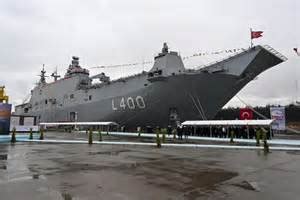
South Korea’s pivot mirrors a broader international military shift. Nations such as the United States, China, Turkey, and the UK are intensifying investment in UAV-based naval platforms. The U.S. Navy, for example, is fielding the MQ-25 Stingray to refuel fighters at sea, while Turkey has deployed drone-capable ships like the TCG Anadolu, a model the ROK Navy is likely observing with interest.
With this move, the Republic of Korea Navy asserts its commitment to next-generation maritime capabilities, aiming to secure technological and operational superiority in the Indo-Pacific theater. It is a pragmatic, forward-looking approach to the realities of modern warfare—one where electronic warfare, AI-enabled targeting, and unmanned swarms may matter more than a fleet of stealth fighters.
A Doctrinal Leap, Not a Retreat
Critics might view the cancellation of a full-fledged aircraft carrier as a step backward in prestige or force projection, but the facts point elsewhere. South Korea’s decision is less about shrinking its ambition and more about modernizing its doctrine. With this new command ship, the ROK Navy is not forfeiting capability—it is redefining it.
Unmanned systems offer longer endurance, higher attrition tolerance, faster manufacturing cycles, and seamless integration with cyber, satellite, and electronic warfare assets. These are not mere support elements; they are the new vanguard of maritime power.
Conclusion: A New Naval Frontier for South Korea
By prioritizing a drone command ship over a conventional carrier, South Korea sends a clear message: it is ready to lead in asymmetric maritime warfare. The strategic environment of the 2030s will not be dominated by who can launch the most jets, but by who can control the data, manage the skies with autonomy, and strike with precision in real time.
The Republic of Korea Navy’s investment in this new platform underscores a paradigm shift in naval power dynamics—one shaped by agility, affordability, and adaptability. As the Indo-Pacific heats up, this evolution may prove decisive in shaping both regional security architectures and the future of naval warfare worldwide.