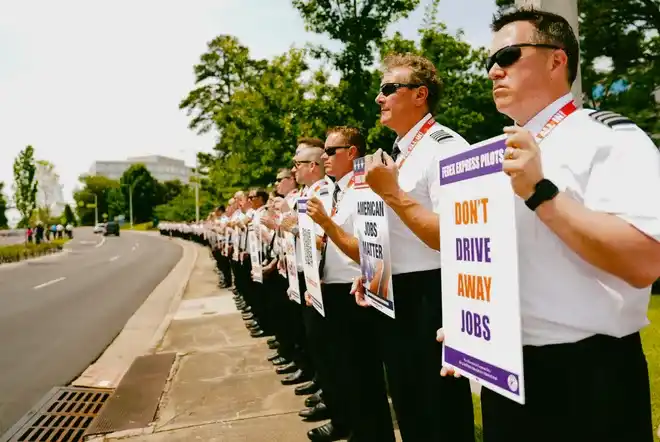
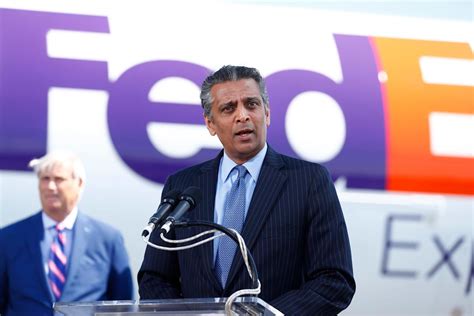
FedEx’s recent financial performance painted a picture of resilience and operational strength. The company reported results that beat Wall Street expectations, triggering a sharp rise in its stock price and drawing praise from investors. Yet beneath this celebration lies a storm brewing within the company’s cockpit. In a decisive move, the FedEx pilot union, representing over 5,000 aviators, cast a vote of no confidence in CEO Rajesh Subramanian during a shareholders’ meeting in Memphis, signaling deep discontent with leadership despite financial success.
FedEx’s Earnings Triumph Overshadowed by Internal Discord
On September 19th, FedEx Corporation (NYSE: FDX) announced quarterly earnings that significantly exceeded analyst projections. The upbeat financial results, driven by efficiency gains and resilient demand in global logistics, sent the company’s stock price soaring. Portfolio managers and Wall Street analysts rushed to commend Subramanian’s leadership, praising his ability to steer the company through inflationary pressures, supply chain disruptions, and geopolitical instability.
But the tone was starkly different within FedEx’s workforce. Pilots, represented by the FedEx Master Executive Council of the Air Line Pilots Association (ALPA), delivered a powerful statement by officially withdrawing their confidence in the CEO. The union, which serves as the collective voice for the thousands of pilots who form the backbone of FedEx’s global air network, accused management of abandoning the company’s people-first values in favor of a more rigid profit-first philosophy.
Why Pilots Rejected Confidence in Leadership
The no-confidence vote stemmed from a growing belief among pilots that the leadership’s policies eroded trust and weakened the company’s culture. Historically, FedEx built its reputation not only on logistics excellence but also on an employee-centric ethos established by founder Fred Smith. According to union leaders, this principle has been sidelined in recent years as management pursued aggressive cost-cutting and restructuring strategies.
Pilots specifically pointed to initiatives they believe undermined workforce stability and reduced transparency. They argued that the company’s current direction threatens morale, operational reliability, and long-term brand reputation. In a statement, union leaders warned that FedEx stands “at a crossroads,” risking both its internal cohesion and external credibility if it fails to restore its people-first commitments.
The call for reform was not limited to compensation disputes. Instead, it reflected a broader desire for management to return to greater accountability, open communication, and employee-focused policies, ensuring that operational efficiency is achieved without compromising workplace dignity and trust.
The Broader Implications for FedEx’s Operations
Although a no-confidence vote does not carry the immediate power to remove a CEO, it sends a clear and public warning signal. For FedEx, this warning could translate into heightened labor tensions, increased operational risks, and potential disruptions in its global delivery network.
Labor unrest in the airline and logistics industry has historically been a powerful disruptor. Pilot dissatisfaction, if left unresolved, could escalate into organized campaigns or even strikes, jeopardizing FedEx’s hallmark promise of on-time global deliveries. With Amazon and UPS aggressively competing for logistics dominance, even small cracks in FedEx’s labor relations could erode its competitive edge.
Customers who depend on FedEx’s time-sensitive and premium services may grow concerned about the stability of its operations, leading them to hedge their shipping volumes with competitors. For FedEx, which relies heavily on large-volume contracts with corporate clients, any shift in customer confidence could have far-reaching financial consequences.
Investor Reactions and Market Performance
Despite the unsettling news of the pilot union’s stance, the market response has been measured but not panicked. On Monday, FedEx shares dipped modestly to around $234, reflecting investor caution. However, the stock quickly regained momentum, buoyed by strong earnings and confidence in the company’s long-term strategy. Over the past five trading sessions, shares climbed approximately 2.4%, suggesting that investors continue to view FedEx as a strong performer in the logistics sector.
Most analysts maintained a “buy” rating, setting price targets with an expected upside of around 14%. Their bullish outlook reflects faith in FedEx’s ability to sustain profitability even amid labor headwinds. Still, analysts also noted that unresolved workforce disputes pose an execution risk that could weigh heavily if tensions escalate further.
The Balancing Act: People vs. Profit
The clash between FedEx pilots and management highlights a recurring theme in corporate America: the tension between shareholder value maximization and workforce well-being. Subramanian’s strategy has clearly delivered financial results, but pilots argue it has come at the cost of weakening the cultural glue that long held the company together.
This balancing act will shape FedEx’s future. If leadership continues prioritizing cost reductions and network reshaping without addressing workforce concerns, it risks long-term operational instability. On the other hand, a recalibrated approach that blends efficiency with renewed employee engagement could help FedEx reinforce its dual advantage of strong financial performance and a motivated workforce.
Possible Paths Forward for FedEx Leadership
The immediate challenge for Subramanian and the FedEx board is to rebuild trust with the pilot workforce. Analysts suggest several avenues through which the company could achieve this:
- Enhanced Compensation Structures: Adjusting pilot pay and benefits to better reflect their role in sustaining operational excellence.
- Transparent Communication: Establishing clearer lines of dialogue between management and pilot leadership to reduce mistrust.
- Cultural Reaffirmation: Re-emphasizing FedEx’s historical people-first ethos, aligning operational decisions with employee values.
- Strategic Concessions: Rolling back or revising policies that have been sources of dissatisfaction among pilots.
Taking these steps could not only diffuse tensions but also signal to shareholders and customers that FedEx is committed to sustainable leadership and workforce harmony.
The Larger Industry Context
FedEx’s internal challenges also reflect broader dynamics within the aviation and logistics industry. Pilots at airlines across the United States have increasingly pressed for better contracts, improved working conditions, and greater recognition of their pivotal role in post-pandemic recovery. The surge in pilot activism has already reshaped labor negotiations at carriers such as Delta, United, and American Airlines.
In this environment, FedEx cannot afford to be perceived as lagging behind competitors in addressing workforce concerns. As rivals move quickly to secure long-term labor peace through favorable agreements, FedEx risks standing out as a company struggling to reconcile its financial performance with employee satisfaction.
What Comes Next for FedEx
The no-confidence vote represents more than a symbolic gesture. It is a strategic inflection point for FedEx. The company faces a choice between doubling down on its current profit-oriented strategy or re-engaging with employees to restore trust. The path chosen will determine whether FedEx strengthens its reputation as both a financial performer and an employer of choice, or whether it risks prolonged disputes that could weaken its market position.
For investors, the coming months will be critical. Market confidence may hold for now, but any signs of labor disruption could quickly reverse positive momentum. Customers, too, will be watching closely to ensure that FedEx maintains its unmatched reliability in the delivery space.
Ultimately, the vote of no confidence underscores that financial results alone cannot guarantee stability in a company as dependent on its workforce as FedEx. The world’s largest cargo airline must now decide whether it will adapt to this internal warning signal or risk turbulence ahead.