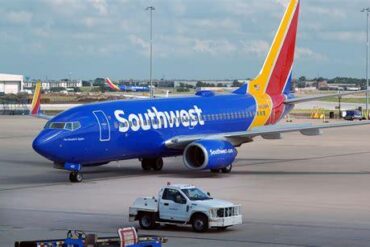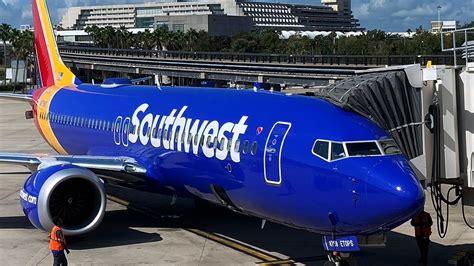
On March 20, 2025, a serious aviation incident narrowly avoided disaster at Orlando International Airport (MCO) when a Southwest Airlines Boeing 737-800, operating as Flight 3278 to Albany, New York, mistakenly began a takeoff roll on a taxiway instead of the runway. The National Transportation Safety Board (NTSB) has now confirmed the root cause: pilot error, specifically the failure of the captain to follow standard procedures and verify the aircraft’s position before initiating takeoff.
Pilot Error Led to Serious Runway Incursion
The incident unfolded as the flight crew taxied towards the designated Runway 17R. However, instead of turning onto the correct runway, the aircraft mistakenly aligned with Taxiway H2, a surface that runs parallel to the active runway. Air traffic controllers quickly intervened, cancelling the takeoff clearance as they noticed the jet was accelerating on the wrong surface.
Thankfully, the crew rejected the takeoff promptly. The plane, carrying 152 passengers and six crew members, returned safely to the gate without injuries or damage. But according to the NTSB, the potential consequences were severe. With spring break travel causing high-density traffic at MCO, the possibility of a catastrophic collision loomed large.
Captain’s Distraction and Misjudgment Cited as Primary Cause
In the official report released by the NTSB and FAA on December 11, the investigation pointed to a critical lapse in situational awareness by the captain. After receiving clearance, the captain mistakenly taxied the aircraft onto the wrong surface. Despite a visible sign marking Runway 17R, he failed to detect that the tarmac was not a runway.
The captain admitted to focusing intently on centering the aircraft and managing pre-takeoff checklist items, which diverted his attention from confirming the physical surface markings. He relied primarily on lighting cues, magnetic heading, and the moving map display—none of which gave adequate indication that he was not aligned with the intended runway.
When investigators asked why he hadn’t verified the painted runway numbers—standard practice for such a maneuver—he claimed they were not visible from the cockpit. The report emphasized that this is not a valid excuse, citing multiple visual cues that should have been referenced.
Deviation From Southwest’s Standard Operating Procedures
A critical factor compounding the mistake was the captain’s failure to adhere to Southwest Airlines’ Standard Operating Procedures (SOPs). The procedures outline multiple safeguards designed to ensure the aircraft is correctly positioned for takeoff:
- Use of heading indicators and navigation displays
- Visual verification of runway signage
- Checking painted runway numbers where visible
- Reference to Jeppesen charts and expected runway lighting patterns
The captain neglected several of these checks. Notably, the painted centerline—yellow on taxiways versus white on runways—and the surface texture difference between a taxiway and a runway went unnoticed.
First Officer’s Role and Cockpit Communication Breakdown
Further complicating the situation was the first officer’s involvement. As the aircraft began turning onto Taxiway H2, the captain asked him to confirm checklist items—a violation of SOPs during such a critical moment. This unnecessary distraction diverted the first officer’s focus, removing a second layer of defense against the error.
The NTSB stated this communication lapse contributed significantly to the runway incursion. First officers are expected to maintain situational awareness and verify that aircraft operations are proceeding safely and correctly. The captain’s directive interfered with that process, reducing the cockpit’s collective oversight.
No Damage, But A Close Call With High Stakes
While no one was injured, and the aircraft returned to the terminal without incident, the gravity of the situation cannot be overstated. A takeoff from a taxiway—especially at a major hub like Orlando—poses immense risk. Taxiways are not built to support takeoff speeds or lift and are often occupied by other aircraft or ground vehicles.
Had the aircraft become airborne or encountered another aircraft, the result could have been catastrophic. The NTSB labeled the event a “serious incident”, a designation reserved for events that nearly lead to accidents involving fatalities or significant aircraft damage.
Implications for Pilot Training and Oversight
This incident underscores the vital importance of procedural compliance and visual confirmation during critical flight phases. Pilots are trained to cross-reference multiple sources of information before takeoff, and this event demonstrates how even seasoned professionals can make dangerous assumptions under pressure.
Southwest Airlines, which has built its reputation on a streamlined, point-to-point model rather than traditional hub-and-spoke systems, may now face scrutiny over training rigor and SOP enforcement. Although the airline has not publicly commented on disciplinary actions, the findings may prompt internal reviews and retraining efforts.
Ultimately, the NTSB’s report acts as a stark reminder to all commercial aviators: vigilance, communication, and strict adherence to standard operating procedures are non-negotiable for flight safety.