The margin between routine aviation operations and catastrophe can be frighteningly thin. That reality was exposed at Brussels Airport when a Scandinavian Airlines aircraft came within seconds of a potentially catastrophic outcome, accelerating to highway speeds on a surface never intended for takeoff. What should have been an uneventful regional hop instead turned into a chilling reminder of how quickly things can go wrong inside even the most tightly regulated transport system.
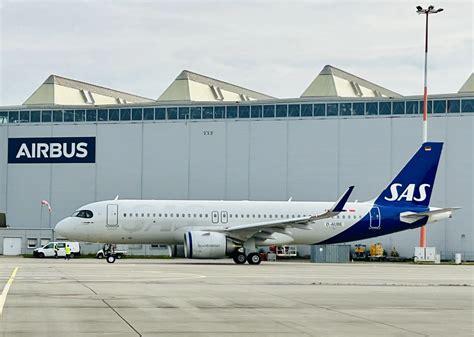
Late on the evening of February 5, 2026, SAS flight SK2590 was preparing to depart Brussels for Copenhagen, a familiar 470-mile sector flown countless times each year. The aircraft, an Airbus A320neo registered as SE-ROM, carried 135 passengers and crew. Delays had already pushed departure more than an hour past schedule, adding time pressure to an operation that normally unfolds with clockwork precision. No one on board could have predicted how sharply the night would deviate from routine.
SAS Flight SK2590 Lines Up on the Wrong Surface
Instead of taxiing fully onto Runway 7R, the pilots turned early and aligned the aircraft with taxiway V1, a parallel strip of pavement designed only for low-speed ground movement. Taxiways are narrower, shorter, and lit differently from runways, yet from the cockpit perspective at night, especially under workload and fatigue, visual cues can degrade faster than most people expect. Once aligned, the crew advanced the throttles.
The aircraft surged forward, accelerating rapidly. Data later confirmed that the A320neo reached 107 knots, equivalent to more than 120 miles per hour, a speed approaching normal rotation for this aircraft type. At that point, the reality became unavoidable: the remaining pavement was disappearing far too quickly.
High Speed, Vanishing Distance, No Easy Options
Taxiway V1 is dramatically shorter than the runway it parallels. As speed increased, so did the impossibility of a safe outcome. The pilots initiated a rejected takeoff, bringing the aircraft into aggressive deceleration. The stop was violent enough that passengers later described being thrown forward as brakes overheated and the aircraft shuddered to a halt. The A320neo came to rest at the very end of the taxiway, partially off the paved surface and edging into grass.
What makes the incident especially unsettling is proximity. The stopping point was alarmingly close to airport fuel storage infrastructure. Had momentum carried the aircraft even slightly farther, the consequences could have escalated from frightening to catastrophic in seconds.
Passengers Evacuate as Investigators Begin to Focus
With brakes overheated and systems stressed, the aircraft was no longer fit to taxi back under its own power. Passengers disembarked via mobile stairs and were transported by bus to the terminal. No injuries were reported, a small mercy given how abruptly the event unfolded. Weather was not a factor; conditions were reported as stable and clear, removing one of the usual explanatory variables.
Scandinavian Airlines quickly issued a statement reaffirming that “safety is our absolute priority” and confirming a joint investigation with local authorities. That inquiry will likely focus on cockpit resource management, airport signage, lighting cues, and the role of human factors under schedule pressure.
Why Taxiway Takeoff Attempts Still Happen
Aviation history contains several cases of aircraft mistakenly beginning takeoff on taxiways, though most are caught early and corrected before speed builds. This event stands out because of how far it progressed. Runways and taxiways are deliberately differentiated through markings, lighting color, and width, making such errors rare. For both pilots to miss those cues long enough to reach triple-digit speeds raises difficult questions.
Modern cockpits are highly automated, but they still rely on human perception at critical moments. Fatigue, expectation bias, and routine can quietly align, convincing experienced professionals that everything looks “right” until physics intervenes. By the time doubt surfaces, distance may already be gone.
A Stark Reminder of Aviation’s Narrow Margins
The SAS A320neo incident did not end in tragedy, but it came disturbingly close. The aircraft faced a grim arithmetic problem: insufficient distance to stop safely, and insufficient distance to fly. That dilemma is every pilot’s nightmare, compressed into a handful of irreversible seconds.
Investigators will eventually publish findings, and procedures may be refined or reinforced. For passengers and industry professionals alike, the episode underscores an uncomfortable truth. Even in a system built on redundancy and precision, safety ultimately depends on constant vigilance, because the line between normal and disastrous can be measured in mere meters of concrete and seconds of realization.