In the aerospace industry, avionics testing forms the foundation upon which modern aircraft safety and performance are built. With the increasing complexity of electronic systems in aviation, ensuring that each component works flawlessly is not optional—it’s imperative. From navigation and communication systems to flight control interfaces, each module must undergo meticulous evaluation to detect flaws and optimize integration before real-world deployment.
As the complexity of avionic systems continues to escalate, the importance of comprehensive testing solutions has never been more paramount. We explore not just the mechanisms, but also the technological advancements and methodologies that shape avionics testing today.

Understanding the Core: Why Avionics Testing Is Crucial
Avionics systems govern a wide range of aircraft functionalities, including instrumentation, communication, navigation, and control. A failure in any of these systems can compromise safety, making proactive, rigorous testing non-negotiable. Testing isn’t merely a step before production—it’s a continuous quality assurance process that begins in the design phase and extends through operational lifecycle support.
We leverage simulation and emulation to replicate real-flight conditions. These methodologies reveal how components behave under extreme pressure, temperature fluctuations, and unexpected signal loss scenarios. With tools like Sital Technology’s ARINC-429 interface cards, we can simulate diverse system behaviors with high fidelity, minimizing risk and ensuring performance under duress.
Simulation: The Heart of Predictive Safety
Simulation testing is a cornerstone of avionics validation. It allows engineers to create controlled, replicable scenarios ranging from electromagnetic interference to system overloads, ensuring the system reacts predictably every time. By enabling fail-safe assessments, simulation reduces both the cost and risk associated with real-flight testing.
In high-fidelity environments, simulated tests can mimic:
- High-altitude low-temperature effects
- Rapid descent communication failures
- GPS spoofing and signal jamming
These insights not only guide debugging efforts but also inform future-proof system designs.
Types of Avionics Test Systems and Their Functions
To ensure robustness across varying conditions, we deploy a suite of diverse avionics test systems:
- Environmental Stress Testing – Verifies system resilience against temperature, pressure, and humidity changes.
- Signal Integrity Testing – Ensures error-free communication between components under fluctuating electromagnetic environments.
- Functional Testing – Evaluates whether systems perform their designated tasks under various load conditions.
Each of these test categories serves a unique role in the design-validation pipeline, catching issues that could otherwise propagate into catastrophic system failures.
Modular Testing: Isolating for Precision
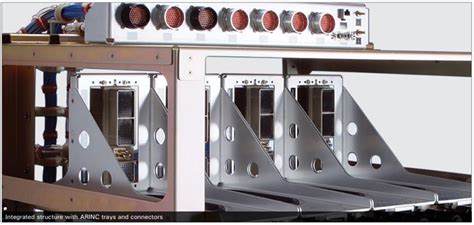
In complex environments, modular testing offers a decisive advantage. By breaking down avionics systems into independent functional units, we can scrutinize each part with surgical precision. This method enhances error detection, streamlines system validation, and ensures more reliable integration.
A modular approach enables:
- Parallel testing of subsystems
- Swift isolation of faults
- Easier upgrades or replacements
It also paves the way for incremental certification, whereby individual modules can be certified independently before full-system certification.
Avionics Testing Procedures: A Layered Approach
Our testing procedures follow a layered verification model:
- Component-level testing – Validation against physical specs and signal tolerances.
- Subsystem testing – Analysis of data transmission and command response behavior.
- System integration testing – Ensures inter-module communication and global system performance under operational loads.
Advanced testing tools simulate real aircraft I/O behaviors to confirm system compatibility, latency performance, and data coherence. These procedures serve as the final gatekeeper before an avionic system enters service.
Regulatory Compliance: Non-Negotiable Standards
Compliance with aviation authorities such as FAA, EASA, and RTCA DO-178/DO-254 standards is integral to the testing process. These standards define not only what needs to be tested but also how the testing should be documented, traced, and maintained.
Key regulatory practices include:
- Documented test plans and reports
- Traceability matrices for requirements coverage
- Verification of test tool qualification
Failure to meet these standards can result in certification delays, financial penalties, or disqualification from service.
Modern Testing Challenges and Innovative Solutions
Today’s avionic systems integrate machine learning algorithms, real-time operating systems, and cybersecurity protocols, complicating traditional testing workflows. Ground-based tests cannot always simulate in-flight turbulence, sudden altitude shifts, or multi-sensor data fusion scenarios.
Innovative responses include:
- AI-driven diagnostics to predict component failure based on historical performance data
- Digital twins for replicating entire aircraft systems in a virtual space
- Hardware-in-the-loop (HIL) testing, enabling real-time feedback loops during software simulation
Sital Technology’s customizable IP cores for MIL-STD-1553 and EBR-1553 have become industry benchmarks in meeting these evolving needs.
Real-World Applications Beyond Aviation
Avionics testing frameworks are now critical in automotive and space industries, where reliability is paramount. In autonomous vehicles, real-time sensor fusion systems undergo similar stress tests as those in aircraft.
In space exploration, avionics must endure:
- Radiation exposure
- Zero-gravity mechanical stress
- Extended communication delays
Test systems designed for aerospace applications have proven invaluable in meeting these challenges, demonstrating their cross-industry versatility.
Enhancing Aircraft Performance Through Testing
Effective testing not only guarantees reliability but actively contributes to performance optimization. By fine-tuning firmware and hardware interactions, we reduce system latencies, improve fuel efficiency, and enhance user interfaces for pilots.
Feedback loops from testing phases help manufacturers:
- Optimize navigation accuracy
- Improve communication fidelity
- Minimize electromagnetic interference (EMI)
Every enhancement leads to tangible gains in aircraft reliability, passenger comfort, and mission readiness.
Safety Protocols in Testing Environments
Safety is not assumed—it is engineered and enforced. Avionics testing incorporates redundant systems to ensure fault tolerance. Rigorous protocols govern equipment handling, data security, and emergency failure simulation.
These protocols include:
- Regular calibration of test instruments
- Controlled simulation of system faults
- Immediate rollback mechanisms to prevent cascading failures
By embedding these standards in every layer of testing, we not only protect test personnel and assets but also uphold the reputation of aviation manufacturers worldwide.
Equip Your Arsenal: Choosing the Right Avionics Testing Equipment
We advocate for test equipment tailored to specific protocol needs, such as ARINC-429, MIL-STD-1553, or CAN Aerospace. Investing in modular, scalable test platforms ensures adaptability to future needs and simplifies compliance with international test standards.
Our test ecosystem includes:
- Bus analyzers with protocol decoding
- Simulation cards with fail-safe injection
- High-speed data recorders for waveform analysis
By aligning test systems with project requirements, engineers can validate systems with higher confidence, faster timelines, and lower costs.

Conclusion: Future-Proofing with Precision Testing
In an era where the margin for error is non-existent, avionics testing is no longer a checkpoint but a continuous innovation enabler. From simulation environments to full-system integration, each layer of testing builds toward one unified goal: absolute system integrity.
Through tools like those developed by Sital Technology, and frameworks aligned with global compliance standards, we are poised to not only meet but surpass today’s aviation safety benchmarks. Investing in cutting-edge testing practices today lays the groundwork for the next generation of safe, intelligent aircraft systems.