Non-destructive testing (NDT) equipment forms the backbone of modern industrial integrity management. By enabling precise evaluations of materials, components, and systems without compromising their usability, NDT technology drives safety, efficiency, and cost-effectiveness across critical industries. From oil refineries to aerospace facilities, NDT tools are the silent guardians ensuring structural integrity and operational performance.
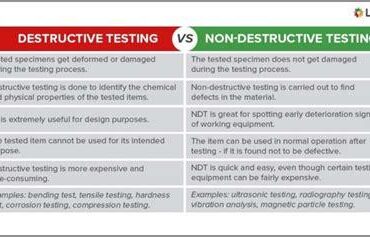
The breadth and versatility of NDT equipment stem from its unique ability to assess without altering—a stark contrast to destructive testing, which inevitably damages the sample. As industries demand greater reliability from assets while reducing downtime and risk, the role of advanced NDT solutions becomes indispensable.
Understanding the Principles of Non-Destructive Testing
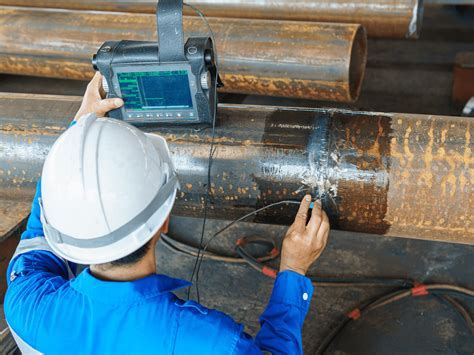
Non-destructive testing refers to an array of techniques used to analyze the properties or integrity of a material, structure, or component without permanently modifying or damaging it. These methods range from straightforward visual inspections using the naked eye or borescopes, to sophisticated technologies like ultrasonic pulse-echo systems, gamma radiography, and eddy current flaw detection.
The central advantages of NDT include:
- Asset preservation: Testing methods do not impair or degrade the material.
- Personnel safety: Most NDT procedures are inherently safe, excluding radiographic applications requiring strict safety controls.
- High efficiency: Advanced NDT devices allow for rapid scanning, especially over large surfaces.
- Exceptional accuracy: With proper calibration and technique, NDT results are reliable and repeatable.
As Jason Acerbi aptly noted, “NDT is the life blood of a well-run facility.” In this context, investing in cutting-edge NDT tools isn’t optional—it’s essential to operational longevity.
Where NDT Equipment Proves Vital
Non-destructive testing systems are standardized across a range of industrial sectors:
- Oil & Gas: Pressure vessels, pipelines, and flare stacks.
- Power Generation: Boilers, turbines, heat exchangers.
- Chemical Plants: Corrosion under insulation (CUI) assessments.
- Mining: Conveyor systems, structural welds, heavy-duty machinery.
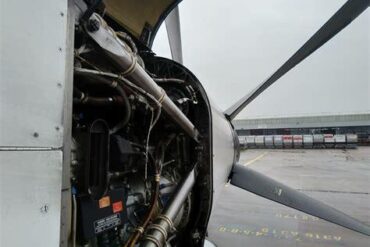
- Aerospace: Aircraft fuselage, composite wings, turbine blades.
- Automotive: Suspension components, engine blocks.
- Maritime: Hull integrity, propeller shafts, ballast tanks.
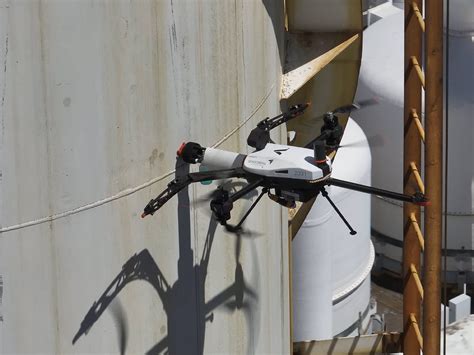
In each setting, inspectors often face inaccessible or hazardous areas, prompting the adoption of drones, robotics, and rope access solutions to deploy NDT gear effectively.
Core Categories of Non-Destructive Testing Methods
Below are the eight most widely used types of NDT, each requiring specific equipment and operational expertise:
1. Visual Testing (VT)
The simplest yet foundational form of NDT, visual inspection relies on:
- Human eyesight
- High-lumen flashlights
- Robotic video tools (RVI)
- Drone-mounted HD cameras
Advanced systems offer zoom, image capture, and flaw annotation, enabling inspections in confined or high-risk spaces.
2. Ultrasonic Testing (UT)
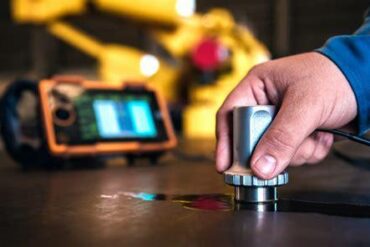
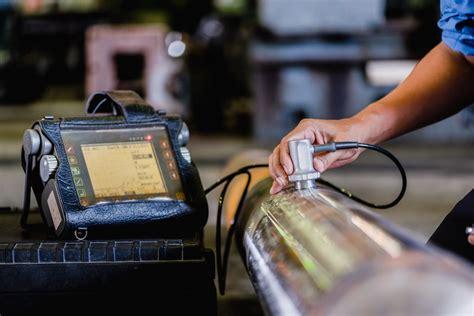
Ultrasonic techniques employ high-frequency sound waves to penetrate materials and reveal subsurface discontinuities. Major subtypes include:
- Pulse-Echo UT
- Phased Array Ultrasonics (PAUT)
- Automated UT (AUT)
- Time-of-Flight Diffraction (TOFD)
Ultrasonic flaw detectors feature A-scan, B-scan, and C-scan outputs, enhancing weld inspections, corrosion mapping, and thickness measurements.
3. Radiographic Testing (RT)
Utilizing gamma rays or X-rays, radiographic systems capture internal images of dense materials on film or digital sensors. It’s a mainstay for detecting:
- Porosity
- Inclusions
- Cracks in castings and welds
Operators must adhere to strict radiation safety protocols, often involving lead shielding, dosimeters, and controlled areas.
4. Eddy Current Testing (ET)
ET generates circulating electrical currents within conductive materials using an alternating magnetic field. Variations indicate flaws or property changes, useful for:
- Surface crack detection
- Coating thickness measurements
- Heat treatment verification
Portable eddy current probes are favored in aerospace and maintenance applications.
5. Magnetic Particle Inspection (MPI)
In ferromagnetic materials, MPI reveals surface and near-surface defects by applying magnetic fields and iron oxide particles. Flaws disrupt the field, making particles cluster visibly.
Common tools include:
- Yokes
- Prods
- Coil-based benches with wet fluorescent particles
6. Acoustic Emission Testing (AE)
AE systems detect stress-induced sound waves emanating from defect sources like crack growth or corrosion. These sensors are deployed in real-time monitoring of:
- Pressure vessels
- Pipelines
- Storage tanks
Data from AE is event-driven, identifying when structural changes occur under load.
7. Dye Penetrant Testing (PT)
PT involves applying a dye solution on a non-porous surface, allowing it to seep into cracks. Excess is wiped off and a developer draws the dye from flaws, revealing them visibly or under UV light.
It’s low-cost, portable, and especially useful for:
- Surface fatigue cracks
- Weld inspection
- Leak trails
8. Leak Testing (LT)
Leak detection systems use:
- Pressure differentials
- Tracer gases
- Ultrasonic detectors
- Bubble tests
They serve in both closed systems (valves, tanks) and sealed components (heat exchangers, pipelines).
Welding and NDT: Detecting Invisible Threats
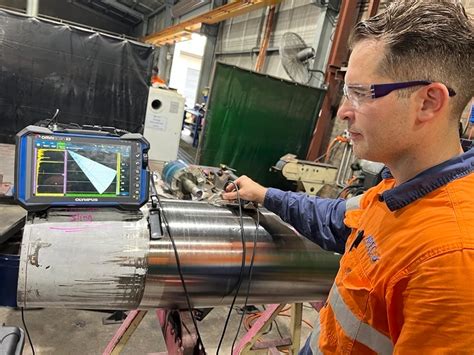
Welding represents a high-risk zone for structural integrity, demanding multiple NDT approaches. Issues like slag inclusions, crater cracks, porosity, and fusion faults are targeted using:
- Ultrasonic Testing (UT)
- Magnetic Particle (MT)
- Radiographic Testing (RT)
- Dye Penetrant (PT)
- Visual Inspection (VT)
Phased-array ultrasonic testing (PAUT) has emerged as a powerful weld testing solution due to its ability to visualize complex geometries and analyze deep flaws.
In contrast, destructive weld tests—such as bend tests and macro-etch examinations—are used for qualification but not routine checks, as they consume the specimen.
The Role of Drones in Modern NDT
Drones are revolutionizing NDT by transforming how we access and analyze complex structures. With onboard sensors and high-resolution optics, drones offer:
- Reduced exposure risks for inspectors (heights, confined spaces)
- Minimized downtime through rapid deployment
- Lower costs compared to scaffolding or rope teams
- Enhanced coverage with thermal and ultrasonic payloads
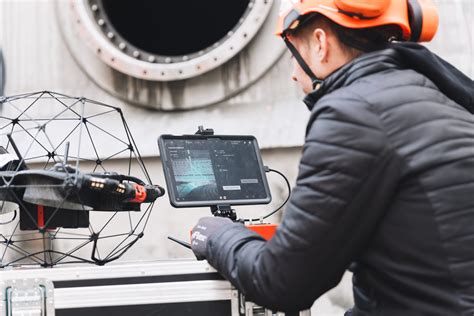
Emerging drone platforms like Flyability’s Elios series and software suites such as Inspector 5.0 provide full 3D defect modeling and AI-enhanced anomaly detection.
Global Standards and Compliance in NDT
To ensure reliability and regulatory alignment, NDT equipment and practices adhere to international codes, including:
- API (American Petroleum Institute)
- ASME (American Society of Mechanical Engineers)
- ASTM International
- ASNT (American Society for Nondestructive Testing)
- COFREND (France)
- CGSB and CSA Group (Canada)
These bodies specify equipment calibration, certification requirements, and inspection intervals, safeguarding high-risk assets in sectors from nuclear energy to deep-sea exploration.
Looking Ahead: The Future of NDT Equipment
Innovation in non-destructive testing equipment is rapidly expanding through:
- Sensor fusion: Integrating ultrasonic, radiographic, and magnetic sensors into compact devices.
- AI analytics: Machine learning for defect classification, corrosion prediction, and pattern recognition.
- Cloud platforms: Real-time collaboration and data visualization across global teams.
- Augmented reality (AR): Overlaying flaw data onto live inspections for enhanced operator awareness.
As technology evolves, the ability to perform more frequent, detailed, and safe assessments will only grow—ensuring assets stay productive and people stay protected.
Non-destructive testing equipment isn’t merely a toolkit—it’s a frontline defense. Whether ensuring weld quality on a gas pipeline or tracking fatigue in an airplane wing, these tools empower industries to operate smarter, safer, and longer.