Non-destructive testing (NDT inspection) plays a pivotal role in ensuring the structural integrity and quality assurance of materials, components, and systems across a vast array of industries. By examining objects without compromising their future usability, NDT techniques allow us to detect internal or surface-level flaws, ensuring safety, compliance, and performance standards without causing damage.
As global industries evolve and the cost of product failures becomes increasingly high, non-destructive testing has emerged as the preferred approach to quality control. Unlike destructive testing (DT), where parts are stressed to failure, NDT ensures tested parts can remain in service, offering significant economic and operational advantages.
What is Non-Destructive Testing (NDT)?
Non-destructive testing (NDT) refers to a series of analytical techniques used to evaluate the condition and characteristics of materials or components without altering or destroying them. Sometimes referred to as non-destructive evaluation (NDE) or non-destructive examination (NDI), these processes are central to maintaining high safety and quality standards in modern manufacturing and engineering environments.
The objective of NDT is to detect defects, irregularities, or material inconsistencies that could lead to failures or compromise structural integrity. By preserving the usability of a product, NDT offers an efficient and cost-effective method for preventive maintenance, product certification, and regulatory compliance.
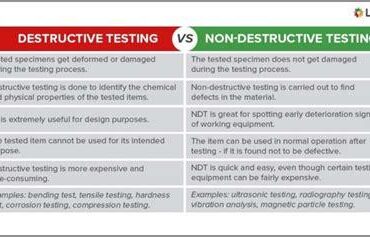
Destructive Testing vs. Non-Destructive Testing
To appreciate the advantages of NDT, it’s crucial to understand its contrast with destructive testing (DT). While DT involves permanently deforming or fracturing a sample to understand its mechanical properties (like tensile strength, fatigue resistance, or ductility), it renders the sample unusable.
In contrast, NDT techniques utilize physics, signal processing, and imaging technologies to evaluate structural conditions without physical compromise. This fundamental difference makes NDT ideal for high-value or limited-availability components where loss during testing would be economically or operationally unacceptable.
Key NDT Inspection Methods Explained
The field of NDT comprises several core methods, each suited to different types of materials, defect types, and industrial needs. Below is a detailed explanation of the six most commonly used NDT techniques:
Eddy Current Testing (ET)
This electromagnetic technique introduces an alternating current through a coil to generate magnetic fields in a conductive material. The interaction of the magnetic fields with the material produces eddy currents, whose behavior reveals surface or near-surface flaws, such as cracks or corrosion. ET is widely used in aerospace and electronics manufacturing.

Visual Testing (VT)
The most basic but essential form of NDT, visual inspection involves examining a component with or without aids (such as magnifying lenses, mirrors, or borescopes) to detect surface anomalies. It is typically the first step in any inspection process and often combined with other NDT techniques.
Liquid Penetrant Testing (PT)
Also known as dye penetrant testing, PT applies a visible or fluorescent dye to the material’s surface. The dye penetrates surface-breaking flaws via capillary action. After removing excess dye and applying a developer, the defect becomes clearly visible. PT is effective for detecting cracks, porosity, and laps in non-porous materials.
Magnetic Particle Testing (MT)
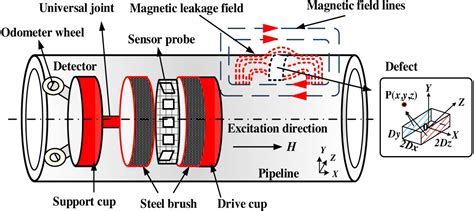
MT is used for ferromagnetic materials. A magnetic field is applied to the material, and iron particles are sprinkled over the surface. Flaws create flux leakage fields, which cause the particles to accumulate in specific patterns, revealing discontinuities just below or on the surface.
Radiographic Testing (RT)
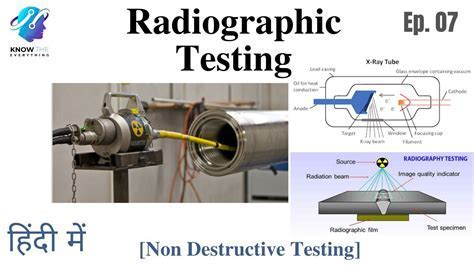
In RT, X-rays or gamma rays are used to penetrate the material and expose an imaging film placed behind it. Internal flaws such as voids, inclusions, or cracks can be visualized based on the radiation absorption profile. RT is a preferred method in pipeline, pressure vessel, and weld inspection.
Ultrasonic Testing (UT)
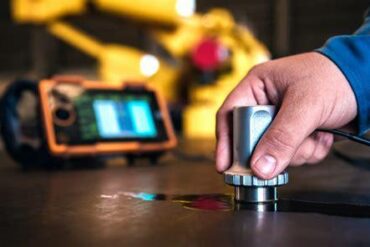
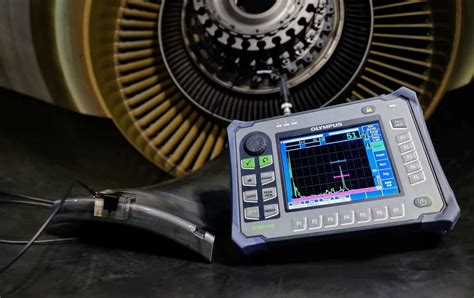
UT uses high-frequency sound waves emitted via a transducer that travel through the material. When these waves hit an internal discontinuity, they reflect back and are captured as electrical signals, visualized on a display. UT is known for its accuracy in locating flaws deep within the material, especially metals.
Industries That Rely on NDT Inspection
NDT is foundational across numerous sectors where reliability, safety, and performance are non-negotiable. The following industries are primary users of NDT:
- Aerospace: Inspection of aircraft components, fuselage, turbine blades, and welds.
- Automotive: Checking engine blocks, frames, suspensions, and safety-critical parts.
- Oil & Gas: Evaluating pipelines, drilling equipment, and pressure vessels for fatigue and corrosion.
- Power Generation: Monitoring of nuclear reactor components, wind turbine blades, and electrical systems.
- Manufacturing: Ensuring product quality in mass production lines.
- Medical Devices: Verifying integrity of implantable devices and surgical tools.

Examples of NDT in Real-World Applications
NDT inspection is not an abstract concept—it directly impacts public safety and infrastructure. Here are real-world applications that illustrate its relevance:
- Weld inspection on bridges and high-rise buildings to ensure structural integrity.
- Pipeline evaluation in the petrochemical sector to prevent environmental disasters.
- Aircraft maintenance to detect fatigue cracks in flight-critical components.
- Medical device certification to ensure biocompatibility and durability under stress.
- Power grid component inspection, ensuring transformers and turbines meet operational standards.
Training and Certification for NDT Technicians
Entering the NDT field requires formal education, hands-on training, and certification. Institutions such as the Universal Technical Institute (UTI) offer comprehensive programs where students gain exposure to core techniques like ET, VT, MT, RT, PT, and UT.
Certification typically follows guidelines set by the American Society for Nondestructive Testing (ASNT). Levels I, II, and III correspond to increasing responsibility and expertise, with Level III professionals qualified to write procedures and supervise programs.
Career Outlook and Salary Expectations in NDT
According to the U.S. Bureau of Labor Statistics (BLS), demand for NDT technicians is expected to rise steadily, with total employment projected to exceed 72,000 by 2033. The median salary as of May 2023 was $73,500, with variations based on location, industry, and experience.
NDT professionals typically begin as entry-level technicians and progress into specialized roles such as:
- Industrial Radiographers
- NDT/NDE Technician Level II or III
- Quality Control (QC) Inspectors
- Aerospace and Pipeline Integrity Specialists
With the growing emphasis on infrastructure maintenance and regulatory compliance, skilled NDT technicians will remain in high demand.
Conclusion: The Future of NDT is Bright
Non-destructive testing stands at the crossroads of engineering innovation, safety assurance, and industrial efficiency. As global infrastructure ages and industries adopt smarter maintenance strategies, the reliance on NDT will only grow. With diverse applications, rewarding career paths, and the power to prevent catastrophic failures, NDT inspection is more than a technical skill—it’s a mission-critical discipline in modern industry.