Nondestructive Testing (NDT) inspectors stand at the intersection of safety, science, and industrial innovation. NDT inspection is not simply a job; it is a commitment to ensuring the reliability of the world’s infrastructure. From towering bridges to jet engine components, these professionals use sophisticated methods to examine materials and structures—without causing damage—ensuring that everything functions as intended while preventing catastrophic failures.
The term “NDT inspector” typically refers to a professional who has advanced beyond entry-level duties and possesses Level II or higher certifications, allowing them to independently conduct tests, interpret data, and generate critical reports. This role is synonymous with the title “NDT technician” in many industries, though often with a stronger emphasis on inspection responsibilities and analytical reporting.
NDT inspectors work across diverse environments, often in settings that demand both technical acuity and physical adaptability. These range from sterile quality assurance labs to the harsh conditions of offshore oil rigs. The position appeals to individuals who seek a combination of technical challenge and freedom from routine office settings.
The Multifaceted Duties of an NDT Inspector
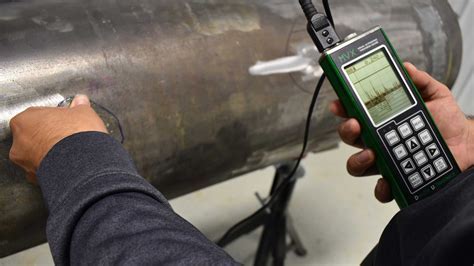
The core responsibility of an NDT inspector is to perform tests that identify flaws, cracks, inclusions, and other imperfections in materials or welds that may compromise safety or performance. These inspections are performed using methods such as:
- Ultrasonic Testing (UT)
- Radiographic Testing (RT)
- Magnetic Particle Testing (MT)
- Eddy Current Testing (ET)
- Liquid Penetrant Testing (PT)
Each of these techniques requires rigorous training, exacting attention to detail, and certification to recognized industry standards such as those issued by the American Society for Nondestructive Testing (ASNT).
NDT inspectors not only conduct testing procedures but are also expected to analyze results, produce detailed reports, and make actionable recommendations. Their findings can influence multi-million-dollar decisions on repair, shutdowns, or approvals for critical infrastructure projects.
Certification: The Gateway to Professional Practice
A defining characteristic of a qualified NDT inspector is certification, often obtained through structured programs that validate both theoretical knowledge and hands-on capability. The most recognized certifications include:
- ASNT NDT Level II – Focuses on theoretical and general application knowledge, alongside specific testing method proficiency.
- ASNT 9712 Level II – Involves both theoretical exams and practical testing to verify expertise in multiple NDT methods.
- ISQ Oil & Gas – Specializes in practical skills for the petrochemical industry, testing performance under realistic conditions.
Level II certified inspectors are considered mid-level professionals who have the authority to independently perform inspections, evaluate results, and document findings. Progression to Level III certification enables deeper specialization and often leads to leadership roles within inspection teams.
Where Do NDT Inspectors Work?
The scope of industries employing NDT inspectors is as wide as the field itself. From aerospace and automotive to energy, construction, and defense, these specialists ensure safety in systems where failure is not an option.
Their workplace could be:
- A quality control lab monitoring manufacturing consistency
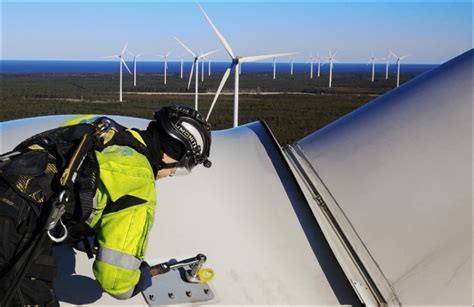
- A wind turbine nacelle, hundreds of feet above the ground
- The underside of a suspension bridge, suspended in a harness
- A space launch facility, ensuring the integrity of rocket components
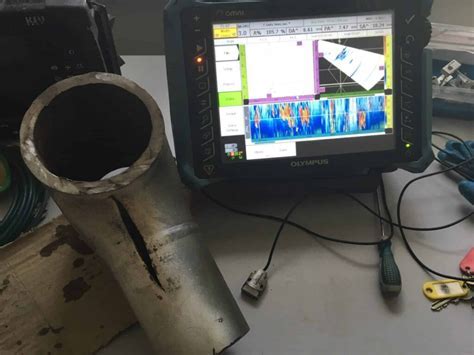
This versatility not only makes the role adventurous and dynamic but also provides a degree of job stability uncommon in many technician-level roles.
Earning Potential and Career Growth
According to data from the ASNT Foundation Compensation Survey, the average hourly wage for Level II NDT technicians is approximately $38/hr, translating to an annual range of $50,000 to $109,000 depending on industry, certification breadth, and overtime work. This surpasses many other technician-level roles due to the specialized knowledge required and the direct impact these professionals have on public and operational safety.
Career growth is robust, with defined pathways such as:
- NDT Manager – Oversees inspection programs, ensures compliance, and implements improvements.
- NDT Instructor – Educates and certifies the next generation of inspectors through theoretical and hands-on training.
- NDT Consultant – Operates independently, offering expert analysis and advising clients on structural integrity and risk mitigation.
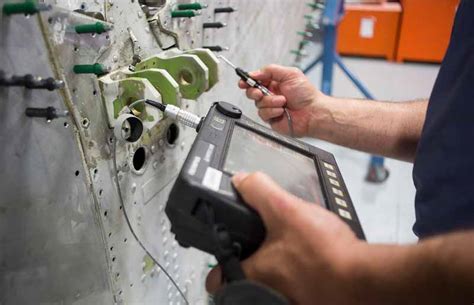
As inspectors accumulate experience, their expertise becomes both highly portable and globally recognized, opening doors for international assignments and cross-industry mobility.
A Career for Problem-Solvers and Precision Thinkers
An NDT inspector’s work is not passive. It demands deductive reasoning, an ability to interpret subtle data patterns, and constant engagement with new technologies. The profession appeals to those who thrive on technical problem-solving and who derive satisfaction from work that carries real-world consequences.
Imagine being responsible for signing off the welds on a subsea pipeline that will carry millions of barrels of crude oil. Or evaluating the fatigue level in the aluminum skin of a passenger aircraft. Each task, though invisible to the public, is a link in a global chain of safety upheld by meticulous professionals.
Training, Tools, and the Role of Technology
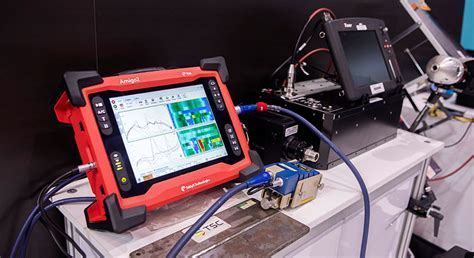
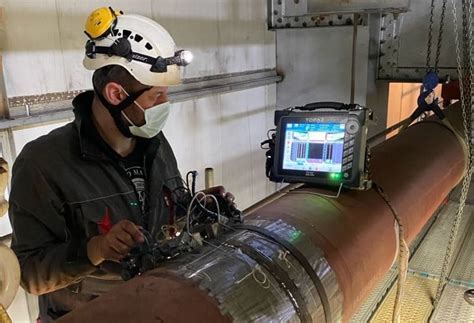
Modern NDT inspectors rely heavily on advanced instruments and software. They use high-frequency transducers, digital radiographic systems, and AI-assisted defect recognition platforms to make precise assessments. Training programs reflect this shift, incorporating virtual simulators, real-time data analysis, and augmented reality (AR) overlays.
Inspectors are increasingly expected to interface with data systems, apply statistical process controls, and understand the interplay between material science and structural engineering. This deep knowledge, when combined with hands-on experience, defines a true professional in the field.
Community, Ethics, and Responsibility
As members of professional societies like ASNT, inspectors are held to high ethical standards. They must report flaws without bias, maintain independence from commercial pressures, and always place safety over convenience. In many cases, they act as the last line of defense before a part enters service—making integrity non-negotiable.
Moreover, being part of this professional community provides ongoing education, resources, and support networks that help technicians stay at the cutting edge of NDT science and technology.
Conclusion: The Unseen Guardians of Safety
The work of an NDT inspector often goes unnoticed, but its impact is profound. These professionals protect lives, equipment, and investments by ensuring that materials and structures meet stringent standards. Their tools may be noninvasive, but their insights are deeply consequential.
In choosing a career as an NDT inspector, individuals join a legacy of precision, trust, and global responsibility. It is a profession for those who believe that integrity matters, and that safety should never be left to chance.