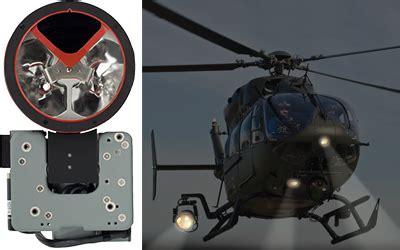
Helicopter operations often unfold in the most unforgiving environments — from pitch-black coastlines to dense urban landscapes, treacherous mountains, and vast open waters. In these scenarios, helicopter searchlights are not simply useful; they are vital. These advanced lighting systems extend the eyes of the crew, enabling precision, safety, and mission success when every second counts. A well-engineered searchlight turns a blind night into a visible canvas, helping aircrews execute rescues, conduct surveillance, and carry out inspections with unmatched accuracy.
High-Intensity Brightness: The Core of Every Effective Searchlight
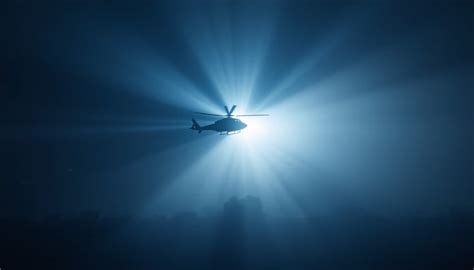
The first and foremost requirement for any helicopter searchlight is intense brightness. Rated in lumens, brightness determines how effectively the beam can cut through darkness, fog, or smoke. Searchlights used in critical night operations often exceed 30,000 lumens, providing a clean, wide, and uniform beam that ensures complete visibility over vast areas.
This brightness directly impacts the success of life-saving missions. For search and rescue operations, being able to illuminate a forest canopy or a capsized boat in turbulent waters makes the difference between life and death. High-brightness searchlights enhance aerial surveillance and assist law enforcement in tracking suspects or scanning terrain quickly and efficiently.
Precision with Adjustable Beams
Equally important is the ability to adapt the beam pattern according to mission requirements. An adjustable beam allows the pilot or crew to toggle between a wide floodlight — ideal for general area illumination — and a narrow, focused spotlight for targeting specific subjects or zones. This flexibility is essential for dynamic mission environments.
Modern searchlight systems integrate motorized zoom mechanisms that can be remotely adjusted during flight. These systems ensure seamless transitions between beam modes, eliminating the need for manual intervention or time-consuming reconfigurations. Whether scanning a mountainside or focusing on a stranded hiker, beam adaptability maximizes efficiency and precision.
Lightweight Design for Optimized Flight Performance
Aircraft performance hinges on efficient weight distribution. Older or overly bulky searchlight systems can compromise aerodynamics, increase fuel consumption, and hinder maneuverability. Therefore, the trend in aviation technology has shifted toward lightweight but rugged materials such as carbon fiber composites and high-grade aluminum.
A lightweight searchlight system reduces strain on the mounting hardware, improves fuel economy, and enhances flight stability — especially crucial during long-duration missions or when operating near maximum load capacity. Additionally, compact systems are easier to install and maintain, minimizing aircraft downtime.
Remote Control and Cockpit Integration: Enhancing Operational Ease
Modern missions demand hands-free efficiency and real-time control, especially when crews operate under pressure. Remote-controlled searchlights — equipped with joysticks, touchscreen panels, or multi-function display interfaces — allow pilots and operators to pan, tilt, zoom, and adjust intensity with precision.
These systems are often integrated into the helicopter’s avionics or mounted as stand-alone controls within the cockpit. The benefit is twofold: crews retain full situational awareness while controlling the beam, and adjustments can be made instantaneously, even mid-maneuver. This capability is vital in police chases, nighttime inspections, and medevac operations where split-second reactions are crucial.
Built to Withstand: The Durability Factor
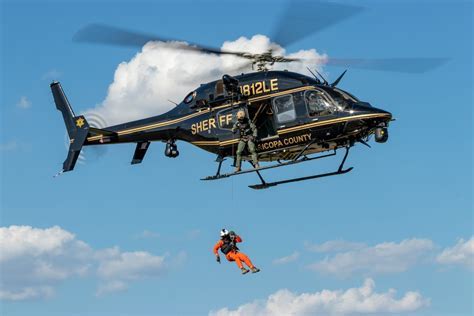
Helicopters endure extreme environments, and so must their equipment. A high-quality searchlight is engineered to resist shock, vibration, temperature fluctuations, moisture, and dust. Without this ruggedness, components can fail, compromising missions or even aircraft safety.
Durable searchlights are often IP-rated for water and dust resistance, and tested under MIL-STD (military standard) protocols to ensure long-term performance. Materials like impact-resistant polymers and sealed housings ensure that the light will withstand the rigors of flight in all weather conditions. Furthermore, durable systems reduce maintenance frequency and repair costs — a long-term advantage for operators aiming to maximize uptime.
Energy Efficiency and LED Technology
Searchlight power consumption directly affects the helicopter’s energy management. Traditional halogen or xenon systems tend to be power-hungry and short-lived, whereas modern systems rely on high-output LED arrays that offer lower power draw and longer operational lifespans.
LEDs run cooler, offer instant-on capabilities, and provide consistent illumination without the degradation over time seen in older technologies. Energy-efficient lights minimize impact on the helicopter’s power distribution system, ensuring critical avionics and navigation instruments remain unaffected.
Energy-conscious lighting also translates to extended mission endurance, allowing crews to spend more time in the air without fear of overloading the system. For night missions that can last several hours, this efficiency is indispensable.
Infrared and Multi-Spectrum Compatibility
Cutting-edge missions require more than just white light. Infrared (IR) compatibility is now a mission-critical feature, especially for military and law enforcement applications. IR-enabled searchlights work seamlessly with night vision goggles (NVGs) and forward-looking infrared (FLIR) systems, offering visibility without giving away position.
These systems can be toggled between visible and IR output to suit covert or overt operations. The inclusion of multi-spectrum capabilities future-proofs the equipment, aligning with evolving mission profiles in tactical operations and disaster response.
Smart Targeting and Tracking Systems
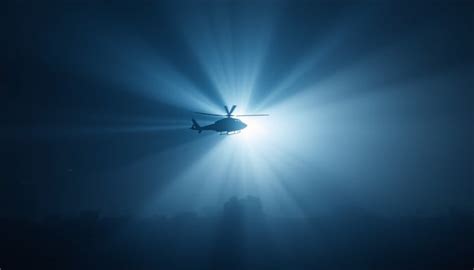
Today’s most advanced helicopter searchlights come integrated with autonomous targeting systems, allowing them to lock onto and follow moving objects automatically. These lights are paired with gyroscopic stabilization and GPS-aided targeting that keeps the beam trained on a moving car, boat, or person, even during aggressive aerial maneuvers.
This feature is especially advantageous for law enforcement surveillance, suspect tracking, and marine patrol, where hands-free lighting precision allows the pilot to focus entirely on flying, while the beam keeps subjects illuminated.
Thermal Management and System Cooling
While brightness and durability are essential, thermal control is what ensures searchlight longevity. High-lumen outputs generate significant heat, and without proper heat dissipation, internal components can fail or reduce in efficiency.
Top-tier searchlight systems use active cooling technologies — including internal fans, heat sinks, and smart thermal throttling — to keep operating temperatures within safe limits. Thermal sensors often monitor internal heat, reducing intensity automatically if limits are approached. These safeguards protect the investment and extend the product’s lifespan under continuous operation.
Mounting Systems and Modularity
The versatility of a helicopter searchlight depends on how it integrates with various aircraft platforms. Modular mounts enable quick installation or repositioning on different aircraft types. Some systems use quick-disconnect latches and universal brackets to facilitate fast deployment and repairs.
Whether mounted on the nose, belly, or skid, the searchlight must maintain balance, vibration isolation, and field of motion. Mount designs should accommodate full-range articulation without compromising the airframe. The most advanced options offer 360° rotation and high tilt angles, ensuring total field coverage.
Regulatory Compliance and Safety Standards
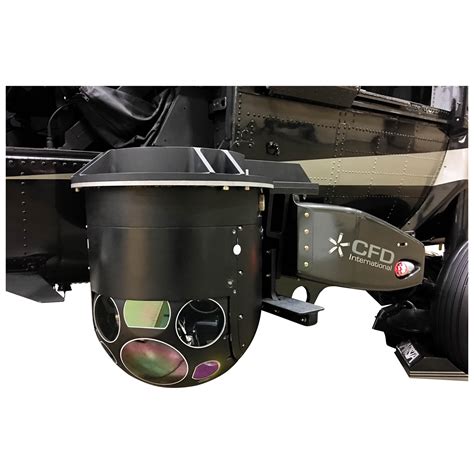
Searchlights, like all aviation components, must comply with FAA and EASA regulations. Certification ensures that the light has been tested for electromagnetic interference (EMI), photobiological safety, and structural integrity. Operators must ensure that the searchlight’s beam pattern does not interfere with pilot visibility or blind ground personnel.
Additionally, civilian and paramilitary operators should verify that the unit meets any local airspace lighting laws, particularly in urban zones where air traffic congestion and light pollution are concerns.
The Mission Impact of Choosing the Right Searchlight
Investing in a well-designed searchlight does not merely improve visibility. It transforms the aircraft into a mission-ready platform, prepared for challenges in darkness, poor weather, or emergency response scenarios. The right light shortens search times, enhances crew coordination, reduces accident risks, and increases mission success rates.
In practical terms, the difference between a basic light and an advanced system can result in:
- Faster rescue times in maritime search operations
- Higher arrest success rates during nighttime police missions
- Safer aerial inspections of critical infrastructure like power lines or bridges
- Extended mission durations without overtaxing aircraft power
Conclusion: Precision Illumination for Modern Helicopter Operations
Helicopter searchlights are no longer an optional accessory — they are a critical system in aviation performance, safety, and operational flexibility. With high-intensity brightness, adjustable beam control, lightweight design, remote functionality, and multi-spectral integration, today’s searchlights are engineered for the harshest missions.
Each component, from its mounting bracket to its beam output, contributes to mission-critical outcomes. Whether saving lives, enforcing law, or conducting aerial surveys, precision illumination empowers crews to act with confidence and efficiency. As the technology evolves, so too will the capabilities of helicopter searchlights, leading the aviation industry into a safer, brighter future.