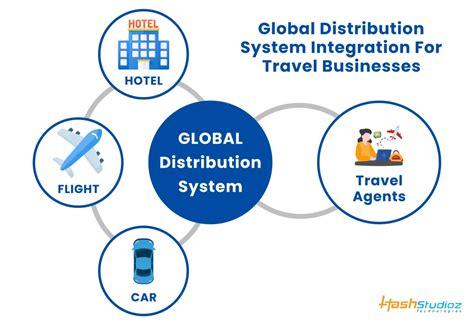
The Global Distribution System (GDS) represents one of the most critical technological backbones of the modern travel industry. Functioning as a real-time computerized network, a GDS connects service providers such as airlines, hotels, and car rental companies to travel agencies, enabling seamless bookings and transactions across multiple platforms. It serves as the consolidated interface between supply-side inventory and demand-side intermediaries, fostering a global marketplace for travel services.
A GDS operates differently from a Computer Reservation System (CRS), which is typically exclusive to a particular airline or hotel chain. While CRSs manage proprietary inventory, the GDS bridges various vendors, allowing agents and platforms to access consolidated data and book services in a centralized manner. This interoperability forms the essence of what makes GDS indispensable in scenarios requiring cross-platform collaboration.

Origins and Architecture of GDS Platforms
The GDS arose from airline CRSs developed in the 1960s and 70s. As commercial aviation expanded, airlines needed a way to manage increasingly complex ticketing operations. American Airlines’ Sabre and United Airlines’ Apollo (later Galileo) were among the first systems that evolved into broader, independent platforms. These systems later expanded their data networks to include hotels, car rentals, and cruise bookings, forming what we now recognize as full-fledged GDS ecosystems.
Modern GDS architecture revolves around real-time inventory access, centralized PNR (Passenger Name Record) handling, and instant booking capabilities. A PNR maintained in the GDS reflects the passenger’s full itinerary across multiple airlines and vendors. For example, a traveler flying from Amsterdam to New York via London using KLM, British Airways, and Lufthansa respectively will have a GDS-level PNR containing the entire multi-segment journey, even though each individual airline’s system might only reflect partial data.
This capability is essential for managing interline agreements, alliance partnerships, and multi-modal travel, ensuring data continuity and traveler convenience.
Primary GDS Providers and Their Capabilities
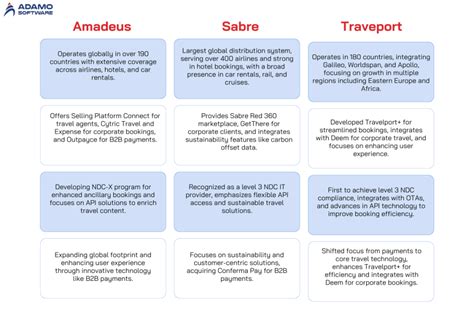
Today, three dominant players control most of the GDS market:
- Amadeus IT Group (Spain)
- Sabre Corporation (USA)
- Travelport (UK), which operates Galileo, Worldspan, and Apollo
These platforms handle billions of transactions annually and support thousands of travel agencies globally. They enable:
- Airline bookings across hundreds of carriers
- Hotel room reservations with live availability
- Car rental reservations and upgrades
- Cruise and rail bookings in select regions
- Ancillary product integration, such as baggage, seat upgrades, and insurance
Each GDS maintains dedicated APIs and partner interfaces, allowing Online Travel Agencies (OTAs) like Expedia or Priceline to build front-end systems on top of GDS infrastructure.
Mid-Office Automation and Workflow Optimization
One of the lesser-discussed yet crucial aspects of GDS utilization lies in mid-office travel automation. This layer sits between the customer interface and back-end ticketing systems, managing complex business rules, validation logic, and reporting workflows.
Using platforms connected to GDS networks, travel agencies can automate:
- Reservation quality control
- Fare audits and rechecks
- Ticket issuance workflows
- Invoice generation and itinerary preparation
Customizable software solutions allow agencies to monitor PNR elements for consistency, enforce corporate travel policies, and generate CRM insights based on traveler behavior. For corporations managing large-scale travel logistics, these tools provide not just efficiency, but also actionable intelligence.
GDS vs Direct Distribution: A Strategic Shift
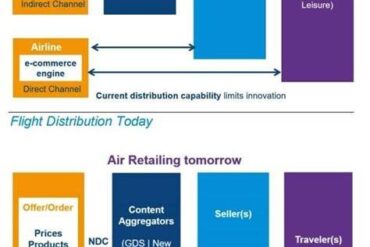
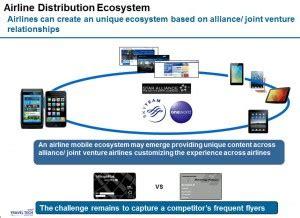
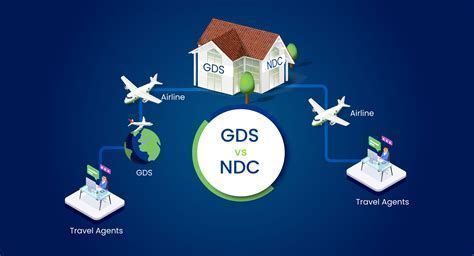
As technology evolved, major airlines began shifting toward direct distribution models, reducing their reliance on GDS intermediaries. By building their own booking portals and connecting directly with customers and aggregators, airlines could avoid high GDS booking fees and tailor the customer journey more precisely.
Lufthansa, for instance, introduced a €16 surcharge in 2015 for bookings made via GDS platforms, pushing travel agents and customers toward its proprietary channels. Emirates and Air France–KLM soon followed similar strategies. Their rationale stemmed from cost concerns and the desire to deliver dynamic pricing and merchandising beyond GDS constraints.
Yet, GDS still retains its value proposition, especially for consolidators, multi-vendor bookings, and last-minute inventory liquidation in the hotel and car rental sectors. Despite predictions that GDS systems would fade by 2020, their resilience lies in versatility, particularly in fragmented markets or scenarios requiring cross-vendor bookings.
Challenges and Innovations in GDS Technology
The centralized nature of GDS comes with notable limitations. GDS networks often struggle with:
- Dynamic pricing integration
- Real-time personalization
- Merchandising flexibility
Modern travel demands rapid adaptation to user preferences and last-minute market fluctuations—areas where GDS, due to legacy architecture, can underperform. To address this, providers like Amadeus have initiated API modernization and NDC (New Distribution Capability) adoption, allowing for richer product offerings and improved data exchange with airline systems.
Moreover, GDS providers are moving toward offshore development and cloud-native deployments to increase scalability, reduce operational costs, and support emerging travel marketplaces.
Global Reach and Local Integration
One enduring strength of the GDS remains its global footprint. A travel agent in Nairobi can book a hotel in Seoul, a flight from Istanbul to São Paulo, and a car in San Francisco within minutes—all through a single interface. This reach is hard to replicate with fragmented direct systems.
Additionally, GDS platforms are essential in markets with high business travel demand, where itinerary complexity and multi-leg flights necessitate a unified booking flow. Many corporate travel management companies (TMCs) depend on GDS to enforce negotiated rates, apply corporate policies, and consolidate traveler data for analytics.

The Future of GDS: Decline or Rebirth?
While GDS systems are under pressure from meta-search engines, direct booking tools, and OTA giants, they continue to evolve rather than disappear. The concept of a centralized, neutral data exchange still holds appeal, especially in scenarios where neutrality, scale, and efficiency trump customization.
Future GDS evolution is likely to focus on:
- NDC integration to support rich content
- AI-powered fare forecasting and personalization
- Cloud-native, microservices-based architecture
- Deeper loyalty program integration
- Support for emerging travel models, like subscription-based travel
Even as airlines and hotels push for control over their distribution channels, many rely on GDS to reach indirect markets, maximize load factors, and support legacy system integration. In parallel, smaller travel businesses, especially in emerging economies, benefit from the low-entry cost and high utility of GDS platforms.
Conclusion
The Global Distribution System remains a foundational pillar in the travel industry’s infrastructure. Its unique capacity to centralize disparate inventory, streamline global bookings, and maintain continuity across vendors ensures its relevance even amid digital disruption. While the battle between direct distribution and third-party systems continues, GDS platforms stand at the intersection of legacy stability and adaptive innovation. As long as the need for scale, reach, and interoperability persists, GDS will continue to play a strategic role in shaping global travel.