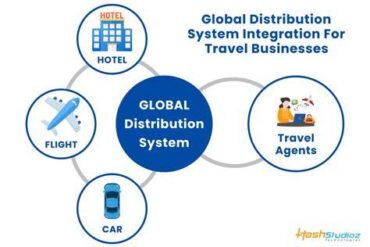
In the ever-evolving travel distribution landscape, the demand for more flexible, efficient, and personalized access to travel content has given rise to a disruptive innovation: Direct Connect. Traditionally dominated by Global Distribution Systems (GDS), the travel industry’s ecosystem has shifted toward direct integration models that promise lower costs, richer content, and deeper customer insights.
At its core, Direct Connect is a method of accessing travel inventory—flights, hotel rooms, car rentals—directly through suppliers’ APIs. This method bypasses the legacy GDS platforms and creates a streamlined data pipeline between the supplier and the travel intermediary, such as a travel management company (TMC), online travel agency (OTA), or corporate booking tool.
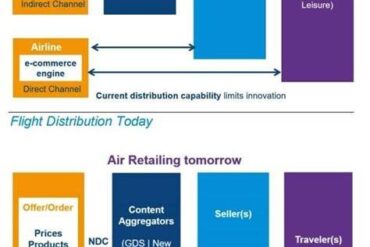
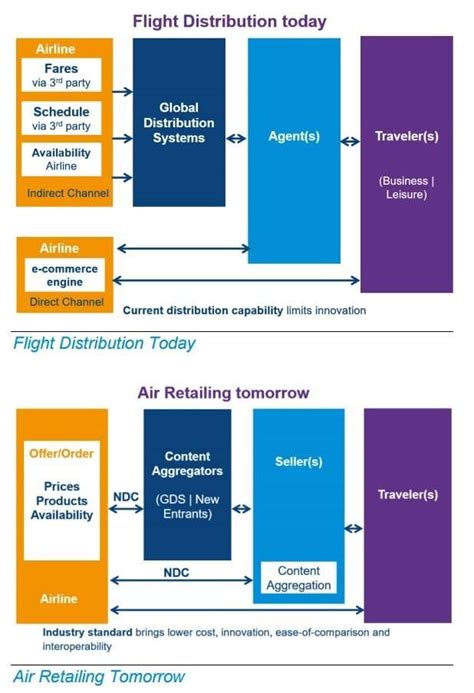
While GDSs like Sabre, Amadeus, and Travelport have historically served as central hubs for travel booking, they operate on standardized frameworks that do not always allow for product differentiation or real-time customization. Direct Connect, by contrast, enables real-time pricing, ancillary service bundling, and personalized fare offers directly from the airline or supplier.
The Economic Case for Direct Connect: Escaping GDS Fees
One of the most compelling incentives for suppliers to adopt Direct Connect is the avoidance of GDS commissions and surcharges. Airlines, in particular, have long sought ways to reduce the significant costs associated with GDS participation. Each booking through a GDS can cost an airline up to $12 per passenger segment, depending on contract terms. Multiply that across millions of bookings annually, and the economic benefit of transitioning to direct integrations becomes undeniable.
For example, Lufthansa Group introduced a GDS surcharge in 2015, incentivizing partners to use its Direct Connect channels. Since then, others such as British Airways, Air France-KLM, and Qatar Airways have followed suit. These carriers have not only sought to lower their distribution costs, but also to regain greater control over merchandising and customer experience.
Real-Time Content and API-Driven Personalization
Beyond cost savings, the most transformative aspect of Direct Connect is its ability to support dynamic, API-driven content. With Direct Connect, airlines and other travel suppliers can:
- Offer real-time seat availability and pricing
- Customize offers based on loyalty status, booking history, and traveler preferences
- Bundle ancillaries (baggage, seat selection, Wi-Fi) into dynamically priced packages
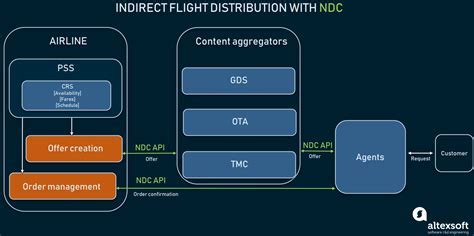
This level of personalization is difficult—if not impossible—to achieve through the rigid data structures of GDSs. The IATA’s NDC (New Distribution Capability) standard has helped enable this evolution, providing a common XML-based data language for modernized airline retailing.
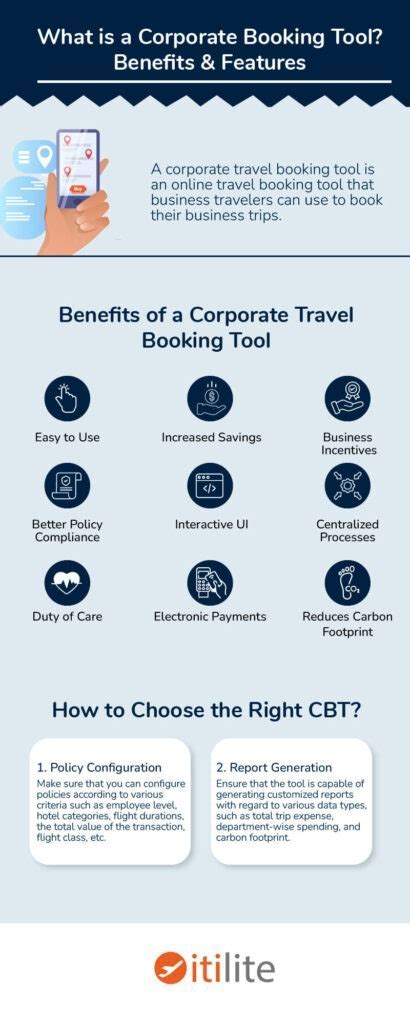
With Direct Connect, a corporate booking tool can now access enriched offers such as premium seat upgrades or exclusive business traveler bundles. These would not have been visible through legacy GDS interfaces.
Control Over Customer Data: From Access to Ownership
In the GDS model, critical customer data often resides within third-party systems. This limits the supplier’s visibility into end-to-end traveler behavior, reducing their ability to engage in direct marketing, loyalty building, or post-trip analytics.
With Direct Connect, suppliers maintain full control over first-party customer data, enabling them to:
- Deliver post-booking communications directly
- Capture behavioral insights to refine future offers
- Enhance CRM and loyalty integrations
This shift toward data sovereignty is especially important in an age of rising expectations around personalization, as well as increasing regulatory scrutiny over how data is stored and shared.
Technical Complexity: The Price of Freedom
While the benefits of Direct Connect are significant, the model is not without its technical and operational challenges. For resellers and travel platforms, establishing multiple direct APIs means:
- Investing in custom integrations for each supplier
- Maintaining version control and uptime SLAs
- Testing and certifying constantly evolving schemas
Unlike a GDS that aggregates all supplier content in one unified feed, Direct Connect forces intermediaries to stitch together disparate connections. This leads to higher initial development costs, and ongoing IT resource allocation.
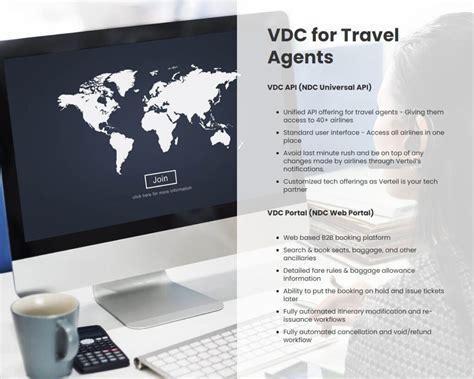
That said, middleware aggregators and API orchestration platforms have emerged to alleviate some of these challenges. Companies such as Duffel, TPConnects, and Travelfusion offer layered solutions that standardize access to multiple airline APIs, reducing the integration burden on the downstream reseller.
Adoption Trends Among Airlines and Travel Sellers
Global adoption of Direct Connect is steadily increasing, especially among full-service airlines seeking to compete with low-cost carriers on pricing and flexibility. Carriers such as Qantas, Emirates, and Singapore Airlines have launched robust Direct Connect APIs. At the same time, major corporate TMCs such as American Express Global Business Travel (Amex GBT) and CWT have begun integrating Direct Connect capabilities into their booking environments.
On the technology front, SAP Concur, Serko, and TripActions (now Navan) have either piloted or deployed Direct Connect integrations for select suppliers. The future points to a hybrid distribution model, where GDSs continue to serve traditional markets, while Direct Connect supports more dynamic, digital-first experiences.
The IATA NDC Standard: Backbone of Direct Connect
No discussion of Direct Connect would be complete without addressing NDC (New Distribution Capability). Championed by IATA, NDC provides the technical backbone that enables standardized API communication between airlines and third-party sellers.
NDC allows for structured transmission of:
- Fare families and branded offers
- Real-time seat maps and upgrade options
- Ancillary bundling and fare rules
By adopting NDC, airlines are able to transform their distribution model from commoditized listings to curated digital storefronts. While initial adoption has been slow due to certification hurdles and technical resource gaps, more than 100 airlines globally are now in various stages of NDC deployment.
Risks and Limitations: Not a Silver Bullet
Despite its potential, Direct Connect is not a one-size-fits-all solution. Airlines that operate in markets with high dependence on TMCs or legacy systems may find Direct Connect adoption fragmented or delayed. Additionally, for smaller OTAs or regional travel agencies, the cost of maintaining multiple APIs may outweigh the benefits—at least in the short term.
There is also a risk of content fragmentation, where certain offers appear only on supplier websites or Direct Connect platforms, but not in GDS channels. This creates visibility gaps for travelers and may erode price transparency in the marketplace.
Moreover, NDC readiness varies significantly between airlines, and without consistent schema adherence or SLAs, downstream resellers may face unreliable content delivery.
The Future: A Dual-Channel World of Distribution
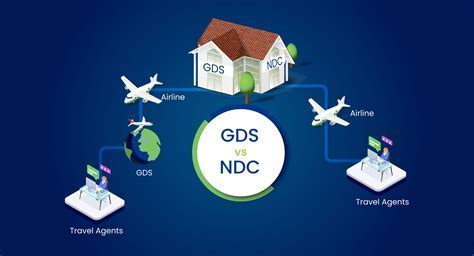
As Direct Connect adoption expands, the travel industry is headed toward a dual-channel distribution paradigm. GDSs will continue to play a role, particularly for multi-airline itineraries, backend financial settlement, and BSP ticketing. However, for point-to-point, dynamic, or corporate-negotiated travel, Direct Connect will become the preferred route.
Airlines that invest early in robust APIs, offer strong documentation, and provide support for third-party integration partners will gain a competitive edge. Conversely, resellers and TMCs that prioritize flexibility and NDC capability will be positioned to offer richer content, competitive pricing, and superior personalization to their clients.
Conclusion: Power Shift in Travel Distribution
Direct Connect marks a strategic power shift in the travel industry. No longer beholden to rigid, one-size-fits-all GDS frameworks, airlines and suppliers are reclaiming their role as digital retailers. As real-time content, dynamic pricing, and personalized offers become the new norm, Direct Connect stands at the center of this transformation.
The move toward supplier-driven distribution will require patience, investment, and collaboration. But for those willing to adapt, the reward is clear: more control, lower costs, richer customer engagement, and ultimately, a smarter, more agile travel ecosystem.