
Nondestructive Testing (NDT) is not merely a profession—it is a mission-critical discipline that safeguards lives, property, and environments across global industries. NDT careers offer high earning potential, broad applicability, and ongoing opportunities for growth in an increasingly technology-driven world. For those who are analytically inclined, safety-conscious, and passionate about hands-on problem-solving, NDT presents a dynamic and fulfilling path.
What Is Nondestructive Testing?
Nondestructive Testing involves the evaluation of materials, components, and structures without causing any damage. By using advanced technologies—such as ultrasonic, radiographic, eddy current, and magnetic particle testing—NDT professionals can detect flaws, monitor integrity, and ensure reliability across critical infrastructure and machinery.
NDT is indispensable in industries where safety and performance cannot be compromised. From inspecting aircraft fuselages to ensuring oil pipelines are leak-free, NDT professionals play a pivotal role in quality assurance and public safety.

Diverse Career Roles in the NDT Industry
The career spectrum in NDT is impressively broad, ranging from field technicians to consultants and researchers. Each role requires a unique blend of technical acumen, industry knowledge, and certification levels.
NDT Trainee
Entry-level roles often begin as NDT trainees, where individuals learn by supporting senior technicians. Duties include setting up equipment, performing calibrations, and assisting with evaluations. This stage lays a strong foundation of hands-on experience, essential for future certification and specialization.
NDT Technician / Inspector
Once certified, NDT technicians take on independent testing responsibilities. They inspect materials for flaws, interpret data from tests, and ensure compliance with industry standards. Many specialize in one or more methods and often supervise junior personnel.
NDT Manager
NDT managers oversee entire inspection programs. Their work encompasses developing procedures, managing personnel, ensuring regulatory compliance, and integrating inspection protocols within broader quality assurance systems.
NDT Instructor
Experienced professionals may become instructors, delivering structured education to the next generation of NDT personnel. Their teaching ensures that testing standards and ethical practices are rigorously upheld across the industry.
NDT Consultant
As consultants, highly experienced practitioners apply specialized knowledge to resolve complex inspection problems. Their expertise is invaluable to industries seeking optimization, risk mitigation, and technological advancement.
NDT Researcher
For those driven by innovation, becoming an NDT researcher opens doors to developing cutting-edge methods and technologies. These professionals expand the scientific boundaries of nondestructive evaluation through experimental analysis and data-driven advancements.
Industries Where NDT Professionals Thrive
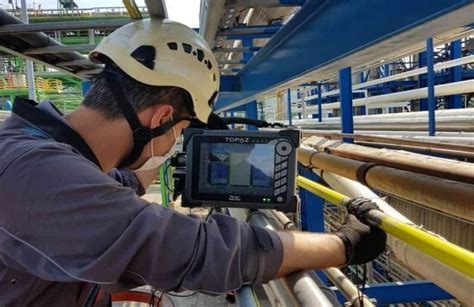
NDT professionals are essential to a wide array of industries where failure is not an option:
- Aerospace: Ensuring airframe integrity and turbine performance.
- Energy: Inspecting nuclear reactors, pipelines, and offshore rigs.
- Transportation: Evaluating the safety of rail systems and cargo vessels.
- Infrastructure: Assessing structural health of bridges, tunnels, and dams.
- Manufacturing: Performing quality checks on high-precision components.
These roles are not just routine—they are vital. Every ultrasonic scan or magnetic particle inspection helps prevent catastrophic failures and saves lives.
Pathways Into the NDT Profession
One of the most appealing aspects of an NDT career is its flexible entry points. Whether you’re a high school graduate, a veteran, or a university-educated engineer, there’s a path that fits.
High School Graduates
Graduates can start with trade school programs, apprenticeships, or entry-level jobs, which often lead to Level I technician roles after gaining field experience.
Trade School / Community College Graduates
After completing an NDT-focused curriculum, individuals often start directly as Level I or Level II technicians, depending on hands-on experience and certifications.
University Graduates
Engineers and science graduates can enter the field as NDT engineers, supervisors, or quality control managers. Advanced roles also include Level III certification and research positions.
Military Personnel
Veterans often transition smoothly into NDT careers. Military programs introduce them to various methods—such as visual, ultrasonic, eddy current, and liquid penetrant testing—preparing them for civilian roles with advanced skills and discipline.

NDT Certifications: Key to Career Growth
Certifications define professional levels in NDT and are governed by standards such as ASNT SNT-TC-1A, NAS-410, or ISO 9712. Progression through these levels increases both responsibility and earning potential.
- Uncertified Trainee: Assists under supervision; earns approx. $36K–$60K annually.
- Level I: Performs specific calibrations and tests; still under supervision.
- Level II: Operates independently; interprets results and prepares reports. Average salary: $50K–$109K.
- Level III: Expert-level with authority over procedures, training, and audits. Salaries can exceed $120K with bonuses and specializations.
Certifications also support cross-industry mobility, making professionals highly adaptable to shifting economic demands.
Why NDT Is a Smart Career Choice
High Demand, High Reward
The combination of aging infrastructure, expanding global manufacturing, and rising safety regulations means NDT professionals are in continuous demand. With skilled labor shortages in technical sectors, job stability in NDT is among the highest in industrial careers.
No Four-Year Degree Required
One of the most attractive aspects of this career is the potential to earn six figures without a university degree. Practical skill, certification, and experience matter more than academic credentials—making it ideal for those seeking cost-effective, high-return career paths.
Impact and Purpose
NDT isn’t just a job—it’s a profession that directly impacts lives. Whether preventing bridge collapses or ensuring aircraft reliability, the work is meaningful and mission-driven.
Future of NDT: Evolving with Technology
The NDT industry is undergoing a digital transformation. Automation, robotics, AI, and data analytics are redefining how inspections are performed. Professionals who understand digital tools and software are well-positioned for leadership roles.
For instance, former field technicians now design mobile apps that improve inspection workflows. This fusion of field knowledge and software innovation is pushing the industry forward.

Starting Your Journey in NDT
To begin, we recommend exploring organizations like the American Society for Nondestructive Testing (ASNT). Their Career Center offers job listings, training resources, and certification guidance. Joining ASNT also provides networking opportunities, industry updates, and discounts on courses and events.
Other useful steps:
- Enroll in an accredited NDT training program.
- Apply for apprenticeships or internships in relevant industries.
- Study and obtain Level I and Level II certifications.
- Engage with online forums and attend industry conferences.
Conclusion: A Career with Unlimited Possibilities
From inspecting rocket boosters to safeguarding public infrastructure, NDT offers a career full of excitement, responsibility, and reward. It’s a field where curiosity meets precision, and where skill meets purpose. Whether you’re just starting out or looking to pivot into a high-impact profession, a career in Nondestructive Testing is not just viable—it’s vital to the world we live in.