The mythology of air combat often glorifies stealth fighters slicing through contested skies or strategic bombers delivering decisive payloads across continents. Yet beneath this high-visibility layer of power projection lies a quieter, indispensable enabler: aerial refueling. Without it, even the most advanced warplanes are tethered by fuel limits, unable to sustain the long-range, high-endurance missions that define modern warfare. The United States Air Force has long mastered this capability—but proving that new aircraft can safely plug into that system is a challenge of its own. That is precisely where the so-called “Ghost Tanker” becomes mission-critical.
In recent years, the importance of aerial refueling has been underscored by marathon operations such as long-duration bomber missions launched directly from the continental United States. These flights, sometimes lasting well over a day, depend entirely on tankers to sustain momentum across oceans and hostile airspace. In such scenarios, tankers effectively transform finite-range aircraft into global-strike platforms, a capability that sits at the heart of U.S. military doctrine.
Yet integrating a new warplane into this ecosystem is far from routine. Each aircraft must undergo rigorous validation to ensure it can safely connect to a tanker’s refueling boom under real-world conditions. The margin for error is razor-thin, involving high speeds, tight formation flying, and complex aerodynamic interactions. This is where a highly specialized aircraft—disguised as a standard tanker—enters the picture.
The Ghost Tanker: A Flying Laboratory in Disguise
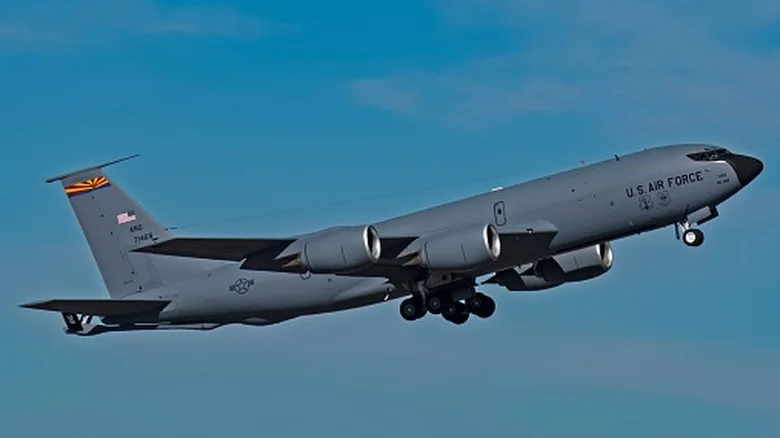
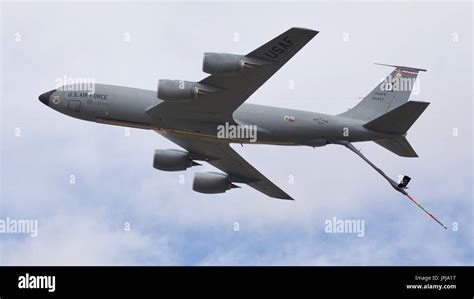
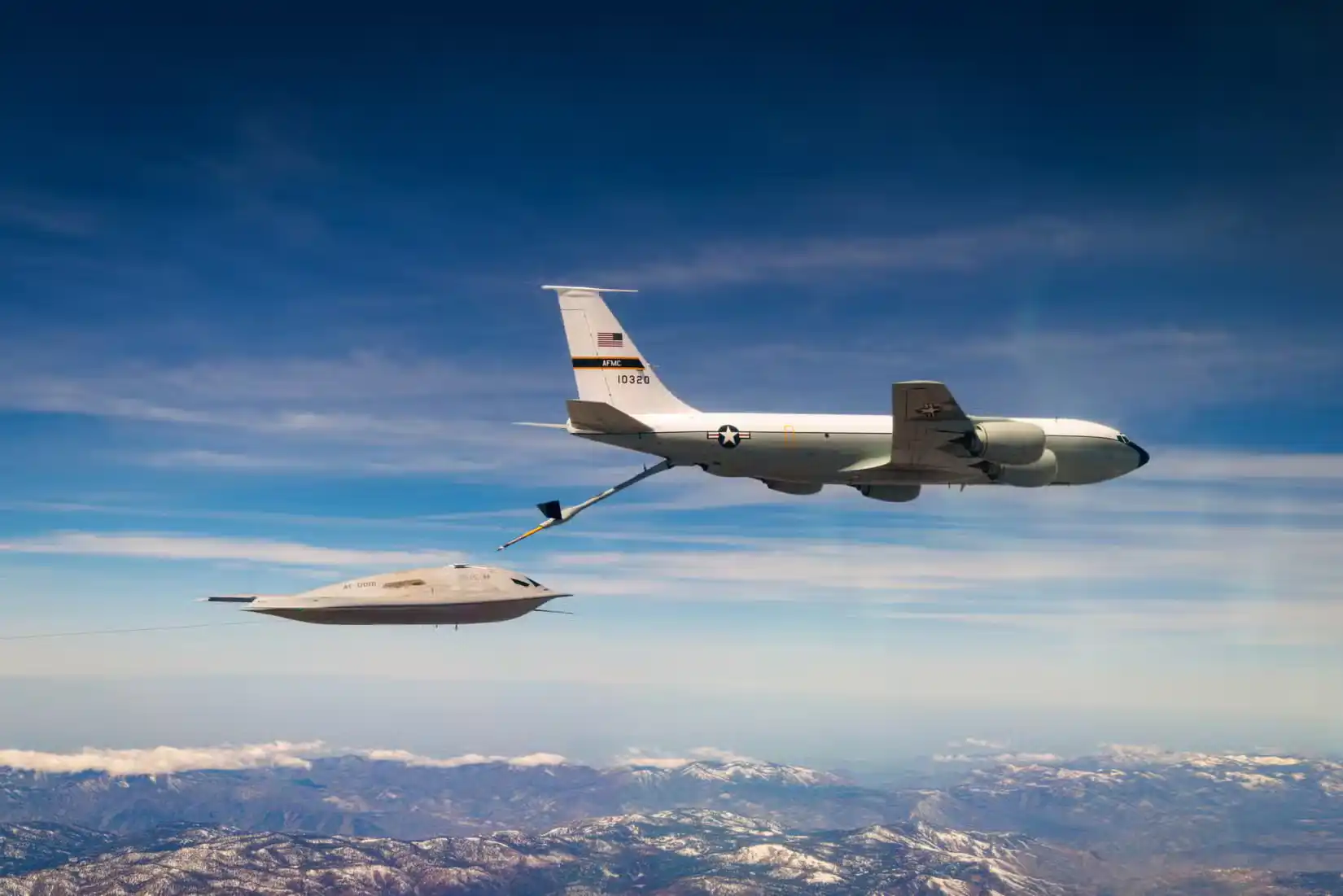
At first glance, the Ghost Tanker appears indistinguishable from a standard Boeing KC-135 Stratotanker, an aircraft that has been in continuous service for over six decades. Its enduring relevance is a testament to both its robust design and the evolving demands of modern airpower. However, this particular KC-135R variant is anything but ordinary.
Stationed at Edwards Air Force Base, the Ghost Tanker operates under the 370th Flight Test Squadron, supporting the elite 412th Test Wing. Its unofficial nickname stems from its radio callsign—“Ghost”—but the moniker has come to represent something far more significant: a unique airborne test platform that validates the future of American combat aviation.
Unlike conventional tankers, this aircraft is outfitted with an array of high-resolution cameras, telemetry systems, and precision sensors. These instruments monitor every aspect of a refueling operation in real time, from the physical alignment of the receiving aircraft to subtle variations in airflow and structural stress. Every connection to the boom becomes a data-rich experiment, feeding engineers with critical insights that shape aircraft certification.
Why Aerial Refueling Testing Is So Complex
The act of refueling mid-air may appear straightforward in concept, but in practice it is one of the most demanding maneuvers in aviation. Two aircraft must maintain near-perfect formation at high speeds while compensating for turbulence, wake vortices, and shifting weight distributions. Even minor misalignments can lead to instability or, in worst cases, structural damage.
To address this, the Ghost Tanker conducts extensive multi-phase testing campaigns that stretch over months. These involve repeated refueling attempts across varying altitudes, speeds, and environmental conditions. The objective is not just to prove that refueling is possible, but to ensure it remains safe, repeatable, and efficient under all operational scenarios.
During these missions, onboard systems record massive datasets covering:
- Fuel transfer rates and pressure stability
- Aircraft positioning and boom dynamics
- Structural loads and aerodynamic behavior
- Environmental variables such as temperature and air density
This data is transmitted to ground-based teams, where engineers analyze performance down to minute details. The result is a comprehensive certification process that leaves no room for uncertainty.
Training the Human Element: Boom Operators Under Pressure
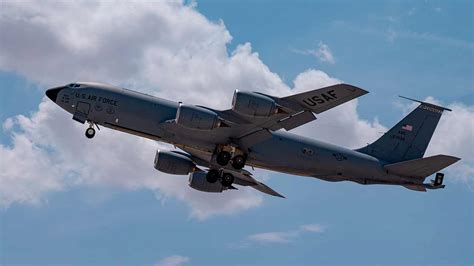
Technology alone does not guarantee success. The human component—particularly the boom operator—plays an equally critical role. On the Ghost Tanker, these specialists are trained to operate under test conditions that differ significantly from standard refueling missions.
Instead of executing routine connections, they must adapt to experimental aircraft with unique flight characteristics, sometimes dealing with unpredictable responses or limited historical data. Their job involves balancing precision with adaptability, ensuring safe engagement while capturing valuable test information.
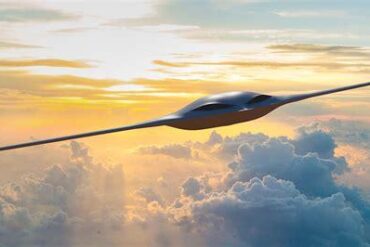
This human-machine synergy is especially vital when working with next-generation platforms like the Northrop Grumman B-21 Raider. As a cutting-edge stealth bomber, the B-21 introduces new aerodynamic profiles and operational requirements, making its certification a complex undertaking. The Ghost Tanker’s role in validating its refueling capability ensures that the aircraft can seamlessly integrate into long-range strike missions from day one.
The Strategic Impact: Enabling Global Reach
The significance of the Ghost Tanker extends far beyond test ranges in California. By certifying new aircraft for aerial refueling, it directly contributes to the United States’ ability to project power globally. In practical terms, this means:
- Fighters can deploy across continents without relying on forward bases
- Bombers can execute intercontinental strike missions without landing
- Surveillance aircraft can maintain persistent coverage over critical regions
This capability is not just a tactical advantage—it is a strategic multiplier. It allows military planners to operate with flexibility, unpredictability, and sustained presence, all of which are essential in modern conflict environments.
Looking Ahead: The Future of Aerial Refueling Innovation
As the Air Force pushes toward integrating unmanned systems and autonomous technologies, the role of the Ghost Tanker is poised to expand. Future concepts include drone-based refueling and advanced networking between tankers and receivers, potentially reshaping how aerial logistics are conducted.
What makes this evolution particularly fascinating is its continuity with history. When the KC-135 first entered service in the 1950s, it represented a revolutionary leap in capability. Today, that same platform—enhanced and repurposed—continues to serve at the cutting edge of innovation.
In the grand hierarchy of military aviation, the Ghost Tanker may never achieve the fame of a stealth fighter or the awe of a heavy bomber. Yet its contribution is foundational. By ensuring that every new aircraft can connect, refuel, and continue its mission without limits, it quietly sustains the very concept of global airpower dominance.