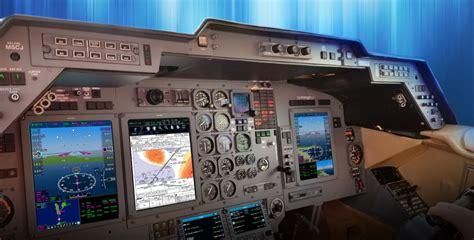
Founded in 1981 by Hubert L. Naimer, Universal Avionics Systems Corporation has evolved into a central player in the aerospace avionics industry, renowned for its cutting-edge flight management systems (FMS) and cockpit instrument displays. Headquartered in Tucson, Arizona, and operating as a subsidiary of Elbit Systems, Universal Avionics continues to influence the trajectory of commercial, private, and military aviation through its integrated avionics solutions, supported by an expansive network of U.S. and international offices.
Universal Avionics’ heritage is one of early innovation and continuous refinement. Only a year after its founding, the company introduced its first FMS—marking the beginning of its journey into high-performance navigational technology. With additional facilities in Kansas, Washington, Georgia, and Switzerland, the company’s reach and capacity to serve a global aviation market remain firmly intact.
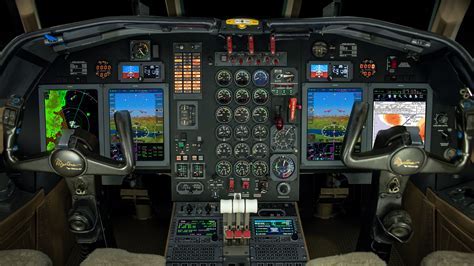
The Foundation of Excellence: A Vision Realized by Hubert L. Naimer
Hubert Naimer envisioned a future where flight operations could be dramatically improved through data-driven automation and display clarity. His legacy is firmly cemented in the company’s core mission: to empower pilots with enhanced situational awareness and operational efficiency. The leadership baton passed to his son, Joachim (Ted) L. Naimer, following his death in 2004, ensuring continuity of this vision while embracing the demands of modern aviation.
With the 2018 acquisition by Elbit Systems, Universal Avionics entered a new chapter, backed by robust R&D infrastructure and defense-grade technological expertise. Despite the change in ownership, the company retains operational independence, maintaining the brand’s identity, management structure, and workforce.
Revolutionizing Avionics: Flagship Products and Breakthrough Technologies
Universal Avionics’ product lineup reflects a commitment to safety, reliability, and next-generation cockpit integration. The following key solutions represent the cornerstone of the brand’s global reputation:
Flight Management Systems (FMS)
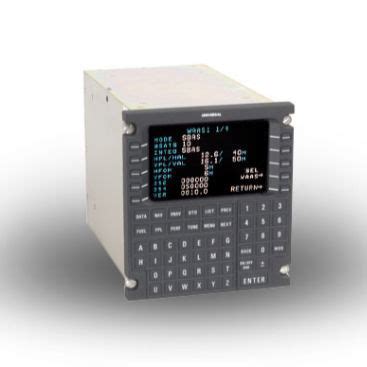
Universal’s UNS-1 series remains the industry benchmark in FMS technology, evolving through decades of updates to accommodate WAAS/SBAS navigation, RNP approaches, and LPV precision guidance. In 2007, it became the first certified FMS for WAAS LPV, reinforcing its status as an industry leader in satellite-based augmentation systems.
FMS units are engineered with modular software and hardware, enabling scalability across aircraft types—from light turboprops to long-range business jets and airliners.
Vision-1 Synthetic Vision System (SVS)
Universal’s Vision-1 was the first SVS certified for Part 25 aircraft, delivering a 3D rendering of terrain, airports, and obstacles. Its real-time graphical environment mimics natural sight and minimizes pilot workload, even in low-visibility operations. The SVS elevates cockpit ergonomics through intuitive data presentation and pilot-centric visual cues, fostering enhanced decision-making during approach and landing.
Terrain Awareness and Warning Systems (TAWS)
The TAWS solution provides an advanced terrain display with 3D perspective, offering predictive and reactive alerts for CFIT (Controlled Flight Into Terrain) scenarios. Its integration with FMS and SVS ensures harmonized situational awareness, especially in mountainous or unfamiliar airspace.
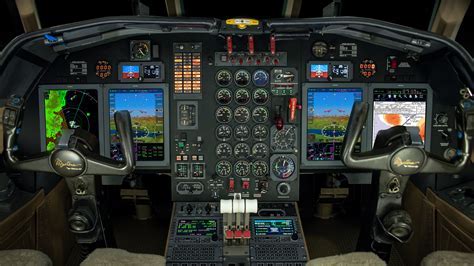
Flat Panel Integrated Displays
In 1999, Universal Avionics expanded into glass cockpit solutions through the acquisition of display technologies from Avionic Displays Corporation. These high-resolution, sunlight-readable displays are compatible with third-party FMS and sensor inputs, providing a versatile cockpit retrofit or OEM option.
UniLink CMU: Advanced Connectivity in the Sky
Communication Management Units (CMUs) represent a pivotal advancement in aircraft-to-ground data exchange. The UniLink CMU series supports both 25 kHz and 8.33 kHz channel spacing, functioning as a robust ACARS datalink component. Pilots and dispatch centers benefit from real-time access to weather updates, ATC clearances, and maintenance reports, significantly improving operational continuity.
An optional integrated VHF Data Radio (VDR) allows seamless compliance with international communication standards, making UniLink ideal for transatlantic operations and evolving ATN B1 services.
WAAS-FMS Certification and FAA Milestone
The 2007 TSO approval of Universal’s WAAS-enabled FMS by the Federal Aviation Administration (FAA) marked a historic shift in navigational accuracy and reliability. Universal became the first avionics provider to receive certification for LPV (Localizer Performance with Vertical guidance) operations under WAAS, enhancing safety for non-ILS equipped runways.
The certification reaffirmed Universal’s technical leadership and opened new frontiers for regional and business aviation, where many runways lack precision instrument approach systems.
Strategic Acquisition by Elbit Systems: A Synergy of Civil and Defense Technologies
In March 2018, Elbit Systems Ltd., an Israeli defense electronics conglomerate, announced its intent to acquire Universal Avionics. By April of that year, the transaction was finalized. The acquisition provided Universal with enhanced access to military-grade avionics expertise, while preserving its civil aviation identity.
The strategic fit lies in technological cross-pollination: Elbit’s experience in helmet-mounted displays, UAV avionics, and defense data fusion systems now complements Universal’s commercial avionics roadmap, potentially enabling future products that straddle both civil and special mission platforms.
Leadership and Innovation: People Driving the Brand
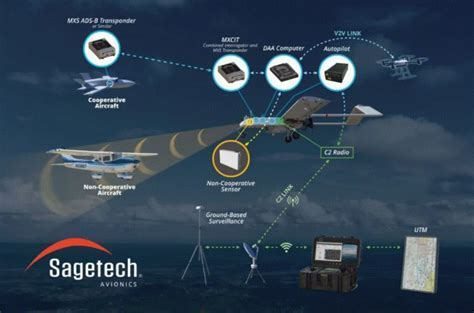
Current leadership under Dror Yahav (CEO) and Joachim (Ted) L. Naimer (President) continues to shape Universal Avionics with an eye on next-gen cockpit environments, increased automation, and predictive data intelligence. The company’s R&D teams focus on integrating AI elements, connectivity, and modular interfaces that will define the future of piloted and unmanned aviation.
The organization’s 570+ employees (as of the last known count in 2007) operate within an engineering culture that values compliance, pilot feedback, and iterative testing. Their combined expertise ensures that human-centered design principles stay at the heart of cockpit innovation.
Market Impact and Operational Legacy
Universal Avionics’ influence stretches across thousands of aircraft worldwide. Its systems are favored by OEMs, MROs, and retrofit programs for their interoperability, lifecycle support, and FAA/EASA certifications. Pilots appreciate the brand for its intuitive interfaces, low failure rates, and consistent software updates—factors that directly influence safety and ease of flight operations.
Aircraft ranging from Learjets to Boeing 737s, from special mission turboprops to medical transport helicopters, are equipped with Universal systems, attesting to their cross-platform adaptability.
Looking Ahead: Avionics for a New Era
As aviation evolves toward greener propulsion, autonomous navigation, and integrated airspace management, Universal Avionics positions itself at the nexus of legacy continuity and disruptive innovation. Current developments in predictive maintenance tools, cloud-based flight data exchange, and AI-assisted route optimization are setting the tone for future releases.
Universal’s close partnerships with airframe manufacturers, avionics integrators, and regulatory agencies ensure that its roadmap aligns with the industry’s most pressing challenges and ambitions.
Conclusion
Universal Avionics Systems Corporation is far more than a legacy avionics firm—it is a dynamic innovator at the intersection of aerospace tradition and next-generation capability. From pioneering WAAS-certified navigation systems to launching synthetic vision in commercial cockpits, the company’s contributions resonate across the industry.
As the aviation landscape shifts toward digital transformation, sustainability, and interoperability, Universal Avionics is poised to lead—not just participate in—this revolution.