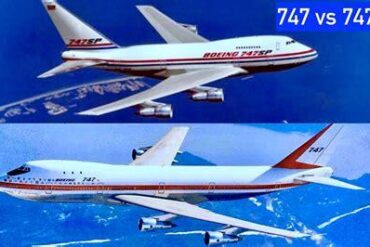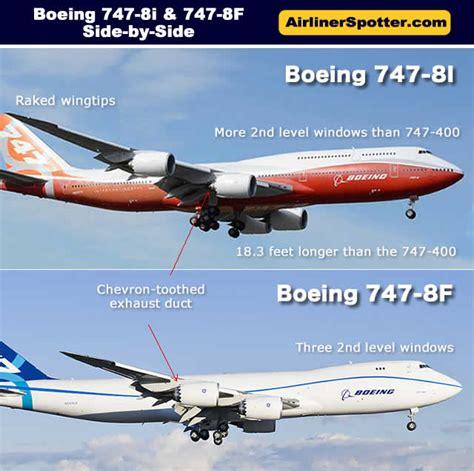
The Boeing 747-8 is an aircraft steeped in legacy and innovation, a dual-role machine serving both passengers and global logistics operators. Its two variants—the 747-8 Intercontinental (747-8I) and the 747-8 Freighter (747-8F)—share a common foundation but diverge in design and purpose. Among their most visible differences is the upper deck length, a design element that has sparked widespread curiosity. The 747-8I boasts the longest upper deck ever featured on a 747, while the 747-8F retains a much shorter, utilitarian hump. This difference is not an oversight—it’s an intentional, performance-driven choice that encapsulates Boeing’s deep understanding of operational demands.
Strategic Efficiency: Why the 747-8F Keeps Its Upper Deck Short
From the outside, the Boeing 747-8F presents a familiar silhouette, instantly recognizable by its iconic hump. But unlike its passenger sibling, this freighter version has a noticeably abbreviated upper deck. Where the 747-8I’s upper deck sweeps elegantly toward the aircraft’s midsection, the -8F’s stops well short, recalling the earlier 747-200F and 747-400F models.
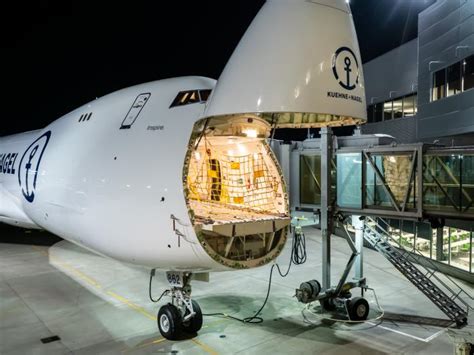
This decision was deliberate. On the 747-8I, the extended upper deck increases seating capacity and allows for premium cabins, lounges, or crew rest compartments—features relevant to passenger transport. In stark contrast, the 747-8F was engineered around a single goal: maximizing cargo capability. Extending the upper deck would compromise cargo hold geometry and reduce volumetric efficiency by lowering the main deck ceiling—a critical error in air freight design.
The freighter’s shorter upper deck helps maintain a unified and unobstructed main deck, ideal for standard cargo containers and oversize freight. Boeing also preserved the 747’s signature nose-loading capability, enabled by placing the flight deck above the cargo floor. This rare feature makes the 747-8F uniquely qualified to carry extra-long or odd-shaped cargo, like turbine blades or oil rig parts, that cannot fit through side doors.
A Legacy of Cargo-Centric Design
To understand why the 747-8F maintains this design, one must revisit the 747’s origin story. The aircraft was initially conceived in response to the U.S. Air Force’s CX-HLS (Cargo Experimental–Heavy Logistics System) project in the 1960s. Although Boeing lost that contract to Lockheed, the company retained the core idea of a freighter-centric design—cockpit above the main deck and a forward-hinged nose door.
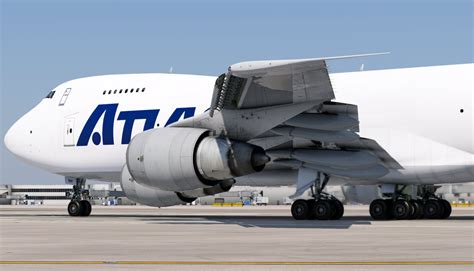
This early decision influenced every freighter variant of the 747, from the 747-100F to the 747-400F, and eventually the 747-8F. When Boeing introduced the 747-300, it extended the upper deck for passenger service. However, later freighter adaptations of these airframes revealed a design flaw: the stretched upper deck interfered with cargo operations, causing structural inefficiencies and reducing usable volume.
Learning from these missteps, Boeing ensured that dedicated freighters like the 747-400F and 747-8F would retain short upper decks. This preserved maximum cargo volume and optimized the aircraft’s interior layout. The short deck minimizes weight, simplifies the frame structure, and helps maintain vertical clearance for high-cube containers—a cornerstone of modern air freight.
Engineering a Freight Powerhouse: The 747-8F’s Technical Superiority
The 747-8F is more than just a continuation of tradition—it’s a substantial leap in cargo aircraft performance. While maintaining the proven design principles of its predecessors, it incorporates a series of advancements from the Boeing 787 Dreamliner program, including its General Electric GEnx-2B67 engines and advanced wing design.
These engines not only reduce noise and emissions but also contribute to a 16% improvement in ton-mile fuel efficiency over the older 747-400F. With a maximum payload of 132,630 kg (292,400 lbs) and a cargo volume of over 30,000 cubic feet, the 747-8F can carry up to 46 main deck pallets and two LD1 containers in the lower deck. In practical terms, this equates to the ability to carry everything from e-commerce shipments to industrial machinery without the limitations imposed by a stretched upper deck.
This cargo-specific optimization ensures that the aircraft’s range—4,390 nautical miles (8,130 kilometers) at full payload—remains uncompromised. It connects global hubs like Luxembourg to Hong Kong, or Seoul to Los Angeles, non-stop, making it an irreplaceable asset for high-volume cargo operations.
Passenger Comfort vs. Cargo Practicality: The Upper Deck Dilemma
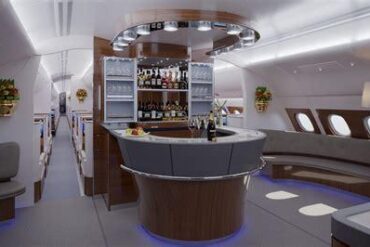
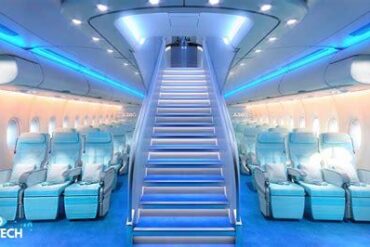
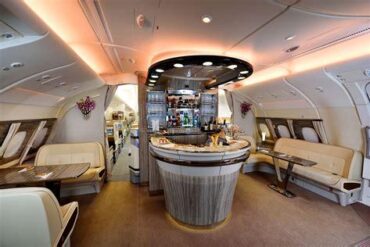
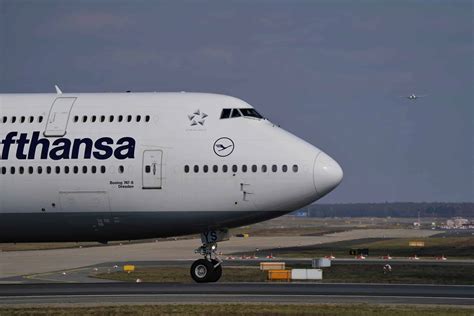
The 747-8I, by contrast, extends its upper deck to improve passenger appeal. Airlines like Lufthansa use this space for premium cabins—business class, first class suites, or crew rest compartments. The extended hump offers passengers a more exclusive environment, separated from the main deck.
However, this comes at a cost. The upper deck’s downward structural support intrudes on main deck space, reducing its vertical clearance. While this is inconsequential in a passenger aircraft, where the deck is segmented into cabins, it’s a dealbreaker for freight. Cargo operations require not just volume, but shape-agnostic, contiguous space, free from obstructions and structural bulges.
Why the Freighter Version Outsold Its Passenger Sibling
Though both aircraft are marvels of aerospace engineering, the market has made its preference clear. The 747-8I, despite its innovations, was overshadowed by more efficient twin-engine widebodies like the Boeing 777-300ER and the Airbus A350. These aircraft offer lower operating costs and greater route flexibility, critical factors for passenger airlines.
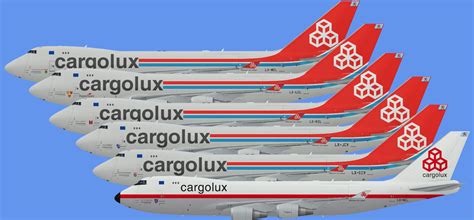
The 747-8F, however, found a thriving niche. With no equivalent competitor—the Airbus A380F was canceled before entering service—it became the default solution for operators needing large payload capacity with long-range capability. Carriers like UPS Airlines, Cargolux, Atlas Air, and Nippon Cargo Airlines made significant investments in the type. As of mid-2025, 86 units remain in active service, with UPS operating the largest fleet at 26 aircraft.
A Design Optimized for Freight: Lessons From Past Variants
Boeing’s consistent design philosophy in its freighter lineup is informed by operational feedback and real-world constraints. For example, when the 747-400M combi variant introduced more passenger seating with some cargo capability, it proved less flexible and less structurally efficient. Later freighter conversions from -300 and -400 models revealed that stretched upper decks complicate container loading and reduce main deck usability.
Thus, when developing the 747-8F, Boeing refused to repeat past compromises. The design kept the upper deck short, discarded unnecessary windows, and reinforced the main deck floor for heavy freight. The outcome is an aircraft tailored not for passenger comfort, but for freight dominance.
The Final 747 Freighter and Its Lasting Impact
The final Boeing 747-8F was delivered to Atlas Air in January 2023, closing the chapter on one of aviation’s most iconic aircraft series. But the end of production does not signify the end of service. Thanks to its structural durability, high utility, and unmatched versatility, the 747-8F is poised to serve well into the 2040s.
Its unique combination of range, volume, and payload, combined with nose-loading capability, makes it irreplaceable for specific cargo missions. While other aircraft offer fuel savings, none provide the same flexibility and capacity.
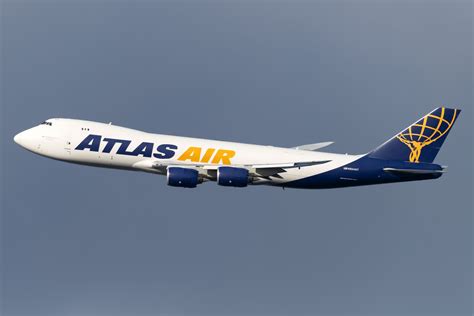
In today’s landscape, where global e-commerce, pharmaceuticals, and time-sensitive logistics dominate supply chains, the 747-8F continues to prove its worth. Boeing’s decision to keep the upper deck short on its freighter variant wasn’t just good design—it was a masterstroke in aviation strategy.
Conclusion: The Upper Deck Is a Window Into Mission-Centric Design
The stark difference between the Boeing 747-8F and 747-8I upper decks is a testament to engineering decisions made with purpose. While passengers might associate the extended upper deck with luxury and exclusivity, cargo operators recognize the shorter deck as a symbol of efficiency, strength, and profitability.
Boeing could have pursued uniformity across both variants, but it didn’t. Instead, it made a choice—to prioritize performance over aesthetics, volume over symmetry, and utility over uniformity. That decision continues to fly high, on every 747-8F that roars across the skies, delivering the world’s freight with unmatched precision.