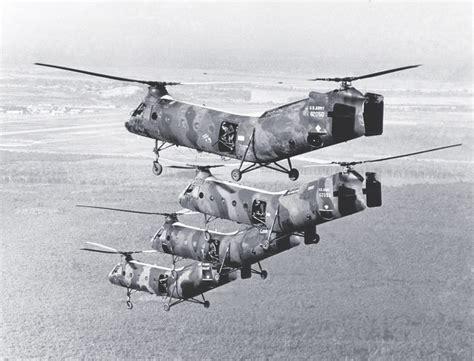
In the world of military aviation, certain aircraft stand out not only for their performance but also for their unforgettable design. One such example is the Piasecki H-21, more famously known as the “Flying Banana.” Its unusual nickname stems from a strikingly curved fuselage that gave the helicopter its banana-like appearance. However, behind this humorous moniker lies a legacy of groundbreaking engineering, battlefield utility, and a significant step forward in rotorcraft development.
The Visionary Behind the Curve: Frank Piasecki’s Helicopter Dreams
The story of the Flying Banana begins with Frank Piasecki, an aeronautical innovator and one of the earliest pioneers of helicopter development in the United States. In 1940, Piasecki co-founded the P-V Engineering Forum with Harold Venzie. At the time, helicopters were experimental oddities at best, and Piasecki’s belief in their potential set him on a course to revolutionize the field.
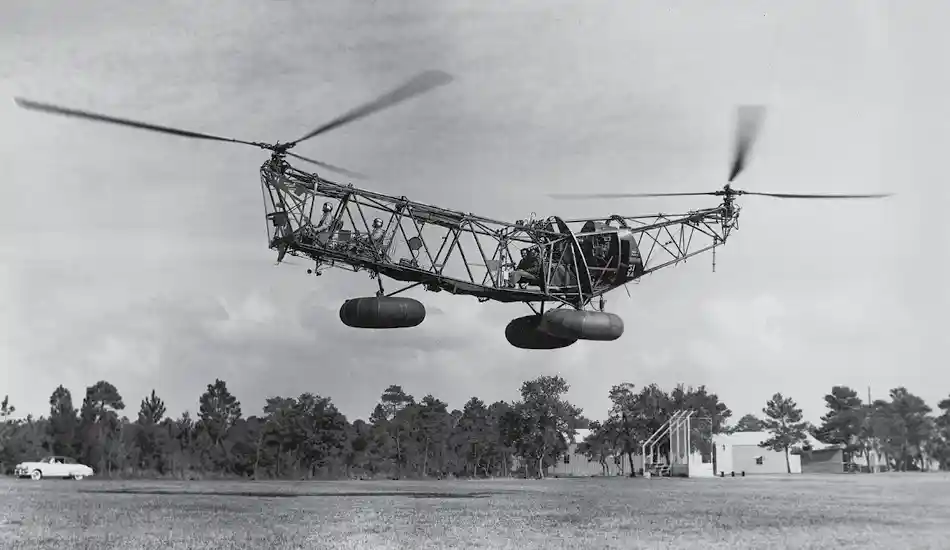
His initial prototype, the PV-2, took flight in 1943 and became only the second helicopter to fly in the U.S. after Igor Sikorsky’s legendary VS-300. With that success, Piasecki became the first American to receive a helicopter pilot’s license, a symbolic milestone that underscored his deep connection to the rotorcraft revolution.
From Dogship to Banana: The Bent Design That Made History
As Piasecki explored new designs, he turned to a tandem rotor configuration to solve the lifting and stability issues faced by traditional single-rotor helicopters. Early versions, such as the XHRP-1 and XHRP-2, featured two large rotors placed at the front and rear of the aircraft. To prevent the rear rotor from striking the fuselage, Piasecki introduced a sharply upward-curving tail boom—a practical design that inadvertently shaped the aircraft into a banana-like silhouette.
This distinctive shape didn’t go unnoticed. While some derided the design as odd or laughable, the engineering community recognized it as a smart solution to a structural problem. Yet the nickname “Flying Banana” stuck—and soon became an iconic part of military aviation slang.
Overcoming Skepticism: How the Coast Guard Sparked a Revolution
Despite its promising engineering, Piasecki’s concept initially faced resistance. The U.S. Navy, deeply conservative in its approach to aviation technology, doubted the viability of the tandem-rotor design and its ability to handle the required 1,800-pound load capacity. However, the U.S. Coast Guard, desperate for a heavy-lift helicopter for rescue operations along the torpedo-ridden Atlantic coast during World War II, took a chance.
On New Year’s Day, 1944, the Coast Guard placed an order for a prototype. Almost instantly, the Navy’s skepticism evaporated, and it ordered two of its own. This pivot marked a turning point in the development of military helicopters. Though it would take until June 1947 to produce the first XHRP-1 prototype, the Dogship—as it was nicknamed for its unfinished appearance—was a technological marvel, three times larger than any existing helicopter.
Birth of the Flying Banana: From Prototype to Production
After successful test flights and evaluations, Piasecki moved forward with production, creating the HRP-1, the first official Flying Banana. The aircraft could carry 10 troops or six stretchers, along with 2,000 pounds of cargo, making it a multipurpose tool for combat, rescue, and logistical support. What set the HRP-1 apart was not just its size but its adaptability. The tricycle-style landing gear could be fitted with skis or floats, depending on mission requirements.
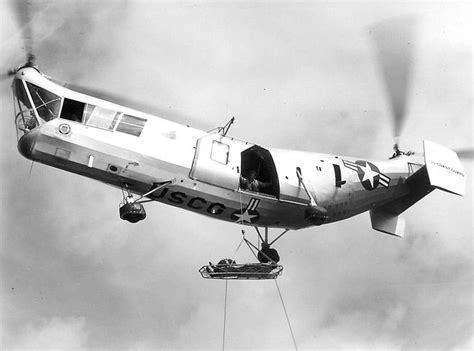
Between 1947 and 1950, the Coast Guard, Navy, and Marine Corps all deployed the Flying Banana in test roles and limited operational scenarios. The Marine Corps, in particular, assigned twelve HRP-1 units to Marine Helicopter Squadron HMX-1, using them to develop some of the earliest vertical assault tactics—a foundational step for future helicopter warfare.
The H-21 Shawnee Takes Flight: Speed, Height, and Vietnam
The HRP-1 eventually evolved into the H-21, with improved engines, avionics, and operational flexibility. The H-21C “Shawnee”, as it came to be known in U.S. Army service, set altitude and speed records, further validating Piasecki’s tandem rotor design. Its ability to transport a full infantry squad made it a vital asset, especially during the early phases of the Vietnam War.
Unfortunately, the H-21’s legacy in Vietnam was a mix of triumph and tragedy. On February 4, 1961, one of the H-21 Shawnees became the first U.S. helicopter shot down in Vietnam, a sobering moment that foreshadowed the intense rotorcraft combat operations that would define the conflict in years to come.
Boeing Takes the Baton: The Legacy of the Flying Banana
In 1960, Boeing acquired the Piasecki Helicopter Corporation, integrating it into what would become the company’s dedicated helicopter division. By that time, over 700 Flying Bananas had been built, making it one of the most widely produced tandem-rotor helicopters of the era.
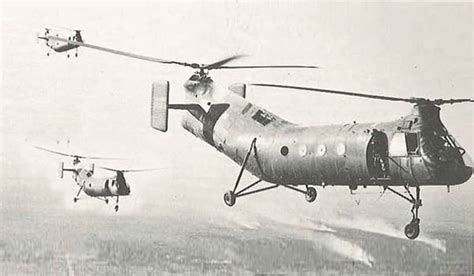
The H-21’s most significant contribution, however, was as a precursor to the CH-47 Chinook. Boeing’s legendary heavy-lift helicopter, still in service today, inherits its tandem rotor layout and rugged multi-mission DNA directly from Piasecki’s original Flying Banana. The Chinook went on to become a battlefield staple in every major conflict from Vietnam to Afghanistan.
A Design Ahead of Its Time: Engineering Ingenuity and Lasting Influence
What made the Flying Banana so revolutionary was its ahead-of-its-time engineering. The tandem rotors eliminated the need for a tail rotor, allowing all of the engine’s power to go toward lift and thrust. The curved fuselage, though unconventional, solved rotor clearance issues in a simple yet brilliant way. These design choices not only made the aircraft viable but also established engineering principles that are still used in tandem rotorcraft design today.
Moreover, its service across multiple military branches showcased its versatility—from troop transport and casualty evacuation to Arctic missions and maritime rescues. The H-21 was more than a proof of concept; it was a workhorse that set the standard for multi-role military helicopters.
Remembering the Banana: A Helicopter Worth More Than a Laugh
While the nickname “Flying Banana” might elicit smiles or chuckles, it’s a term that belies a legacy of innovation, bravery, and transformation. Frank Piasecki’s odd-looking machine changed the way militaries viewed helicopters—not just as spotters or novelties but as essential, powerful tools of warfare and rescue.
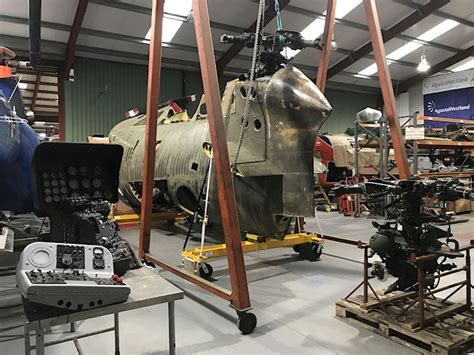
Today, surviving examples of the H-21 can be found in museums across the United States, where they continue to fascinate aviation enthusiasts and historians alike. And though modern military helicopters may have sleeker lines and greater capabilities, few can claim a heritage as colorful—or as consequential—as the Flying Banana.
Final Descent: The Flying Banana’s Place in Aviation History
In the vast and complex history of military aviation, the Piasecki H-21 Flying Banana holds a distinct and enduring place. It was an engineering oddity that proved wildly successful. It opened the door to the tandem-rotor lineage that continues to shape military capabilities today. And it stood as a testament to what happens when innovation challenges convention.
The Flying Banana might look funny. But it flew higher, lifted heavier, and changed military tactics more profoundly than nearly any helicopter of its time. That’s why this military helicopter earned a name so unusual—and a legacy so unforgettable.