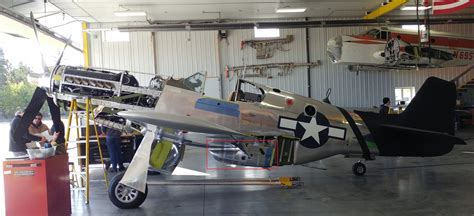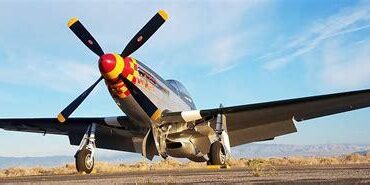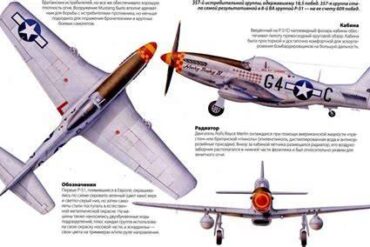
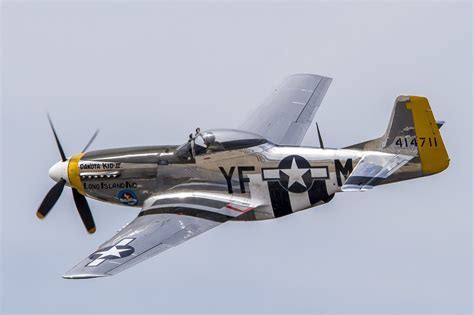
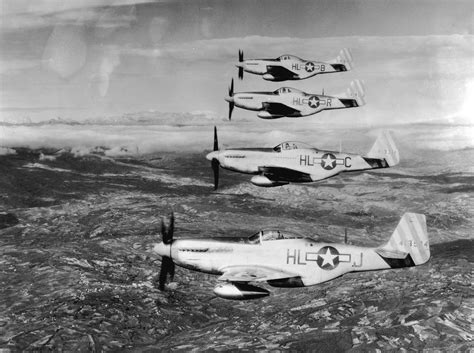
The P-51 Mustang, one of the most iconic fighter aircraft of World War II, owes much of its battlefield dominance not only to its speed and agility but also to its groundbreaking design. Among the Mustang’s standout features, the prominent ventral scoop—positioned underneath the fuselage—remains a subject of intrigue and engineering admiration. This scoop wasn’t merely an aesthetic quirk. It served as a sophisticated, multifunctional system that tackled the cooling challenges of high-performance aviation while contributing an unexpected benefit: additional thrust.
The story of the P-51 Mustang’s scoop begins with a problem that troubled engineers for decades—cooling drag. Aircraft engines, especially those using liquid cooling systems, generate immense heat. In early aviation history, particularly during World War I, planes struggled to manage this heat efficiently. Radiator systems mounted on these aircraft frequently disrupted airflow, increasing drag and reducing overall performance. As aircraft speeds increased into the 1920s and beyond, this drag became unacceptable in the race for aerial superiority.
The key breakthrough came in the form of a theoretical principle later tested and refined during the interwar years: the Meredith Effect.
The Meredith Effect: Turning Heat into Thrust
In 1935, British scientist F.W. Meredith proposed a groundbreaking concept in a study that would later reshape aviation design. He hypothesized that air entering a cooling duct could not only cool engine components but also contribute to the aircraft’s thrust output—if managed correctly.
Meredith theorized that the air could be slowed and compressed before passing through a radiator. After absorbing heat, this now high-pressure, high-temperature air could be accelerated as it exited a convergent-divergent duct, thus creating kinetic energy. Essentially, he discovered a method to recover waste heat and repurpose it as useful energy—an idea somewhat analogous to jet propulsion principles. By converting waste heat into forward momentum, the system could partially offset or even negate the drag penalty typically caused by cooling systems.
Early implementations of Meredith’s ideas were seen in British aircraft like the Hawker Hurricane and Supermarine Spitfire, though they didn’t fully optimize the thrust-recovery potential. Still, the concept attracted attention among high-speed aircraft engineers, including teams developing experimental racers like the Napier-Heston T.5, which ultimately suffered from overheating and never achieved its intended performance.
American Innovation Meets British Theory
By 1940, the United States began to integrate the Meredith Effect into new military aircraft, most notably in the development of the North American P-51 Mustang. The Mustang was initially equipped with the Allison V-1710 engine, a liquid-cooled inline V-12 powerplant. Engineers at North American Aviation recognized that incorporating a long, well-designed duct beneath the fuselage could transform the cooling system from a performance liability into a tactical advantage.
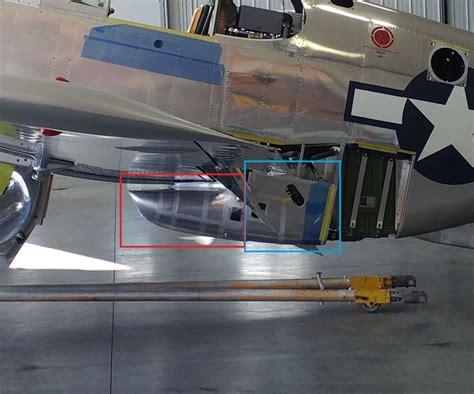
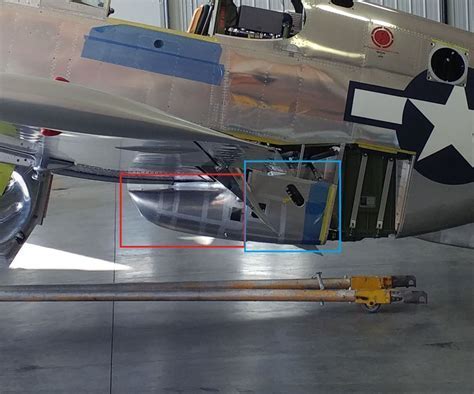
The P-51’s scoop housed several critical components:
- A radiator and aftercooler for managing engine temperatures
- An oil cooler to ensure lubrication remained stable during high-G maneuvers and long missions
- A movable inlet and exit flap system, allowing airflow to be precisely modulated based on flight conditions
Eventually, the designers settled on a fixed inlet design after extensive wind tunnel testing. This allowed the scoop to continuously harness high-speed airflow, compress it through a duct, and discharge the heated, accelerated air in a rearward direction. In theory—and likely in practice—this produced measurable thrust.
Performance Gains That Shaped the Air War
Even if engineers couldn’t quantify the exact amount of additional thrust generated by the scoop, the results spoke for themselves. The Mustang, once paired with the Rolls-Royce Merlin engine in later variants (notably the P-51B and P-51D), achieved breathtaking performance. With a top speed of 425 mph at 30,000 feet, long range, and unrivaled maneuverability, the P-51 quickly earned its place as a premier fighter escort and bomber destroyer over Europe.
The combination of low drag, high power, and efficient cooling made the P-51 incredibly versatile. It could deliver a 2,000-pound bomb load, conduct long-range missions deep into enemy territory, and outperform Axis fighters in sustained combat. Pilots praised its responsiveness, fuel economy, and survivability—qualities directly influenced by the aircraft’s aerodynamic efficiencies, including its ventral scoop design.
Aerodynamic Elegance and Engineering Precision
The scoop’s long duct, unique among Allied fighters, provided superior airflow management compared to the short ducts used in European designs. This innovation allowed for better thermal regulation while maximizing airflow pressure differential—the precise conditions needed for Meredith Effect thrust to occur. The placement under the fuselage was also optimal, reducing turbulence and helping maintain the Mustang’s laminar flow wing characteristics, which further reduced drag.
Importantly, the scoop didn’t interfere with the aircraft’s center of gravity or increase vulnerability in combat. It was integrated seamlessly into the fuselage and reinforced for durability, protecting it from small arms fire and debris. Its functional benefits far outweighed any potential drawbacks, solidifying its role as an essential element of the P-51’s aerodynamic success story.
Legacy of the Scoop in Aviation History
Although the P-51’s scoop may seem like a niche design curiosity today, it represented one of the earliest practical applications of a principle that would later influence jet propulsion and thermodynamic optimization in aerospace design. While not a jet engine in any formal sense, the scoop’s function parallels the way modern turbofan engines extract energy from airflow to generate thrust.
The success of the P-51 and its scoop was so influential that later post-war aircraft began experimenting with integrated cooling and propulsion systems, where every ounce of airflow was scrutinized for its potential to reduce drag or contribute to thrust.
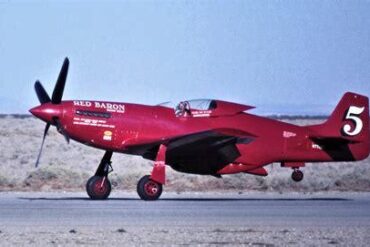
Even in the 21st century, the scoop design remains a point of fascination for aviation historians, engineers, and restorers of vintage warbirds. Modified Mustangs competing in Reno Air Races or restored for air shows continue to showcase the performance potential of this seemingly humble underbelly feature. In 2017, a modified P-51 Mustang set a record of 531 mph, a testament to the enduring genius of its engineering foundation.
Conclusion: More Than Just a Scoop
To the casual observer, the P-51 Mustang’s belly scoop might appear as a simple radiator intake. But beneath its unassuming shape lies a story of innovation, wartime necessity, and scientific insight. The integration of the Meredith Effect into the Mustang’s design solved one of aviation’s greatest challenges—cooling without compromising speed—and turned a potential weakness into a strategic advantage.
Through a blend of British theoretical physics and American aeronautical engineering, the P-51 Mustang emerged not only as a war-winning aircraft but also as a case study in how thermal and aerodynamic challenges can be overcome through elegant design. The scoop was not just functional—it was revolutionary.