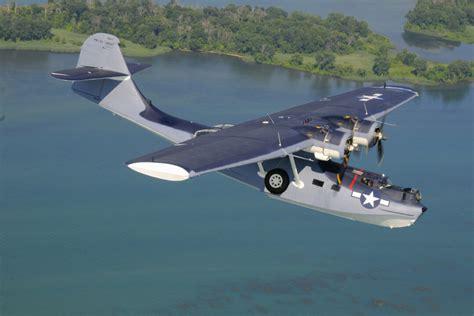
Among the most enduring and versatile aircraft of the 20th century, the Consolidated PBY Catalina stands as a symbol of ingenuity, resilience, and multi-role excellence. Born in the interwar years and matured into prominence during World War II, the Catalina was a maritime patrol bomber and amphibious flying boat that played critical roles across multiple theaters of war. Known in different services as the OA-10 (U.S. Army Air Forces), Canso (Royal Canadian Air Force), and NATO reporting name Mop, this aircraft’s legacy is deeply embedded in the fabric of aerial maritime operations.
Originally designed by Consolidated Aircraft, over 3,300 units were built by several manufacturers, including Boeing Canada (PB2B), Canadian Vickers (PBV), and the Soviet Taganrog factory (GST). From its first flight on March 21, 1935, to its final military retirement in 1982 by the Brazilian Air Force, the Catalina’s robust utility and reliability made it a legend among aircrews worldwide.
A Vision Born of Naval Necessity
The Catalina’s inception was driven by the U.S. Navy’s urgent requirement for long-range patrol bombers that could project power across the Pacific. With Japan’s rising influence in the 1930s, maritime surveillance and supply line disruption became paramount. In October 1933, the Navy initiated a competitive design program. Consolidated’s XP3Y-1, which evolved into the Model 28, triumphed over Douglas’s rival design largely due to cost effectiveness and innovation.
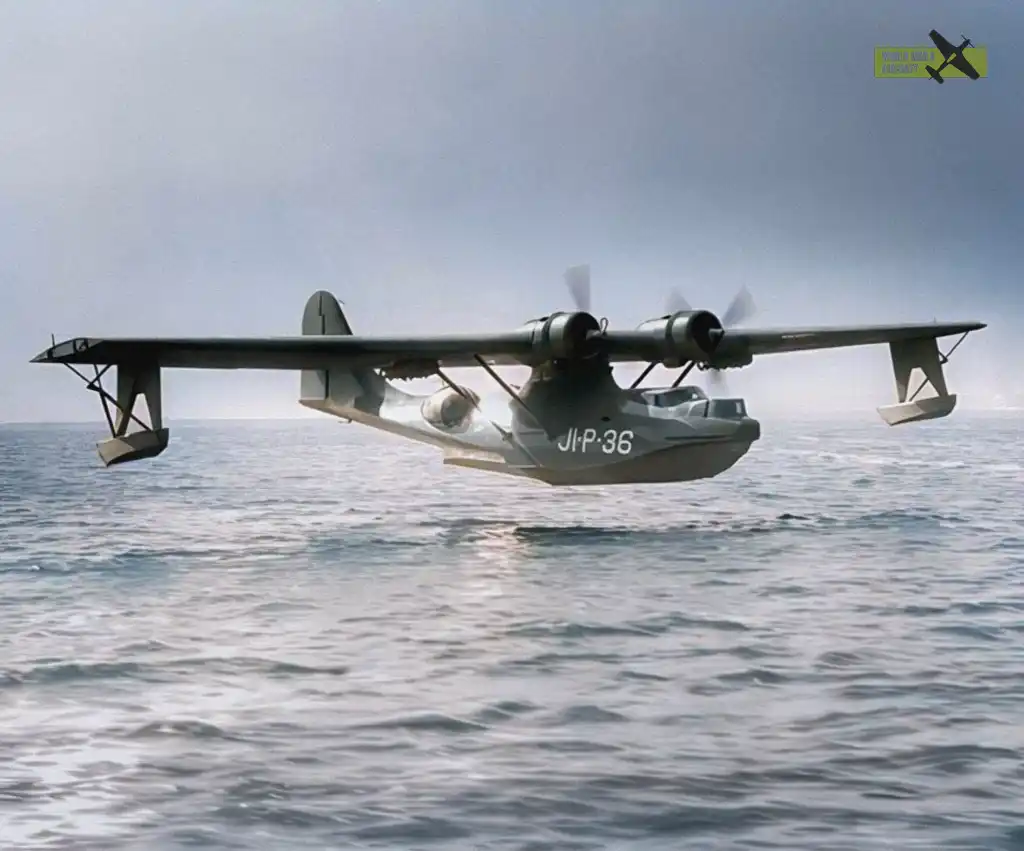
Featuring a parasol-mounted wing, retractable wingtip floats licensed from Saunders-Roe, a two-step hull, and a cruciform tail, the aircraft was both structurally advanced and hydrodynamically efficient. Constructed mostly of stressed-skin aluminum with fabric-covered control surfaces, the Catalina’s initial design was a leap forward in flying boat technology. Powered by Pratt & Whitney R-1830 Twin Wasp radial engines, the aircraft also boasted a respectable weapons payload and impressive range.
From Prototype to Record-Breaker
The original XP3Y-1 made its maiden flight in March 1935. Further enhancements led to the XPBY-1, featuring more powerful engines (900 hp), improved vertical stabilizers, and tail refinements. On May 19, 1936, it completed a non-stop record-setting flight of 3,443 miles, setting the tone for what the Catalina would accomplish in wartime.
Deliveries to U.S. Navy Patrol Squadrons VP-11F and VP-12 followed in 1936–37. In 1941, the British ordered 30 units and dubbed the model “Catalina”, a name that would become synonymous with excellence.
The PBN Nomad: Soviet Adaptation and U.S. Upgrades
The Naval Aircraft Factory (NAF) undertook a major modification program, resulting in the PBN-1 Nomad. With a sharper, extended bow, enlarged tail, 50% greater range due to larger fuel tanks, and structural strengthening, the Nomad represented a significant evolution of the base design. Of 156 units built, 138 were transferred to the Soviet Navy under Project Zebra during WWII, while 18 supported U.S. training operations.
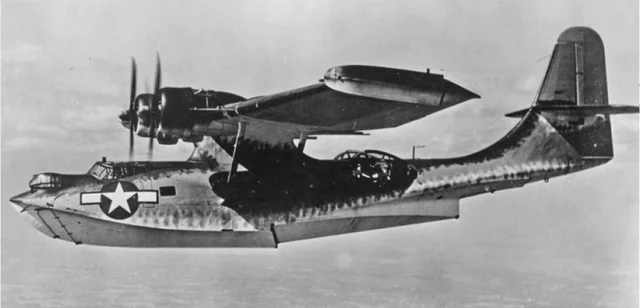
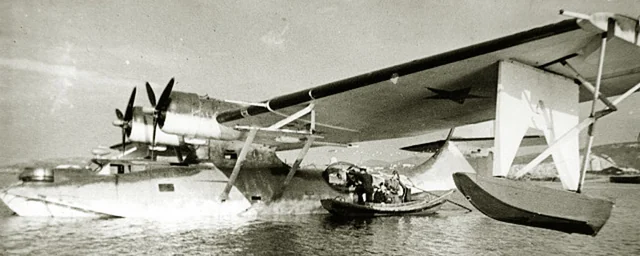
Later, several improvements from the PBN were incorporated into the PBY-6A, including its larger vertical stabilizer.
Roles Across the Globe: Combat and Beyond
A Workhorse in WWII’s Air-Sea Theatre
The PBY Catalina was indispensable across major WWII operations. Despite its modest speed and low-altitude cruising, it was irreplaceable in long-endurance missions over water. The aircraft served with distinction in antisubmarine warfare (ASW), maritime patrol, bombing, convoy escort, and search and rescue (SAR).
On December 10, 1941, Lieutenant Harmon T. Utter’s Catalina scored the U.S. Navy’s first aerial kill of a Japanese Zero during the Philippines campaign. Utter would later direct carrier strikes that destroyed the Yamato, Japan’s largest battleship.
On December 27, 1941, VP-101 Catalinas bravely struck Japanese shipping at Jolo Island. Four aircraft were lost to enemy fighters, but the mission underscored the Catalina’s ability to function as an attack platform.
Underwater Hunters: Antisubmarine Missions
In the Atlantic, Pacific, Indian Ocean, and Arctic, Catalinas were relentless sub-hunters. The type accounted for 40 U-boat kills, including Brazil’s attack on U-199 in July 1943, with the aircraft later named Arará. Two Victoria Crosses were awarded to Catalina pilots: RAF F/O John Cruickshank for sinking U-361, and RCAF’s F/L David Hornell, who perished after downing U-1225.
Eyes in the Sky: Legendary Reconnaissance Missions
Catalinas were instrumental in tracking major enemy warships. On May 26, 1941, an RAF Catalina located the German battleship Bismarck, enabling her destruction. Later that year, another Catalina was the first Allied casualty in the Pacific War when it encountered Japanese forces near Kota Bharu.
During the Battle of Midway, Catalina crews located the incoming Japanese fleet, a critical intelligence breakthrough that allowed U.S. carriers to prepare a devastating counterattack.
Black Cats and Nocturnal Warfare
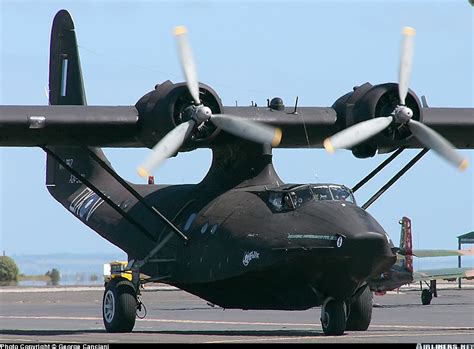
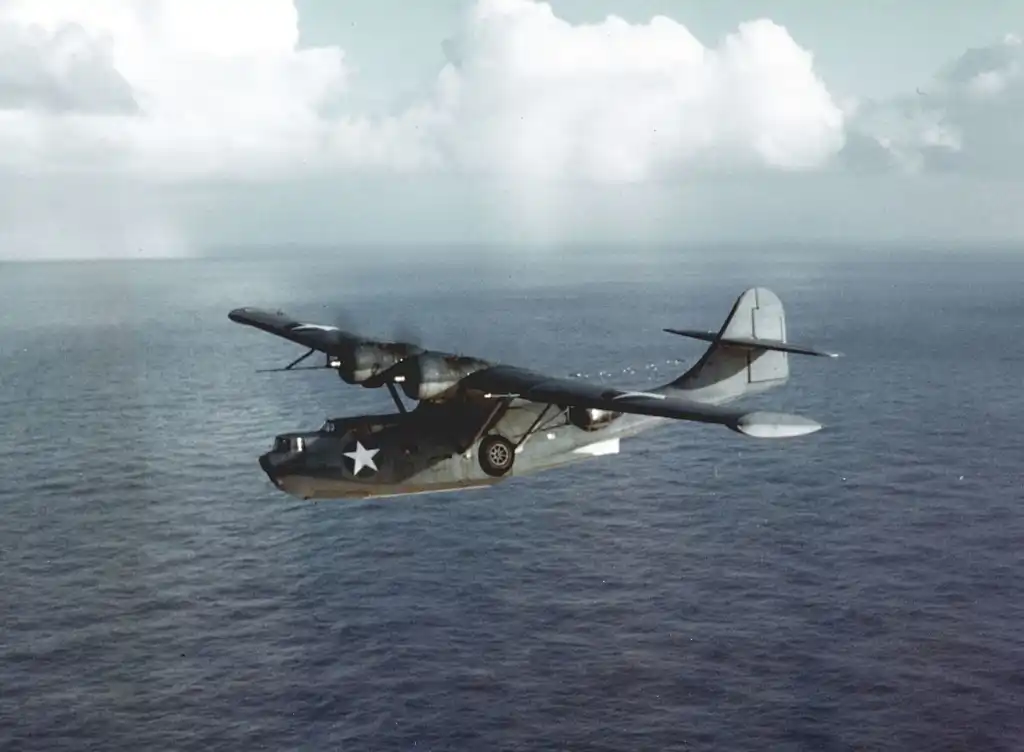
A defining evolution of the Catalina was its use in night interdiction operations. Painted matte black, the so-called Black Cats operated from 1942 onward, harassing Japanese shipping and supply chains under cover of darkness. Flying dangerously low, these aircraft bombed, torpedoed, and strafed enemy vessels and installations.
In the Southwest Pacific, the Royal Australian Air Force (RAAF) deployed Catalinas in mine-laying missions that choked strategic ports such as Balikpapan. These flights sometimes lasted over 20 hours and used creative “terror bombs” like empty beer bottles to demoralize Japanese garrisons.
Heroes of the Sea: Search and Rescue
Catalinas saved thousands of lives through daring rescue operations. Perhaps the most famous was LCDR Adrian Marks’ rescue of 56 survivors from the torpedoed USS Indianapolis. With his aircraft overloaded, Marks kept the Catalina on water as a lifeboat until naval vessels arrived. The bravery and utility of these aircraft in SAR roles became a cornerstone of their legacy.
Beyond War: Commercial and Post-War Contributions
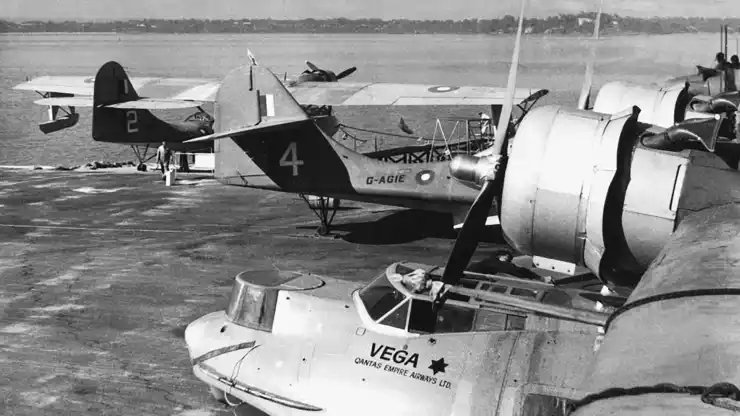
After WWII, the Catalina seamlessly transitioned to peacetime roles. Qantas Empire Airways operated the legendary Double Sunrise flights from Perth to Colombo, covering 3,592 nautical miles non-stop over 28–32 hours in total radio silence. With limited payloads, these were the longest commercial flights in history by duration.
In 1951, famed aviator Sir Gordon Taylor flew “Frigate Bird II”—an ex-RAAF Catalina—from Australia to Chile across the South Pacific, a pioneering transoceanic feat.
Though retired from U.S. Navy use by 1957, the Catalina continued service globally. Brazilian Air Force Catalinas supplied remote Amazonian detachments until 1982, with one aircraft’s insignia proudly featuring a winged turtle and the motto: “Though slowly, I always get there.”
The aircraft also entered civilian life in unique ways: filmmaker Jacques-Yves Cousteau used a Catalina for ocean exploration. Unfortunately, it was in this aircraft that his son Philippe Cousteau was killed during a hull inspection accident in Lisbon.
Variants and Innovation
The PBY evolved across numerous models:
- PBY-1 to PBY-5A: Progressive engine upgrades, increased payloads, amphibious capability.
- PBY-6A: Taller vertical stabilizer, radar above cockpit, last major U.S. variant.
- PBN-1 Nomad: Modified extensively by the NAF; exported largely to the USSR.
- Canso / Canso A: Canadian-built variants with amphibious features.
- Super Catalina (Super Cat): Steward-Davis conversion with Wright R-2600 engines, increased power, and structural reinforcements.
Notably, China Airlines was founded with two Catalina amphibians, signaling their versatility even in startup aviation contexts.
A 21st-Century Resurrection
In July 2023, Catalina Aircraft, now the holder of the type certificate, announced the Catalina II—a turboprop revival of the classic design. With expected deliveries beginning in 2029, this modernized amphibian aims to blend nostalgic form with 21st-century aerospace technology, potentially offering roles in firefighting, SAR, and transport.
The Catalina Affair: Cold War Intrigue
The Catalina’s Cold War relevance was underscored in June 1952 when a Swedish Air Force TP 47 was shot down by Soviet MiG-15s while investigating the disappearance of a Swedish DC-3 on a SIGINT mission. Dubbed the Catalina Affair, it highlighted the ongoing risks faced by maritime patrol aircraft in the early Cold War theater. The Catalina crew survived, rescued by a civilian ship.
Conclusion: A Legacy That Soars On
The Consolidated PBY Catalina was far more than just a seaplane. It was a global sentinel, rescue angel, and naval warrior that defined an era of aviation with its adaptability and grace. Whether bombing enemy fleets, saving downed airmen, or pioneering transoceanic routes, the Catalina remains a legendary aircraft that continues to inspire both historians and aviators today.
From World War II to peacetime exploration, its wings touched nearly every ocean—and perhaps soon, with the Catalina II, they will again.