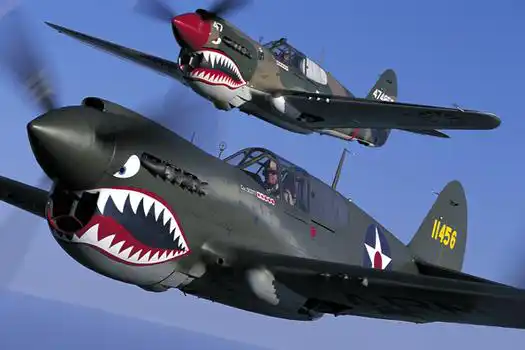
Air power became a key part of warfare during World War I, but the aircraft themselves were still early prototypes of what was to come. By the start of World War II in 1939, things had changed drastically. Europe, North America, and parts of Asia had developed sleek, powerful planes with serious firepower—and in many cases, bold and memorable designs.
When the United States entered the war, the skies grew even more intense. The Allies brought in aircraft like the P-51 Mustang, Avro Lancaster, B-29 Superfortress, and newer versions of the famous Supermarine Spitfire. These planes didn’t just dominate in combat; they also left a legacy of beauty, performance, and influence that still captures attention today.
Tough and smartly built, the 13 aircraft featured here stood out not only for what they did in the war, but for how they looked doing it. They represent the design values, combat demands, and creative risks of the 1940s.
P-51 Mustang
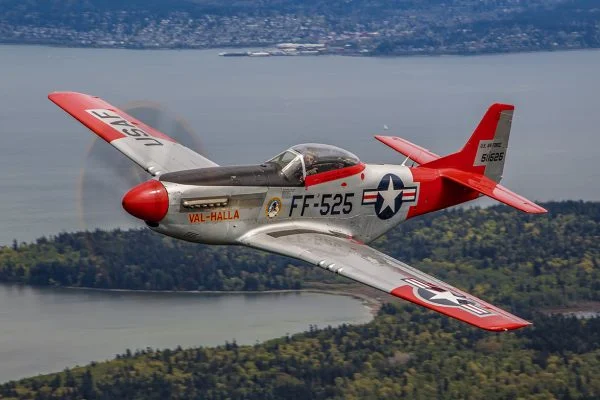
The P-51 Mustang is one of the most iconic fighter planes of all time. Around 8,000 units of the P-51D version were made. One of its standout features was the “bubble top,” a clear, domed canopy above the pilot. This allowed for a wide field of view, improving both combat awareness and control.
Another innovation was its wing design, which produced laminar flow. This reduced drag by nearly half and worked alongside a smoother outer surface known as conical lofting. The result was a fast and agile plane that looked just as sleek as it performed.
P-51s were used in a variety of missions, including long-range and high-altitude combat. In total, they destroyed more enemy aircraft over Europe than any other Allied plane—4,950 confirmed kills.
Supermarine Spitfire
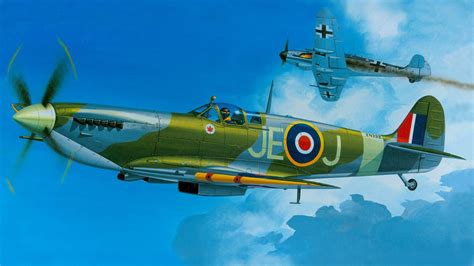
The Supermarine Spitfire is the pride of British aviation. Designed by Reginald Mitchell, a passionate engineer, the plane became legendary, even though Mitchell sadly passed away before seeing its full impact in battle. He did, however, witness its maiden flights.
This fighter used a two-stage supercharged Merlin engine, made in collaboration with Rolls-Royce. It also featured a unique elliptical wing. More than just stylish, this shape reduced drag and allowed faster speeds. Plus, it placed the plane’s eight machine guns outside the propeller’s arc, meaning it didn’t need an interrupter gear to shoot forward.
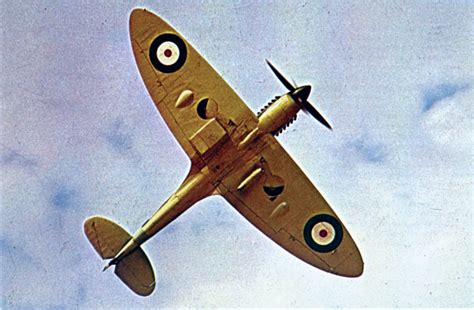
The Spitfire was nimble, made entirely of metal, and played a key role in countering German dominance in the air. Throughout the war, Spitfires shot down 529 enemy aircraft and lost 230. Over 20 versions were created, each improving on the last while keeping the classic Spitfire look.
Gloster Gladiator
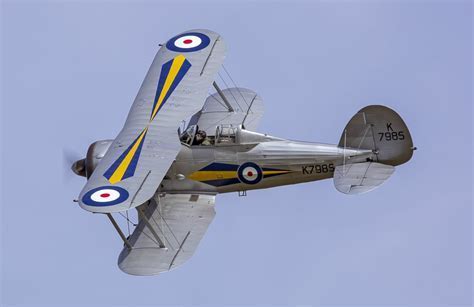
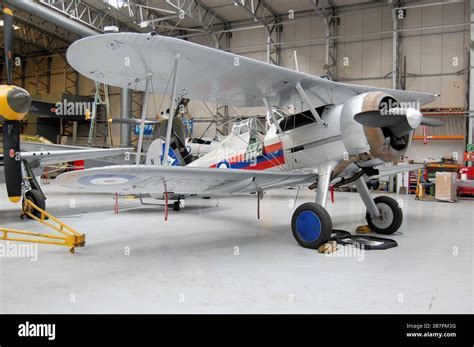
The Gloster Gladiator offers a different kind of beauty. It was the last biplane made by the RAF for combat roles. Though it didn’t fare well against modern German fighters, it remains a favorite among aviation lovers.
Built with two wings stacked above each other, it had a single forward propeller and fixed landing gear. As newer planes became dominant, the Gladiator saw less action, but it did play a key role in defending Malta.
Though it couldn’t compete long-term, its nostalgic charm and bold biplane structure keep it in the spotlight.
Lockheed P-38 Lightning
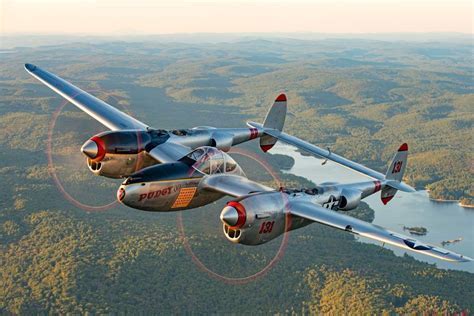
The Lockheed P-38 Lightning stood out immediately thanks to its unusual twin-boom design. This layout separated the tail from the central cockpit, leaving the middle of the plane open. It wasn’t just for looks—the design helped support twin engines, crucial for Pacific missions.
It had a rounded nose and two large engine pods behind the propellers, giving it a strong, futuristic profile. Surprisingly, this was Lockheed’s first military aircraft. Charles Lindbergh flew one in the Pacific and taught pilots how to stretch its range. Col. Robin Olds famously called it “the most beautiful plane of our generation.”
Powered by twin turbocharged Allison V-1710 engines, each producing up to 1,700 bhp, the P-38 could fly high and fast. Richard Bong, America’s top ace, scored 40 kills in a P-38. German pilots gave it a chilling nickname: “the forked-tail devil.”
Boeing B-29 Superfortress
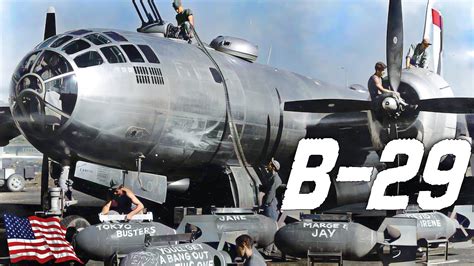
The B-29 Superfortress built on the success of the B-17, taking it to another level. Bigger in every dimension, its wings stretched over 141 feet wide, and its height reached nearly 28 feet—almost double that of a modern F-35. It could also carry 20,000 pounds of bombs, four times more than its predecessor.
When resting on the runway, the B-29 sat low, with four massive engines and a long, rounded window arching over the cockpit. It measured 99 feet in length and bristled with machine guns pointing in nearly every direction.
It was also the first bomber to feature pressurized crew cabins. This allowed it to fly higher, beyond the reach of most enemy defenses. One pilot said, “It just blew my mind. First of all, its size, and then its capabilities…” Visually and technically, the B-29 was stunning.
Gloster Meteor
The Gloster Meteor earned a special place in history as the only Allied jet fighter to see action during WWII. It had polished aluminum skin, smooth curves, and jet engines extending from each wing. The design was futuristic and aerodynamic.
Its tail was shaped like a guitar pick, with a vertical fin rising upward and a horizontal element slicing across it. Seen from above, the Meteor’s wings were short but deep, giving it a squat, powerful stance. The engines were placed close to the centerline, only about five feet from the fuselage.
The tail fin reached the midpoint of the engines, and the wings arched upward at a gentle angle, completing its graceful, balanced form.
The most striking design feature of the Gloster Meteor was undoubtedly its clipped wings. This design wasn’t just about looks — it solved key stability issues discovered during tests with the Mk. 4 model. By trimming almost 6 feet off the wing tips, engineers significantly improved the aircraft’s handling. The new look also created a compact, powerful appearance, with the engines and cockpit tightly nestled together.
Some Meteors had already begun production when the redesign was finalized, so rather than pause and start from scratch, many existing models were simply retrofitted with the modified wings. That decision likely saved both time and resources, while also delivering better flight performance.
Bell P-63 Kingcobra
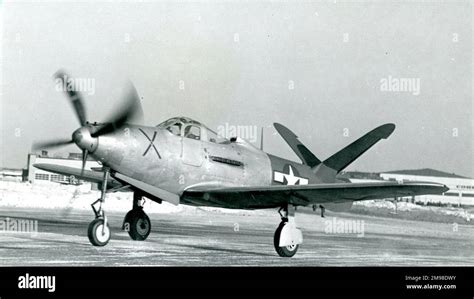
Although the Bell P-63 Kingcobra was an American creation, it never bore the stars and stripes in combat. Instead, the aircraft was shipped overseas — mostly to the Soviet Union — where it was used primarily for training and target practice. Of the 3,300 units built, approximately 2,300 ended up in Soviet hands, while around 300 more were given to Free French forces.
Unique to the Kingcobra was its angular design, including a side door and heavily armored hull. A hit-indicator lighting system was installed to aid in training exercises. Its silhouette looked more like a beefed-up Cessna than a typical military aircraft of the time. The unusual appearance and limited power kept it out of frontline American or British service, and it was ultimately treated as a lend-lease product.
Despite this, the Kingcobra has a certain charm. Its rounded underbelly, long nose, and bulging cockpit offer a memorable look, making it a standout example of World War II-era engineering creativity.
Lockheed P-80 Shooting Star
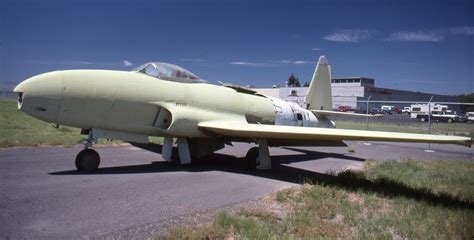
True to its name, the Lockheed P-80 Shooting Star was a game-changer for American aviation. It became the first U.S. jet fighter to fly in combat — during the Korean War — and was also the first mass-produced jet fighter in the country’s history. Even before entering combat, it broke barriers by being the first American aircraft to exceed 500 mph in level flight, with later models reaching over 600 mph.
Built with sleek lines and flush rivets, its design was ultra-aerodynamic. In fact, it looked almost like a bullet slicing through the air. From initial concept to flying prototype, the P-80 took just 143 days to build. Four early versions, marked YP-80, were sent to Europe, but the war ended before they could engage in combat.
Though originally crafted for high-altitude interception, the P-80 adapted to many roles during the Korean War. Its speed, sleek shape, and performance solidified its place as one of the coolest aircraft to emerge from World War II development.
Hawker Hurricane
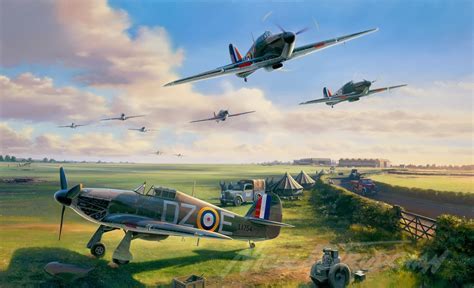
The Hawker Hurricane began service with the Royal Air Force in 1937 and quickly became a backbone of Britain’s aerial defense. By the time the Battle of Britain began in 1940, it was central to the country’s survival, responsible for downing more enemy aircraft than all other British defenses combined.
At the war’s start, Britain had roughly 500 Hurricanes, many of which were stationed in France. Production increased rapidly, and by September 1940, the RAF operated 32 Hurricane squadrons — up from just 18. Its impact during that period was enormous.
The Hurricane’s design was clean and practical. It had a sliding cockpit window, a sleek frame, and a short taper running from its propeller nose to the tail. Armed with eight wing-mounted Browning machine guns, it fired .303 caliber rounds at high speed. Despite its simplicity, the Hurricane was fast, tough, and a relentless fighter.
De Havilland Mosquito
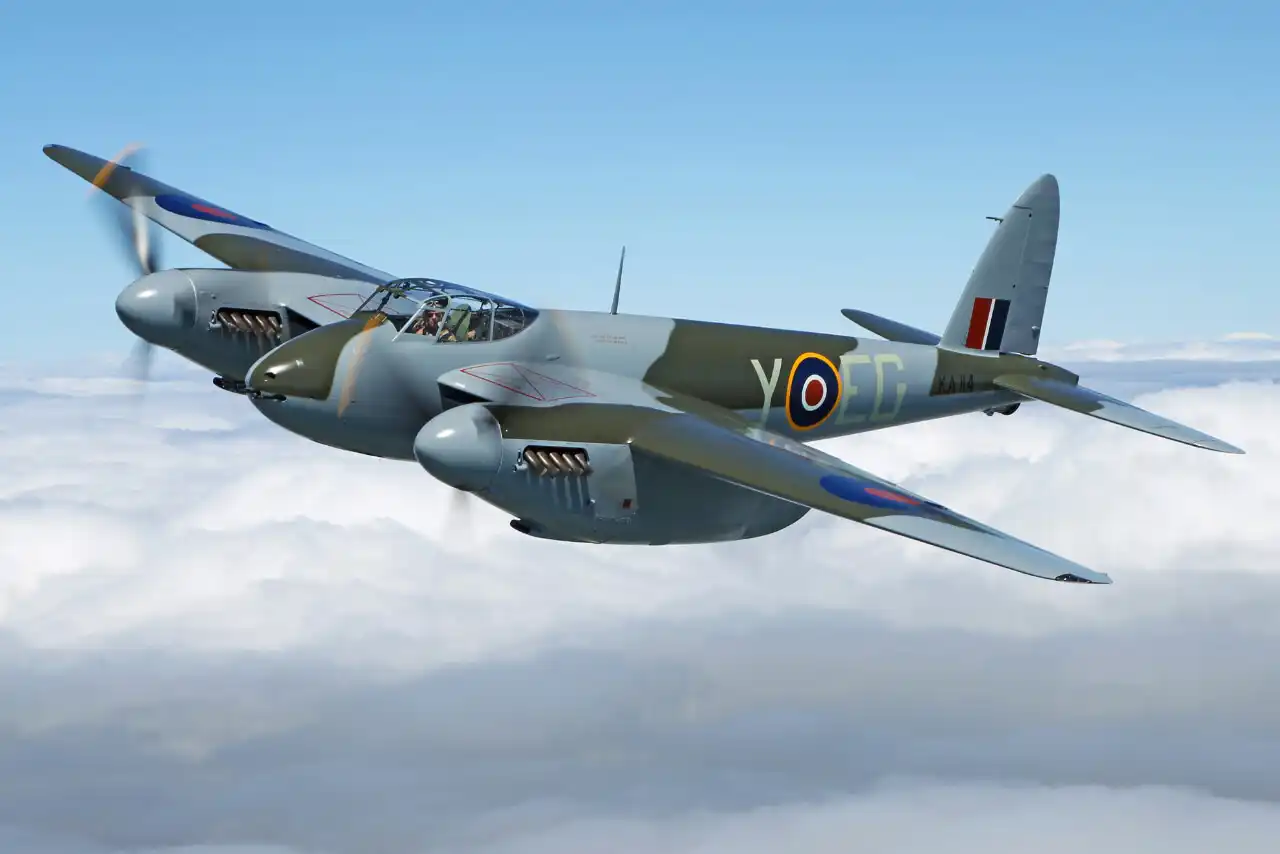
Unlike many of its bulky peers, the De Havilland Mosquito stood out with its lightweight wooden airframe, built from plywood and balsa. This gave it a unique agility and speed for a bomber. Seen from above, the Mosquito’s wings had a sharp triangular taper, stretching to a wingspan of 54 feet, 2 inches. From the side, the wing tops ran nearly flat across.
Originally conceptualized for the England-Australia Air Race, the Mosquito evolved into a highly effective wartime bomber. The wooden segments were glued and screwed together, then joined with balsa spacers and covered in aircraft fabric. The combination resulted in a nimble aircraft that could outmaneuver many threats. In tight turns, it even produced noticeable vortices at the wingtips.
About 8,000 Mosquitoes were built in Britain, Canada, and Australia. Some were provided to American forces via reverse lend-lease. Canadian-built versions were reclassified as F-8s and used for photo reconnaissance. With two Rolls-Royce Merlin engines packing a combined 3,380 horsepower, the Mosquito’s performance matched its distinctive looks — especially the powerful nose section that immediately drew attention.
Vickers Wellington
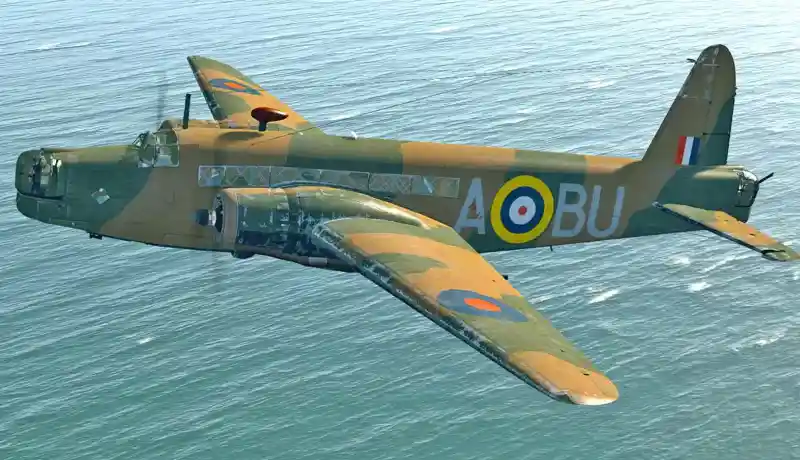
The Vickers Wellington was Britain’s only bomber produced for the entire duration of World War II. Its most unique feature was the geodetic airframe — a lattice-like structure that offered strength and flexibility. This design also gave the crew easy access to all parts of the aircraft.
The Wellington’s layout included a cockpit positioned behind the nose, which held a forward-facing gun turret in a separate cabin. A second turret was located under the tail. Overall, the shape was boxy, with only a slight taper at the bottom. Its twin engines were mounted close to the fuselage, and the wings rose slightly from the center. A tall tail fin with a single rudder became a signature of the Wellington’s silhouette.
Versatile by design, the Wellington took on many roles beyond bombing. Some were equipped with high-powered searchlights for nighttime missions, while others supported maritime patrol and anti-submarine operations. In May 1940, Wellingtons led the first 1,000-bomber raid over Germany. One was even assembled from start to finish in under 24 hours — a testament to British wartime urgency and ingenuity.
Vought F4U Corsair
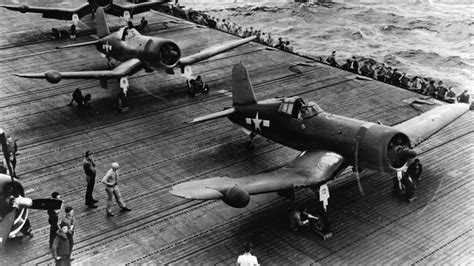
Though the British Navy pioneered prototype aircraft carriers in World War I, it wasn’t until the second global conflict that these ships proved truly critical. Especially in the Pacific Theater, American carriers dominated, launching everything from fighters to dive and torpedo bombers. Major victories at battles like Coral Sea, Midway, and Guadalcanal were secured thanks to these floating airbases. Since then, carriers have remained the cornerstone of naval power — despite the existence of alternative platforms.
Among the aircraft that operated from carriers during WWII, the Vought F4U Corsair stood out. It was a high-speed fighter, equipped with a huge 13-foot propeller that enabled it to fly beyond 400 mph — a major feat for the time.
To make room for that oversized propeller while preserving flight efficiency, engineers gave the Corsair its signature inverted gull wings. These wings bent downward at mid-span, reducing drag while also improving landing gear performance and low-speed control — vital traits for carrier operations. Tests confirmed the shape was the perfect balance of speed, stability, and practicality.
The result? A star performer. Over 12,000 Corsairs were produced before the line ended in 1952. At just over 33 feet in length and 41 feet across the wings, the Corsair resembled the iconic P-51 Mustang when viewed from the side. But the unique wing shape gave it a personality all its own — powerful, poised, and unmistakable.
Avro Lancaster
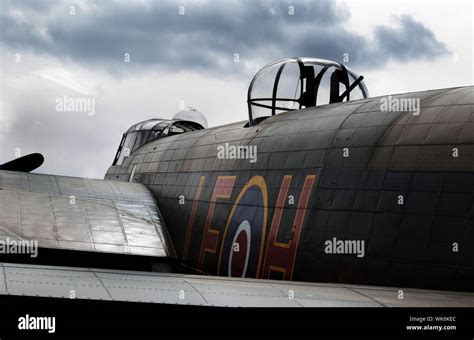
Britain’s most successful bomber of World War II was the Avro Lancaster. Fitted with four mighty Merlin engines — each pushing out 1,460 horsepower — the Lancaster was a beast in the skies. Avro rolled out about 7,300 units, most of which specialized in night bombing missions over Europe.
The Lancaster’s look was just as intimidating as its payload. Two large gun turrets dominated the front, with others placed around the aircraft for full defensive coverage. The pilot’s cockpit sat above, encased in a rounded glass canopy that provided excellent visibility. Combined with the oval body and layered gun compartments, the plane took on a look that some say resembled an oversized over-under shotgun.
Its massive 102-foot wings were nearly symmetrical, adding to the aircraft’s balance and strength. The dual tailfins, each mounted on opposite ends of the 33-foot tailplane, increased stability and widened the arc for the rear gunner — a crucial edge during heavy fire engagements.
The Lancaster replaced the underpowered twin-engine Manchester, which had been plagued by reliability issues. This four-engine upgrade was a complete turnaround. With a seven-person crew, the Lancaster could carry more than 33,000 pounds of bombs and fuel, covering nearly 2,500 miles per mission. Its presence overhead spelled serious trouble for enemy forces below.