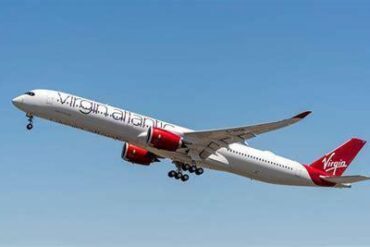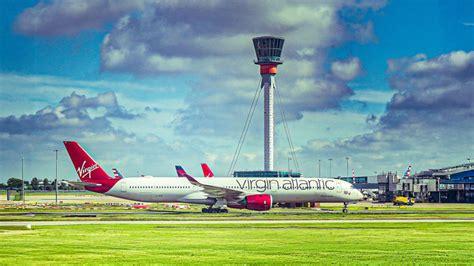
Virgin Atlantic has built much of its identity around long-haul flying, and North America has been one of the most important pillars of that network. From its first revenue flight to Newark in 1984 to its modern services across the United States, Canada, Mexico, and the Caribbean, the airline has repeatedly adjusted its transatlantic footprint as demand and commercial priorities changed.
Over the past two decades, that process has included the withdrawal of five North American routes. The destinations were Chicago, Newark, Detroit, Austin, and Vancouver, although the reasons behind each cancellation were very different. Some routes disappeared because of extraordinary events, while others were casualties of changing demand, network restructuring, or disappointing performance.
The changes illustrate an important characteristic of Virgin Atlantic’s business model. The airline has never attempted to serve every major North American city simply because it can. Instead, its network has evolved around routes where it believes its aircraft, schedule, partnerships, and premium-heavy customer base can generate attractive returns.
Chicago O’Hare: A Route That Survived Once but Not Twice
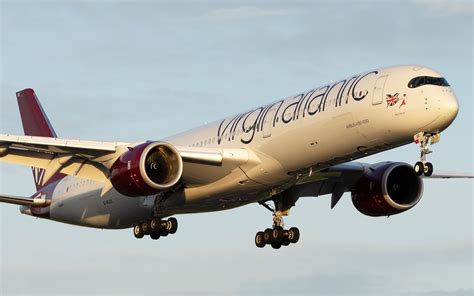
Chicago O’Hare International Airport was one of Virgin Atlantic’s most notable discontinued North American destinations. The airline originally launched its London Heathrow-Chicago service in 1999, operating a daily nonstop flight with Boeing 747-200 aircraft.
The timing soon became problematic. Following the September 11 attacks in 2001, international aviation demand plunged, particularly on long-haul routes. Virgin Atlantic suspended its Chicago operation in October that year, demonstrating how quickly a major global event could alter the economics of an established transatlantic service.
The route eventually returned, with Virgin Atlantic rebuilding its presence between Heathrow and Chicago. Yet the second chapter did not last indefinitely. The airline ultimately ended the service in 2016, as it sought to optimize its network and deploy aircraft on routes offering stronger commercial opportunities.
One revealing decision came when a Boeing 787-9 originally intended for Chicago was instead used to support a third daily London Heathrow-Los Angeles service. That choice underlined the strategic calculation behind the cancellation: aircraft capacity could potentially earn more on established, higher-demand markets than on Chicago.
Newark: Virgin Atlantic’s Historic First Destination
Few route cancellations in Virgin Atlantic’s history carry as much symbolism as Newark. The New Jersey airport was the destination of the airline’s first-ever revenue flight, which departed London Gatwick in June 1984.
Newark therefore represented more than another point on the network. It was effectively the route on which Virgin Atlantic began its commercial life as a transatlantic airline. Over the following decades, the carrier accumulated thousands of flights between the United Kingdom and Newark.
According to scheduled-flight data, Virgin Atlantic operated approximately 9,140 one-way flights to Newark over the 20-year period examined. Yet even such a historically important route could not escape the dramatic disruption caused by the COVID-19 pandemic.
Virgin Atlantic eventually stopped serving Newark in 2020, bringing an extraordinary 36-year chapter to an end. The cancellation also reflected the wider transformation of international aviation during the pandemic, when airlines were forced to reconsider capacity, aircraft utilization, and the viability of individual routes.
Detroit: A Short-Lived Virgin Atlantic Operation
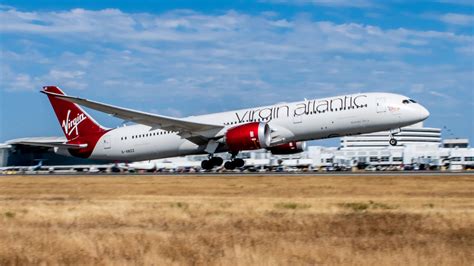
Detroit Metropolitan Wayne County Airport represents a different kind of network change. Virgin Atlantic began operating the route in 2015, taking over the service from Delta Air Lines as part of the airlines’ broader joint venture relationship.
The arrangement made strategic sense. Virgin Atlantic and Delta have maintained a close commercial partnership, allowing the two carriers to coordinate networks and provide customers with broader access across the Atlantic and beyond. Detroit was therefore not simply a standalone Virgin Atlantic experiment; it formed part of a wider partnership strategy.
However, the Virgin Atlantic operation lasted only until 2017. Following a broader network reshuffle, the flying moved back to Delta aircraft. The result was effectively a return to the previous operating structure, showing how airline partnerships can change the identity of a route without necessarily eliminating the underlying city pair.
Virgin Atlantic’s Detroit experience also highlights why route numbers alone can be misleading. A destination can disappear from an airline’s timetable while the broader partnership continues to provide connectivity between the same markets.
Austin: Post-Pandemic Corporate Demand Changed the Equation
Virgin Atlantic launched its London Heathrow-Austin-Bergstrom International Airport service in 2022, during the complicated period when airlines were rebuilding international networks after the pandemic.
Austin had several attractive characteristics. The Texas city had developed into an important technology, business, and cultural center, while the United Kingdom remained a significant source of international visitors and corporate traffic. At launch, the route reflected optimism that transatlantic demand would continue recovering.
However, the market did not develop as expected. Virgin Atlantic discontinued the Austin route in 2024, with the airline pointing toward changes in corporate travel demand following the COVID-19 pandemic.
That explanation is significant because corporate travelers have traditionally been particularly valuable to long-haul airlines. A route can carry plenty of leisure passengers and still struggle financially if premium and business demand is weaker than anticipated.
Austin therefore became another example of airlines reassessing their networks after the pandemic changed where, why, and how frequently people travel internationally.
Vancouver: Virgin Atlantic’s Only Canadian Route Wasn’t Popular Enough
Vancouver was perhaps the most distinctive cancellation among the five. Virgin Atlantic launched its London Heathrow-Vancouver service in 2012 as a seasonal summer operation, hoping to capture strong demand between Britain and British Columbia.
The market already had formidable competition. British Airways and Air Canada were established players on the nonstop Heathrow-Vancouver route, and Virgin Atlantic entered with the stated intention of increasing competition and giving travelers another option.
The underlying demand looked promising. At the time, more than 700,000 people traveled from the UK to Canada annually, with roughly 70% of those journeys occurring during the five-month summer peak. Yet Virgin Atlantic concluded that Vancouver had not become as popular as anticipated.
The airline canceled the route in 2014, leaving Virgin Atlantic without a Canadian destination for more than a decade. The cancellation is a useful reminder that strong overall market demand does not automatically translate into a successful individual airline route. Competition, fares, schedule quality, brand preference, connecting opportunities, and aircraft economics all matter.
Virgin Atlantic Has Returned to Canada, But With a Smaller Schedule
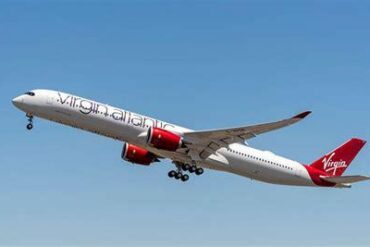
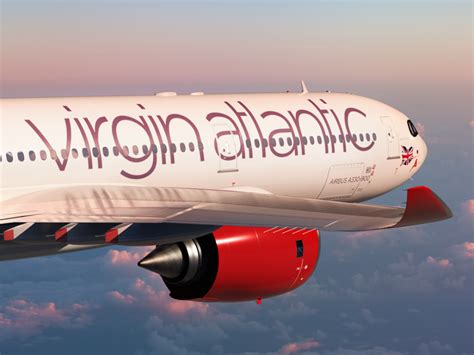
Virgin Atlantic eventually returned to Canada with service to Toronto, restoring a Canadian presence after its long absence. The airline currently operates the route with Airbus A350-1000 aircraft, reinforcing its strategy of deploying modern widebody aircraft on important long-haul markets.
However, the Toronto schedule is also changing. From October 25, 2026, through March 27, 2027, Virgin Atlantic is scheduled to reduce the route to three weekly flights, operating on Mondays, Thursdays, and Saturdays.
That seasonal adjustment demonstrates how Virgin Atlantic continues to calibrate capacity rather than treating a route as an all-or-nothing decision. Airlines can respond to seasonal demand by reducing frequencies while retaining a market presence.
North America Remains Central to Virgin Atlantic’s Strategy
Despite these five cancellations, it would be misleading to interpret the changes as a retreat from North America. The region remains one of Virgin Atlantic’s most important long-haul markets, with 13 destinations currently served across North America.
Its network includes major destinations such as New York-JFK, Los Angeles, Atlanta, Orlando, Miami, and Cancun. The airline is scheduled to operate more than 8,000 one-way flights to North America during 2026, demonstrating the scale of its commitment to the region.
New York-JFK and Orlando are particularly important. Virgin Atlantic offers as many as seven daily departures to JFK from London Heathrow and Manchester, while Orlando can see up to six daily departures from Edinburgh, Heathrow, and Manchester.
The five discontinued routes therefore tell a more nuanced story. Virgin Atlantic is not abandoning North America; it is concentrating its resources on markets that fit its long-haul strategy. Chicago, Newark, Detroit, Austin, and Vancouver each disappeared for different reasons, but together they show how even an airline’s most ambitious international network must constantly adapt.
For Virgin Atlantic, the lesson is straightforward: a long-haul route has to do more than connect two large cities. It needs the right combination of demand, pricing, partnerships, aircraft utilization, and long-term commercial potential. As those factors change, so does the map.