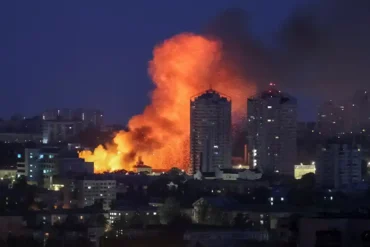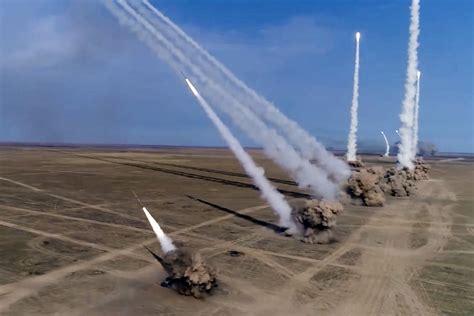
In the early hours of Monday, Russia launched a sweeping missile and drone attack across Ukraine, targeting multiple regions with a ferocity not seen in weeks. The most significant strikes occurred in the Rivne region of western Ukraine, a territory historically removed from frontline combat but now pulled into the vortex of strategic warfare. The assault is widely believed to be connected to growing speculation around the presence of U.S.-supplied F-16 fighter jets, possibly stationed at or near Dubno Airfield, a location of increasing interest to both Ukrainian and Russian military planners.
Russia Strikes Deep Into Ukrainian Territory
According to Oleksandr Koval, the head of the Rivne Regional Military Administration, at least one civilian fatality has been confirmed, though the number is expected to rise as search and rescue operations continue. Mayor Oleksandr Tretyak labeled it “the largest attack” ever recorded in the Rivne region, a stark reminder that Russia’s missile campaign is evolving in its reach and intent. Notably, the attack struck far from the eastern and southern battlefronts where most of the fighting has traditionally occurred.
The breadth of the strike, which included long-range missiles and Iranian-made Shahed drones, extended beyond Rivne. In Kyiv, several residential and commercial areas were impacted. The Darnytsia district saw an office complex partially destroyed, and a private residence in the Boryspil district suffered severe damage alongside an adjacent vehicle and outbuilding. Despite the devastation, Ukrainian air defenses reportedly intercepted a significant number of incoming projectiles, preventing broader destruction.
Dubno Airfield: A Strategic Bullseye?
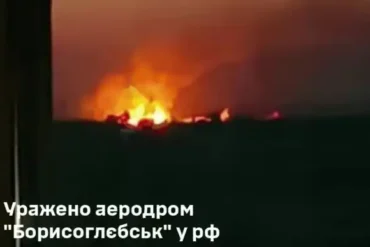
Perhaps the most critical aspect of the attack lies not just in its destruction, but in its potential strategic signaling. The Dubno military airbase, located in the Rivne region, has been the subject of rampant speculation in both Ukrainian and Russian military circles. Pro-Russian milbloggers and open-source analysts have floated the idea that Dubno may be the secret staging ground for Ukraine’s F-16 fighter jets, which are expected to be delivered from Western allies later this summer.
While no official confirmation has been made by the Ukrainian Ministry of Defense, the pattern of strikes, especially the concentrated barrage near military infrastructure, suggests a Russian preemptive strike effort—a tactical attempt to degrade any capacity for F-16 operations before they can become a factor on the battlefield.
Retaliation for Su-35 Shootdown?
The timing of the missile barrage has drawn attention, as it follows closely on the heels of a high-profile aerial encounter on Saturday, during which Ukrainian forces reportedly shot down a Russian Su-35 multirole fighter jet over the Kursk region in Russia. The Su-35, a critical asset in Russia’s air superiority ambitions, represents one of Moscow’s most advanced fighter aircraft. Its loss was not only a tactical blow but also a symbolic defeat, reinforcing Ukraine’s ability to challenge Russian air dominance.
The massive bombardment that followed may well be a retaliatory gesture, designed both to avenge the Su-35 incident and to send a clear warning about the consequences of F-16 deployment.
International Fallout: Polish Airspace Scrambled
Russia’s offensive also had immediate regional consequences. The proximity of the missile flight paths to NATO member Poland triggered a military response from Warsaw. Polish Operational Command confirmed that Polish and allied fighter jets were deployed into national airspace as a precautionary measure. These air alerts, while routine under such circumstances, underline the precarious nature of the conflict’s expansion.
“Due to the intensive air attack by the Russian Federation on the territory of Ukraine, Polish and allied aircraft began to operate in Polish airspace in the morning,” the official statement read. This incident has reignited debates within NATO over escalation control and the need for updated defensive protocols along the alliance’s eastern flank.
F-16s in the Crosshairs: Why Russia Is Increasing the Pressure
The introduction of Western fourth-generation aircraft like the F-16 is a game-changer in the conflict. Despite not being fully integrated into Ukraine’s air force yet, Russian intelligence and military planners appear to be preparing for their eventual battlefield appearance. The F-16’s capabilities, including long-range radar, precision-guided munitions, and electronic warfare suites, would significantly enhance Ukraine’s ability to conduct combined air and ground operations.
From Russia’s perspective, neutralizing these assets before they are deployed is a matter of urgent national interest. The repeated targeting of airbases and logistical routes in Ukraine’s west suggests a shift in Moscow’s strategy, moving from attrition warfare in the Donbas and Zaporizhzhia to strategic interdiction campaigns deep within Ukraine.
Civilian Resilience Amid Ongoing Warfare
Despite the scale of Monday’s attacks, the response from local governments and civilians has been marked by resilience. Emergency crews have worked throughout the day to clear rubble and restore utilities. Schools and hospitals, some of which were briefly evacuated, have resumed operations under heightened security.
Local leaders, including Rivne Mayor Tretyak, emphasized the importance of civilian discipline during air raid alerts, noting that casualties could have been much higher had residents not sought shelter promptly. The regional authorities have also ramped up public communication channels, providing real-time updates and safety instructions via Telegram and other platforms.
The Broader Military Landscape
This attack comes amid a complex and volatile phase in the ongoing war. While some diplomatic overtures have been attempted—including recent peace discussions in Istanbul—the conflict continues to escalate in scale and sophistication. Russia’s missile campaign is being supplemented by cyberattacks, disinformation campaigns, and pressure on energy infrastructure.
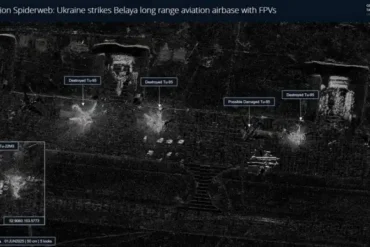
Simultaneously, Ukraine’s counteroffensives, particularly its use of long-range drones and precision strikes, have exposed vulnerabilities in Russia’s rear defenses. The so-called “Operation Spider Web,” involving coordinated drone attacks on Russian logistics hubs, has undercut Moscow’s ability to resupply front-line units efficiently.
Israel’s Quiet Role: Patriot Systems in Ukraine
One noteworthy development in Ukraine’s air defense resilience has been the quiet transfer of Patriot missile systems from Israel. Israeli Ambassador to Ukraine recently confirmed that mobile Patriot batteries, once used to defend Israeli airspace since the 1990s, have been delivered discreetly to assist Ukraine. These advanced systems are playing a crucial role in intercepting Russian cruise missiles and drones, especially in densely populated areas.
This marks a significant geopolitical shift, as Israel had previously been cautious in directly supplying lethal aid to Ukraine. The move also underscores how global alliances are recalibrating in response to Russia’s continued aggression.
What Comes Next: Strategic Implications and Future Escalation
As Ukraine braces for more long-range strikes, analysts believe that Russia’s attacks will increasingly focus on disrupting Ukraine’s military modernization efforts. This includes not only targeting airfields like Dubno but also attacking transport infrastructure—bridges, railroads, and fuel depots—that would facilitate the movement of advanced weaponry.
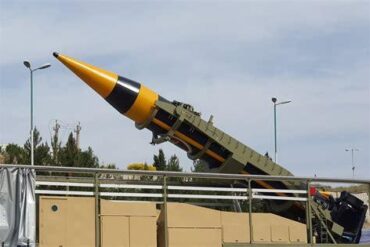
The possibility of Russia using ballistic missiles or hypersonic weapons in future assaults cannot be ruled out, particularly as Ukrainian defense systems become more adept at intercepting conventional threats. Conversely, Ukraine is expected to accelerate the integration of its new assets, including NATO-compatible jets, radar systems, and battle management networks.
Western support, particularly from the United States and the European Union, will likely intensify, both to safeguard Ukraine’s sovereignty and to signal to Moscow that escalation comes at a steep cost.
Conclusion: A War Entering a Dangerous New Phase
The June 10 missile assault on western Ukraine marks more than just another chapter in this grueling conflict. It signals the onset of a new strategic phase, where long-range precision warfare, air superiority contests, and symbolic retaliation strikes become focal points of the battlefield.
As the Dubno airfield and surrounding regions come under scrutiny, it is clear that the war’s front lines are no longer geographically fixed. They are now determined by capability, perception, and timing—factors that change with each intercepted missile, each fallen aircraft, and each new delivery of Western arms.