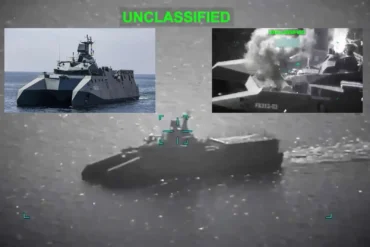
The opening salvos of U.S. Operation Epic Fury did not remain confined to Iranian territory. As American and Israeli aircraft struck ballistic missile sites, naval assets, and command infrastructure, Tehran answered not only in the air over Iran but across the Persian Gulf battlespace. What followed was a sustained and coordinated barrage of ballistic missiles, cruise missiles, drones, and even manned aircraft, directed at some of the most strategically vital targets in the Middle East.
Data released by defense ministries in the United Arab Emirates, Qatar, Bahrain, and Kuwait provides the clearest operational picture yet of how Iran has prosecuted its retaliatory campaign. The numbers reveal not sporadic harassment, but a calculated pressure strategy designed to test the endurance, inventory depth, and reaction speed of Gulf air defense networks operating under live-fire conditions.
The Gulf is not merely geography; it is infrastructure. Energy export terminals, liquefied natural gas facilities, desalination plants, naval bases, and forward-deployed U.S. forces form a dense lattice of targets. Iran’s approach since the launch of Operation Epic Fury suggests an attempt to stress that lattice simultaneously, forcing defenders to divide attention and interceptors across multiple axes.
United Arab Emirates: The Heaviest Volume of Fire
The United Arab Emirates (UAE) has borne the largest share of detected incoming threats. Emirati officials report the identification of 186 ballistic missiles launched toward national territory. Of those, 172 were intercepted, 13 fell into the sea, and one reached land. Even a single impact in a high-density urban and industrial environment represents a serious breach, underscoring the stakes involved.
More striking are the drone figures. The UAE recorded 812 unmanned aerial vehicles (UAVs) approaching its airspace. Air-defense systems destroyed 755, while 57 ultimately fell within national territory. The scale alone signals sustained operational pressure. Interceptors, radar crews, and command networks have been functioning in continuous engagement cycles.
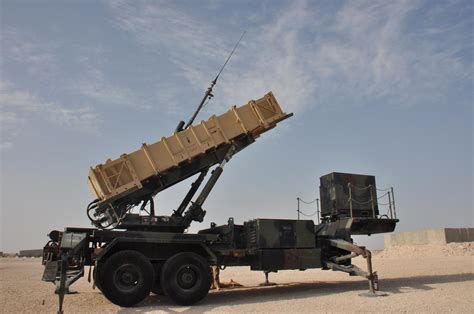
The Emirati defensive architecture integrates U.S.-supplied radar systems, Patriot missile batteries, and short-range point-defense systems capable of engaging low-altitude threats. Ballistic missiles demand high-altitude intercepts at tremendous closing speeds, while drones creep in at low level. Managing both simultaneously requires layered radar coverage and disciplined fire control to avoid exhausting interceptor stocks prematurely.
Qatar: Intercepting Missiles and Manned Aircraft
Qatar’s data reveals a smaller, yet tactically complex engagement picture. The Qatari military detected 101 ballistic missiles, intercepting 98 before impact. In addition, 39 drones were tracked approaching Qatari airspace, with 24 destroyed in flight.
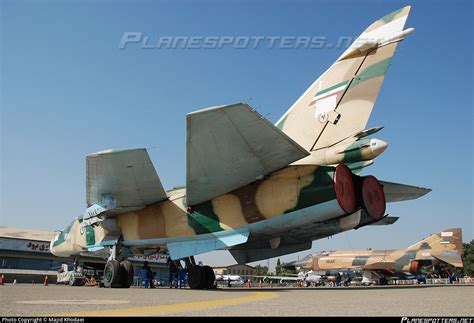
More revealing, however, was the reported presence of cruise missiles and Sukhoi Su-24 strike aircraft. Three cruise missiles were intercepted. Two Su-24s were detected and neutralized before they could complete attack runs. The Su-24 Fencer, a Soviet-designed twin-engine supersonic strike aircraft, is optimized for low-level penetration at speeds exceeding Mach 1.3. Its variable-sweep wings and heavy payload capacity allow it to carry guided bombs and anti-ship missiles.
The use of manned aircraft alongside drones and missiles indicates an attempt at multi-domain saturation. Drones draw defensive fire and sensor focus; ballistic missiles force rapid high-altitude engagements; manned aircraft probe for seams in radar coverage. In theory, this layered pressure increases the probability that at least one vector slips through.
Bahrain and Kuwait: Sustained Defensive Engagements
Further north, Bahrain reported destroying 73 missiles and 91 drones directed toward the island kingdom. Bahrain’s strategic value lies in hosting the U.S. Fifth Fleet, making it an obvious pressure point within Tehran’s deterrence calculus.
Kuwait monitored and intercepted 178 ballistic missiles and 384 drones approaching its territory. The scale suggests that Kuwait’s northern position does not insulate it from missile arcs originating along Iran’s Gulf coastline. Even when missiles do not impact, the cost of continuous readiness is significant. Interceptor inventories must be replenished. Radar crews rotate under fatigue. Maintenance cycles compress.
No official figures have been released by Saudi Arabia or Oman, though both remain within range of Iranian missile forces and operate integrated air-defense networks. Their silence does not imply inactivity; rather, it highlights the opacity that often surrounds real-time missile defense operations.
The Ballistic Missile Arsenal Behind the Barrage
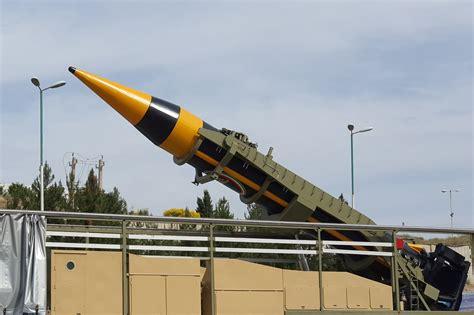
Iran’s long-range strike capacity rests primarily on ballistic missile systems such as the Shahab-3 and the Fateh-110 family. The Shahab-3, a liquid-fueled medium-range ballistic missile, is assessed to possess a range between 1,000 and 1,300 kilometers, depending on payload. With a warhead mass near 750 kilograms, it can deliver substantial conventional explosive force.
The Fateh-110 series, by contrast, is solid-fueled and shorter-ranged but offers improved accuracy. Estimates of its circular error probable (CEP)—a measure of accuracy—often range between 50 and 100 meters. Solid fuel enables faster launch preparation and reduced vulnerability during fueling operations.
Ballistic missiles follow a high-arcing trajectory, exiting the atmosphere before descending at speeds exceeding Mach 5. Defenders must track them early and calculate intercept solutions within seconds. Engagement windows are narrow, and interceptor missiles themselves are costly. A single high-end intercept can cost millions of dollars. Multiply that by hundreds of incoming threats, and the resource calculus becomes clear.
Shahed Drones and the Logic of Saturation
Complementing ballistic strikes are long-endurance drones such as the Shahed-136 loitering munition. This delta-wing UAV, powered by a small piston engine, carries an explosive payload estimated between 30 and 50 kilograms. Its range may approach 2,000 kilometers, depending on launch profile.
Unlike ballistic missiles, Shahed drones cruise at roughly 180 kilometers per hour and fly at relatively low altitudes. Their small radar cross-section and slow speed complicate detection, particularly against ground clutter over desert and coastal environments. Individually, they are not strategically devastating. In large numbers, they become economically and operationally draining.
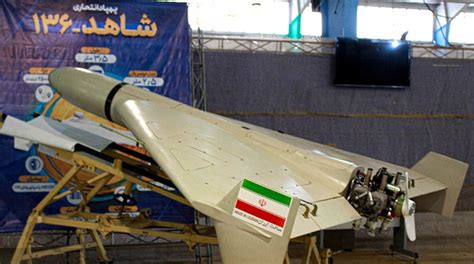
The pairing of fast ballistic missiles with slow drones is not accidental. Ballistic missiles demand immediate, high-priority intercepts. Drones arrive later, sometimes hours after launch, probing defenses that may already have expended interceptors. The result is saturation warfare—not necessarily to guarantee impact, but to strain and expose defensive seams.
Strategic Implications for Gulf Air Defense
Since Operation Epic Fury began, the Gulf has effectively transformed into a forward missile-defense theater. Radar coverage must remain continuous across maritime approaches and desert corridors. Interceptor inventories must be replenished at pace. Coordination between U.S. and Gulf command centers becomes critical to avoid duplication or misallocation of defensive fire.
The presence of major U.S. installations—air bases supporting tanker fleets, surveillance aircraft, and maritime patrol operations—means that any successful strike could carry both military and political consequences. Energy infrastructure adds another layer of vulnerability. The Gulf’s export terminals and processing facilities underpin global energy markets; even minor disruptions can ripple through supply chains.
Iran’s launch tempo suggests a willingness to expand the battlespace beyond direct U.S.-Iran engagement zones. By targeting Gulf states hosting American forces, Tehran signals that regional alignment carries tangible risk. At the same time, the high interception rates demonstrate that Gulf air-defense networks remain functional and resilient under sustained pressure.
Missile and drone warfare has become the grammar of modern deterrence in the Middle East. Speed, saturation, and sensor coverage now define strategic stability as much as armored divisions or naval task forces once did. The exchanges unfolding since Operation Epic Fury began are not isolated events; they are part of an evolving contest over who can endure the longest under the weight of guided fire from beyond the horizon.