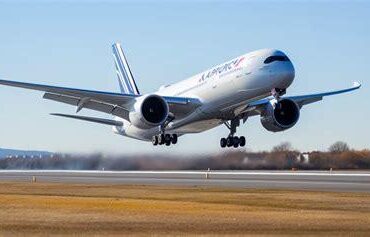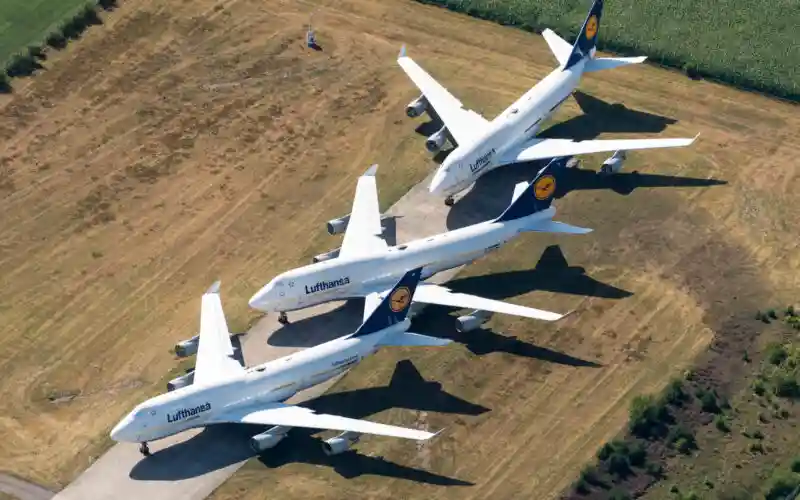
The Boeing 747, once the undisputed king of the skies, is gradually transitioning from active service to desert storage facilities and aviation graveyards. With over 1,574 aircraft built since its debut in 1970, the retirement wave of this legendary widebody has turned into a logistical and financial puzzle for airlines. Central to this dilemma is one pressing question: how much does it cost to store a Boeing 747—and what does that cost entail?
The answer is more complex than a single dollar figure. While the average monthly storage cost for a Boeing 747 can reach approximately $10,000, multiple variables influence this number. These include the location of storage, duration, aircraft variant, contractual terms, and whether the aircraft is being kept temporarily or permanently.
Understanding Why Storage Costs for the 747 Are So High
The Boeing 747’s massive size plays a crucial role in determining storage costs. Depending on the variant—from the original -100 to the modern 747-8—the aircraft boasts:
- Wingspan: 195 ft 8 in to 224 ft 7 in
- Length: 184 ft 9 in to 231 ft 10 in
- Tail Height: Up to 65 ft 5 in
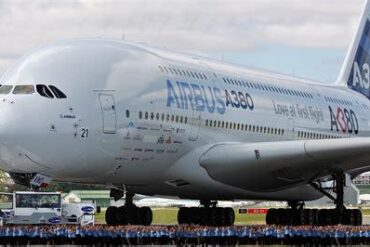
These dimensions require a substantial footprint on the ground, which translates into high parking costs. In contrast, narrowbodies like the Boeing 737 or Airbus A320 average around $2,000 per month for storage. The Airbus A380, the only aircraft of comparable size, also incurs similar storage costs to the 747 at roughly $10,000 monthly.
Key Factors That Influence Boeing 747 Storage Costs
Storage costs for a Boeing 747 aren’t uniform across all facilities. Prices fluctuate based on a variety of factors:
- Location: Dry desert climates, such as Marana, Arizona, are ideal for minimizing corrosion, which makes places like Pinal Airpark highly sought-after.
- Storage Type: Short-term, long-term, or permanent.
- Aircraft Condition: Whether mothballed, flight-ready, or awaiting dismantlement.
- Services Included: Ground handling, engine runs, anti-corrosion treatments.
- Volume Contracts: Storing multiple aircraft can often reduce unit costs.
Pinal Airpark: The World’s Premier 747 Graveyard
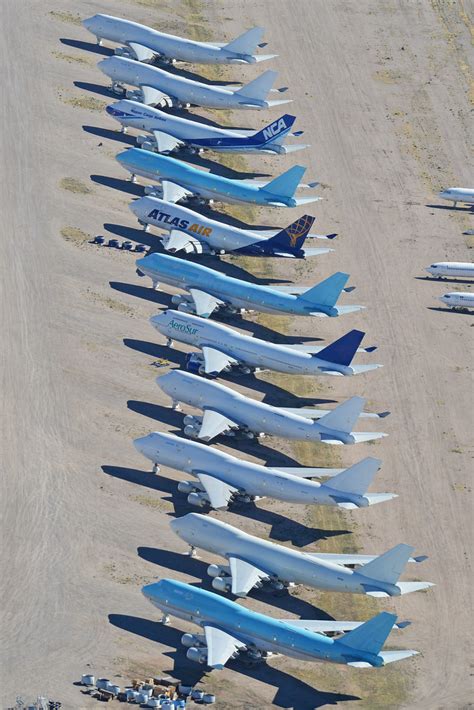
Pinal Airpark in Marana, Arizona is among the most iconic aircraft storage and salvage locations on the planet. Originally built in 1943 for the U.S. military and later used by the CIA, Pinal has transformed into a mecca for aviation enthusiasts and a final resting place for many Boeing 747s. The airpark’s dry desert climate significantly slows down corrosion, making it perfect for both short-term and indefinite aircraft storage.
The COVID-19 pandemic saw a surge in 747 arrivals at Pinal, as airlines like Lufthansa, British Airways, and KLM retired their quadjets en masse. One headline-grabbing case involved a 747-8BBJ delivered to the Saudi Arabian Royal Flight Group, scrapped after logging less than 50 flight hours. The jet’s avionics and engines were salvaged to support the remaining fleet.
The Cost Spectrum: Short-Term vs. Long-Term vs. Permanent Storage
Aircraft storage can be divided into three primary categories, each with its own cost profile and operational assumptions.
Short-Term Storage
Used seasonally or during market downturns, short-term storage is designed with the expectation that the aircraft will return to service. Airlines use this approach to rotate fleets or navigate lean quarters. While rates remain near the $10,000/month mark, the shorter contract durations mean fewer discounts are available.
Long-Term Storage
Spanning multiple years, this category often benefits from volume deals and reduced monthly charges. However, long-term storage demands routine checks, fluid cycling, and system preservation to ensure the aircraft doesn’t deteriorate.
Permanent Storage & Scrapping
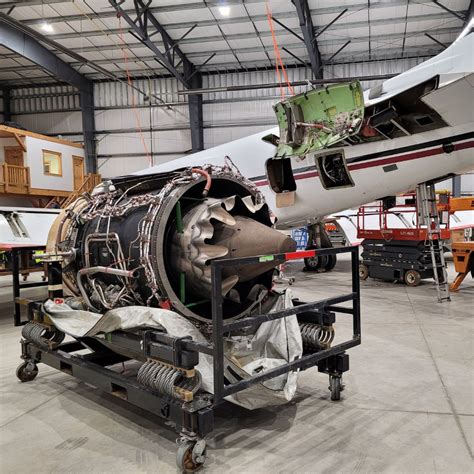
Permanent storage typically leads to dismantling and recycling. While upfront costs may be lower, the process of scrapping involves labor-intensive component recovery. Yet, these costs are offset by revenue from salvaged parts, many of which—like engines, flight controls, and avionics—can command high aftermarket prices.
Inside the Aircraft Recycling Economy
The aircraft recycling industry is booming, estimated to be worth $4.7 billion annually, and expected to reach $9.7 billion by 2028. As 747s reach the end of their life cycles, recycling companies like Aircraft End-of-Life Solutions (AELS) and Air Salvage International are aggressively competing for access to these aircraft.
Boeing 747s contain millions of parts, with the 747-8 boasting nearly six million components. Around 80–95% of an aircraft’s weight can be recycled. Non-salvageable parts can be sold as scrap metal for use in the manufacturing sector, while more desirable components are reused in active fleets.
There’s also a thriving niche market for aviation memorabilia. Windows, seats, overhead bins, and signage from scrapped 747s are being converted into furniture, museum pieces, and even interior décor.
747s Still Flying: Who’s Keeping the Queen Alive?
While over 1,000 Boeing 747s have been retired or scrapped, more than 400 airframes remain in active service as of April 2025. The vast majority are operated by cargo carriers, where the 747’s range and payload still make financial sense. Leading operators include:
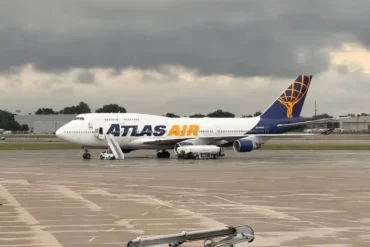
- Atlas Air: 61 aircraft
- UPS Airlines: 43 aircraft
- Cargolux: 30 aircraft
- Lufthansa: 27 aircraft
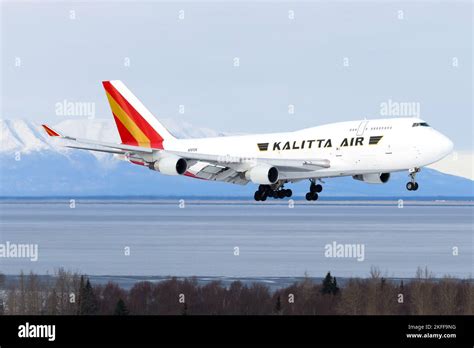
- Kalitta Air: 22 aircraft
Passenger operators like Korean Air, Asiana Airlines, and Lufthansa still fly limited numbers of 747s, particularly the 747-8, which remains Boeing’s most modern and efficient version.
Where to See the Boeing 747 Today
With the sun setting on 747 passenger services, aviation enthusiasts must travel to specific hubs to see these majestic birds in action. As of May 2025, the airports with the most frequent 747 departures include:
- Shenzhen Bao’an International (SZX)
- Washington Dulles (IAD)
- Shanghai Pudong (PVG)
- Frankfurt (FRA)
- Seoul Incheon (ICN)
These airports are treasure troves for planespotters eager to photograph one of aviation’s most iconic silhouettes before it disappears from the skies entirely.
Converting the Queen: Beyond Storage and Scrapping
Creative reuse of Boeing 747s is another growing phenomenon. Former airframes have been transformed into:
- Luxury hotels
- Themed restaurants
- Event venues
- Training simulators
These repurposing efforts not only breathe new life into retired jets but also provide additional revenue streams for former operators or investors in aviation-themed attractions.

The Real Economics of 747 Retirement
Ultimately, storing a Boeing 747 is not a one-size-fits-all calculation. While $10,000 per month is a good benchmark, it merely scratches the surface. When factoring in maintenance, insurance, salvage rights, and market demand for parts, the true cost of storage may be far higher—or, in rare cases, offset entirely.
Storage facilities like Pinal Airpark make tens of thousands of dollars annually on a single parked jet, but they also face competition from aircraft recyclers, collectors, and even creative developers turning airframes into venues. Meanwhile, airlines, desperate to cut costs and modernize fleets, are racing to monetize every square inch of their grounded 747s.
In a world where fleet efficiency reigns supreme, the Boeing 747 may no longer rule the skies—but on the ground, its economic impact is just getting started.