Google’s abrupt decision to exit the Pentagon’s $100 million Autonomous Vehicle Orchestrator program marks a pivotal moment in the uneasy relationship between Big Tech and military AI development. What initially appeared to be a bold step toward redefining battlefield coordination through voice-controlled drone swarms quickly unraveled under internal pressure, ethical scrutiny, and a long-standing cultural divide within the company.
The proposal itself was ambitious. Google aimed to build a human-machine interaction layer that would allow military commanders to control large groups of autonomous drones using natural voice commands. This concept promised to streamline decision-making, reduce reaction time, and fundamentally reshape how autonomous warfare systems operate in real-time combat environments.
Yet, despite advancing in the early stages of the competition, Google withdrew just weeks later. The catalyst was not technical limitations, but a renewed wave of internal dissent. Hundreds of AI researchers within the company signed an open letter opposing the use of Google’s artificial intelligence in defense applications, especially those tied to lethality and autonomous weapons systems.
The Ethics Rift Inside Google’s AI Strategy
Google’s relationship with military projects has always been turbulent, and this latest withdrawal reinforces that pattern. Back in 2018, the company faced widespread backlash over Project Maven, a Pentagon initiative that used AI to analyze drone surveillance footage. Employee protests at the time forced Google to step back, with leadership publicly committing to avoid AI applications that could directly contribute to harm.

However, the company’s stance has not remained consistent. By 2022, Google had cautiously resumed collaboration with defense agencies, focusing on non-combat AI tools. In 2025, it even recruited former military personnel to guide its defense-oriented AI strategies. This gradual re-engagement created a growing disconnect between leadership ambitions and employee values.
The recent withdrawal highlights that this internal conflict is far from resolved. While some employees reportedly disagreed with pulling out of the drone swarm program, a significant portion remained deeply concerned about the ethical implications of enabling AI-driven battlefield autonomy.
Understanding the Pentagon’s Drone Swarm Vision
The Autonomous Vehicle Orchestrator challenge, launched in January by the Pentagon’s Defense Innovation Unit (DIU), represents a new frontier in military technology. The goal is deceptively simple but technologically profound: create a system that allows operators to manage complex drone swarms through intuitive commands rather than manual controls.
At its core, the program seeks to enhance battlefield efficiency, situational awareness, and response speed. Instead of navigating multiple interfaces or issuing fragmented commands, a commander could theoretically direct dozens—or even hundreds—of drones with a single spoken instruction.
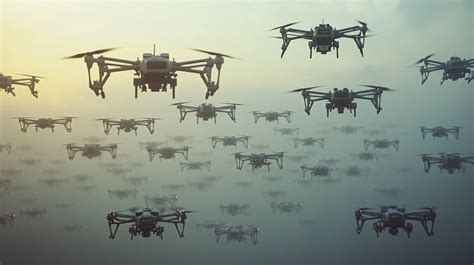
The competition unfolds over multiple stages, requiring participants to develop capabilities such as target recognition, data sharing, and full lifecycle mission control—from deployment to termination. Companies that succeed will not only win contracts but also play a defining role in shaping the future of AI-powered combat systems.
With Google stepping aside, the field now includes major players like OpenAI, Palantir, and xAI, each bringing distinct technological philosophies and capabilities to the table.
Strategic Implications for AI and Defense Collaboration
Google’s withdrawal does more than reshape a single competition—it sends a broader signal about the limits of corporate participation in military AI programs. Unlike traditional defense contractors, tech companies operate within ecosystems heavily influenced by employee sentiment, public perception, and global scrutiny.
This creates a structural tension. On one hand, governments are accelerating investments in autonomous warfare technologies, recognizing their strategic importance. On the other, companies like Google must navigate internal resistance and reputational risks that can derail even the most promising initiatives.
The Pentagon, however, shows no signs of slowing down. Programs like Drone Dominance 2026 and the Autonomous Vehicle Orchestrator challenge reflect a clear commitment to integrating AI deeply into military operations. The emphasis is not just on capability, but on speed—developing and deploying solutions faster than geopolitical rivals.
A Defining Moment for AI Governance and Warfare
Google’s exit underscores a critical reality: the future of AI in warfare will not be determined solely by technological capability, but by ethical boundaries, corporate governance, and societal consensus. The debate is no longer theoretical. It is unfolding in real time, influencing billion-dollar programs and national security strategies.
For now, Google has chosen caution over competition. Whether this decision strengthens its ethical credibility or limits its influence in the evolving defense landscape remains to be seen. What is certain is that the race to control autonomous drone swarms is far from over—and the stakes are only getting higher.