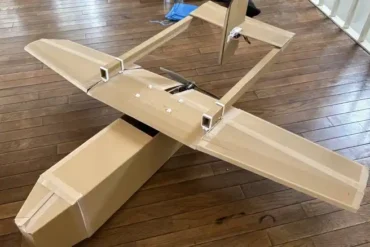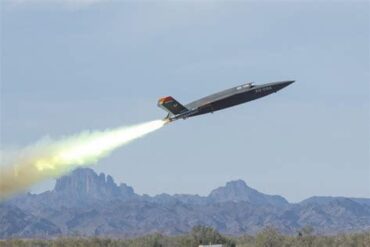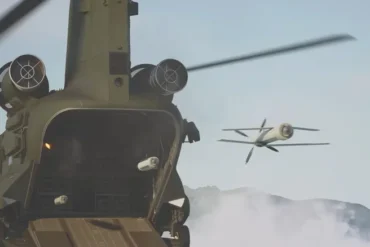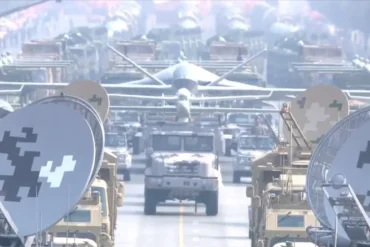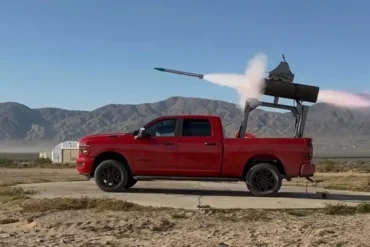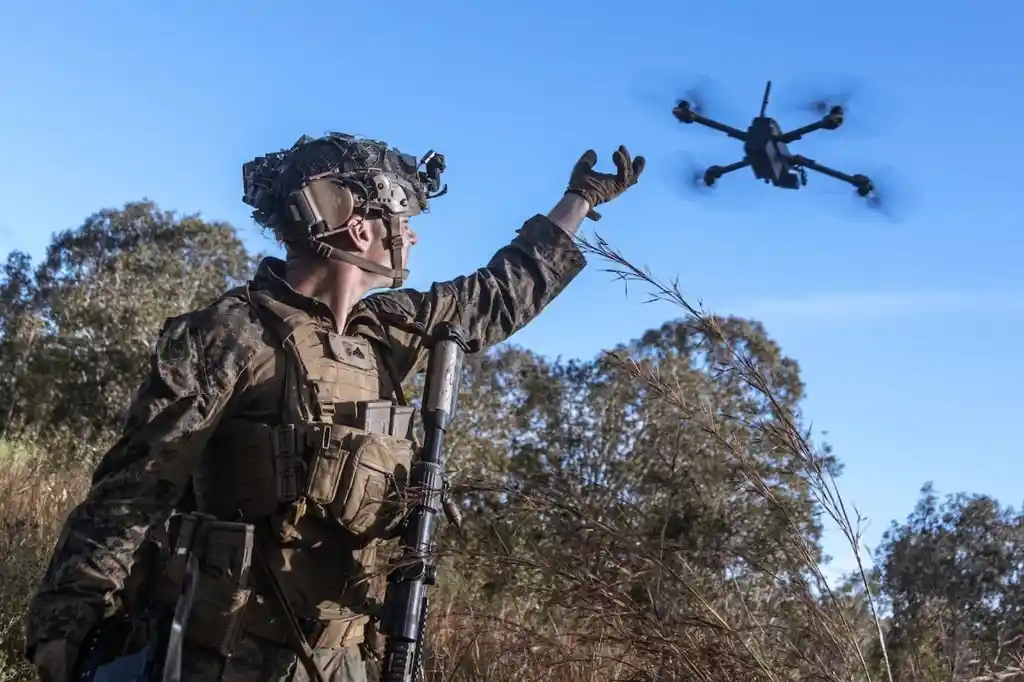
The United States is moving into a new era of warfare driven not by stealth bombers or advanced fighters, but by hundreds of thousands of low-cost attack drones built for speed, automation, and expendability. This initiative — a centerpiece of President Donald J. Trump’s drone dominance agenda — aims to field a war-ready unmanned strike fleet at an unprecedented scale. The plan intends to shift U.S. strategy away from the old model of limited high-tech platforms and into a future where warzones are saturated with cheap, lethal, disposable aerial weapons deployed in overwhelming volume.
The War Department’s December 2, 2025 announcement arrives in a tense geopolitical moment, particularly as the U.S. confronts rising friction with Venezuela and expands its military posture in the Caribbean. Rather than focusing on a handful of exquisite UAVs, leadership is steering toward industrial-scale manufacturing, where attack drones are produced like ammunition — abundant, constant, and ready for attrition warfare.
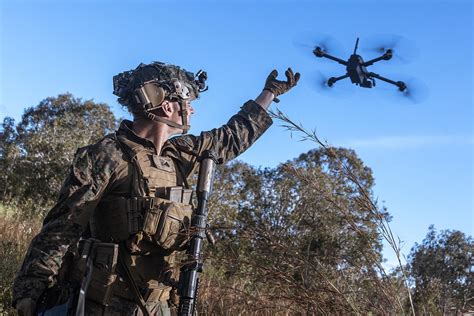
At the core of the strategy is a procurement framework designed to push American industry into high-volume output. The War Department’s request for information seeks to deliver roughly 300,000 one-way attack drones over two years, with production beginning in 2026. Twelve drone manufacturers are expected to join in the first wave, delivering up to 30,000 units at approximately $5,000 each. By late-stage scaling, only five firms would remain, but output would surge toward 150,000 drones annually — with a target per-drone price of just $2,300. This cost compression model effectively weaponizes American manufacturing capacity, favoring quantity, speed, and logistical simplicity. If successful, infantry units will treat drones not as speciality hardware, but as routine, consumable strike tools used freely and frequently in battle.
The New Economics of War: Scale Over Sophistication
Budget architecture is built around a two-year, billion-dollar envelope under what officials brand the Big Beautiful Bill, meant to finance around 340,000 sUAS units. This breaks sharply from decades of Pentagon procurement patterns, where the norm was expensive systems fielded in small numbers. Trump officials argue the U.S. must stop intercepting $200 civilian-grade drones with million-dollar missiles and instead create a sustainable kill-chain economy — matching small threats with small weapons.
This model also hardens supply resilience. Instead of outsourcing components to foreign markets or relying on fragile high-end supply chains, Washington intends to build a sovereign, scalable drone industry. A predictable multi-year demand signal invites private investment, strengthens domestic production lines, and lowers cost through volume. Upgrades in sensors, navigation, or warheads may be added over time, but affordability must remain the core principle.
Battlefield Lessons From Ukraine Become U.S. Doctrine
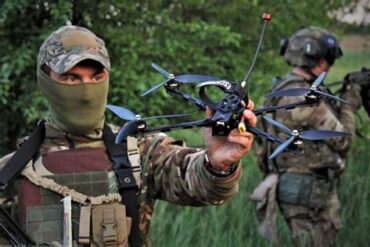
Washington’s pivot is deeply informed by combat lessons from Ukraine, where cheap FPV drones have equalized artillery duels, crippled armored columns, and reshaped offensive tempo. Commanders watched soldiers mix consumer electronics with improvised munitions and recognized a battlefield truth: quantity can disarm quality.
The U.S. now seeks to institutionalize that reality. Beginning 2026, drone-on-drone exercises will become standard training across ground combat units, shaping a generation of troops fluent in swarm tactics, anti-UAS maneuvers, low-altitude strike routing, and rapid-fire attrition logic. This is less about technology and more about changing the cultural DNA of the American military — faster decisions, decentralized authority, autonomous targeting.
Venezuela Tensions Accelerate Drone Posture Shift
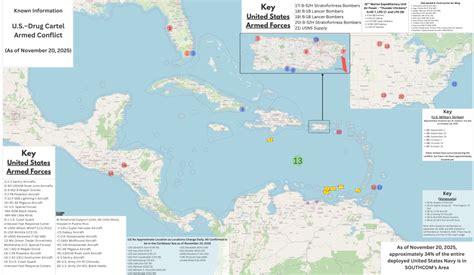
This sweeping drone surge unfolds in parallel with one of the most volatile Western Hemisphere standoffs in decades. Under Operation Southern Spear, the U.S. has committed warships and more than 15,000 personnel to the Caribbean, launching repeated maritime interdiction strikes that killed over eighty suspected traffickers. Congress is edging toward confrontation over presidential war powers, while Venezuela responds with coastal deployments, joint drills, and aviation restrictions.
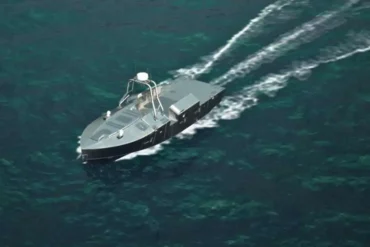
Low-cost drones carry enormous implications here. They enable U.S. forces to execute frequent, pinpoint coastal and maritime strikes at minimal cost, which lowers the political and logistical threshold for action. The danger is escalation through repetition — the more normalized drone attacks become, the greater the chance of retaliatory swarms, mistaken targeting, and spiraling kinetic exchange.
Global Power Ripple: Allies Re-Arm, Rivals Respond
Once operational at scale, Drone Dominance could reshape arms dynamics beyond the Americas. The United States would possess not only battlefield supply, but export capacity — enabling allies facing gray-zone threats to purchase swarms instead of relying on slow, expensive procurement. Yet the inverse is equally true. Russia, Iran, and China will almost certainly accelerate counter-programs, arming Venezuela or other U.S. adversaries with their own mass-produced attack drones.
Future regional crises may be defined not by fighter jets or missiles, but by which side can field more drones — faster, cheaper, and in greater volume. Technology becomes alignment, production becomes power, and the ability to burn through machines without political pain becomes a strategic advantage.
The Decisive Question: Will Mass Drones Stabilize or Destabilize Warfare?
The United States is betting that cheap drones can deter conflict by saturating the battlefield and overwhelming enemy systems at low cost. If implemented effectively, commanders gain rapid, scalable response options — hitting threats without deploying pilots, risking ships, or escalating to cruise missiles. In theory, drone mass reduces risk.
Yet mass also invites chaos. More engagements mean more miscalculations. Automation compresses decision time. Swarms amplify uncertainty. The Drone Dominance strategy could stabilize regions through deterrence — or push them toward fragmented, low-level constant conflict.
The next two years will determine which future the world inherits.