Mode A: Basic Identity
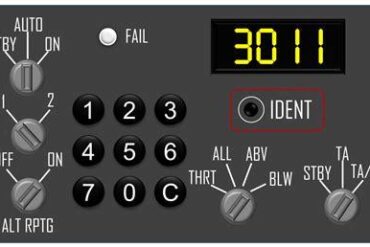
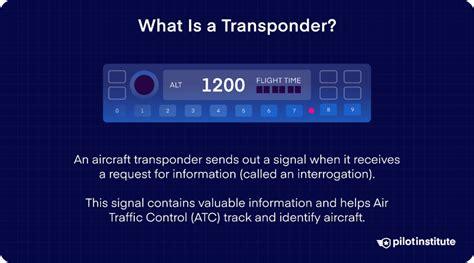
Mode A transponders transmit only the four-digit squawk code, assigned by ATC. This code serves as a digital name tag. When ATC instructs, “Squawk 4703,” the pilot enters that code into the transponder, and from then on, radar scopes can correlate that squawk with the aircraft’s radar return.
However, Mode A does not include altitude information. While ATC can see your horizontal position, they cannot see your altitude unless additional data is sent through other modes.
Mode C: Adding Altitude
Mode C builds on Mode A by adding pressure altitude to the response. This is crucial for both ATC and collision-avoidance systems. Pressure altitude is derived from an onboard encoder and enables altitude stratification on radar scopes. Most aircraft operating in Class B, Class C, and above 10,000 feet MSL are required to use Mode C.
In real-world use, Mode A and C are often grouped together as simply “Mode C,” since they work in tandem: the code identifies the aircraft, and the altitude allows safe vertical separation.
Mode S: Selective Surveillance
Mode S, short for “Mode Select,” is the most advanced civilian transponder mode. Designed to mitigate radar congestion and improve aircraft surveillance, Mode S transponders respond only to interrogations specifically directed at them. This targeted communication reduces unnecessary replies in dense airspace and allows for more detailed exchanges.
Key capabilities of Mode S include:
- Unique ICAO Aircraft Address: A globally unique 24-bit address identifies each aircraft unambiguously.
- Altitude and Position Data: Mode S delivers pressure altitude and can optionally provide GPS-based position, velocity, and heading.
- Squawk Code: Mode S still transmits the standard squawk code for ATC identification.
- Flight Intent Data: Some Mode S transponders transmit information like autopilot-selected altitude and heading, giving ATC better predictive capability.
Perhaps most importantly, Mode S enables Traffic Collision Avoidance Systems (TCAS) and Automatic Dependent Surveillance-Broadcast (ADS-B). TCAS uses Mode S data from other aircraft to calculate collision risks and advise evasive maneuvers. ADS-B further enhances safety by broadcasting aircraft location and velocity to ATC and other aircraft in real time.
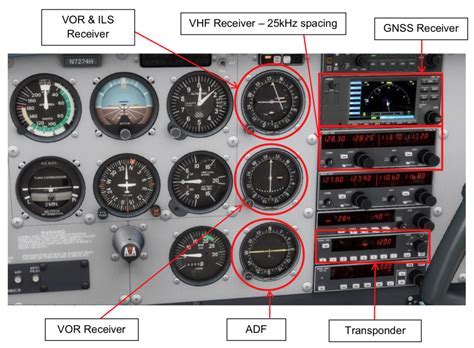
Transponder Codes vs. Transponder Modes
It is critical not to conflate transponder modes with transponder codes. A transponder mode (e.g., Mode C or Mode S) defines what kind of information is sent. A transponder code, or squawk code, is the four-digit number pilots input into the transponder, which is assigned by ATC to identify specific aircraft.
For example, if ATC says, “Squawk 1324,” that refers to the code to enter, not the transmission mode. However, if your transponder is not set to the correct mode (e.g., it’s in Mode A instead of Mode C), ATC may be able to see your position, but not your altitude.
What Is “Ident” and When Is It Used?
The “Ident” function is a key feature of any transponder. When activated, the transponder sends a distinctive pulse to ATC that causes the aircraft’s radar blip to flash or highlight on the controller’s screen. This helps controllers quickly confirm an aircraft’s identity.
Situations where ATC might ask for an “Ident” include:
- Initial radar contact
- Frequency change handoff between controllers
- When radar contact is briefly lost and re-established
- To verify a new squawk code entry
For pilots, using Ident is as simple as pressing a single button marked “Ident” on the transponder panel when prompted. It’s a quick, efficient way to cut through radar clutter and ensure proper identification.
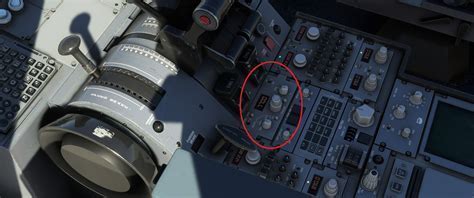
Military Transponder Modes: Modes 1 to 5
While civilian aircraft use Modes A, C, and S, military aircraft use additional transponder modes to support tactical operations, encryption, and mission-specific communication. These include:
Mode 1
Mode 1 transmits a two-digit mission code to indicate the aircraft’s operational role. While not suitable for positive identification, it provides basic mission context such as air defense or training.
Mode 2
Mode 2 transponders send a four-digit unit-assigned identification code, effectively serving as a tail number. This allows military controllers to track specific aircraft during coordinated operations.
Mode 3/A
This is the shared civilian-military mode, equivalent to Mode A. It allows joint operation with civil ATC systems while maintaining compatibility with military radar infrastructure.
Mode 4
Mode 4 is a secure, encrypted mode used to confirm friendly aircraft in combat zones. It requires synchronization with ground-based crypto units and provides identity verification without revealing classified data.
Mode 5
The most advanced military mode, Mode 5 enhances Mode 4 by integrating encryption, anti-jamming protection, and high-fidelity aircraft data. It is fully compatible with Mode S but adds NATO-interoperable features, including support for Link 16 — a secure, high-speed tactical data exchange system used by allied forces.
FAA Transponder Requirements
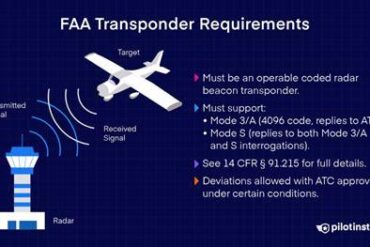
The Federal Aviation Administration (FAA) mandates transponder usage under specific circumstances to ensure orderly airspace usage. According to 14 CFR § 91.215, a transponder with Mode C capability is required:
- In Class A, B, and C airspace
- Above 10,000 feet MSL, excluding airspace below 2,500 feet AGL
- Within 30 nautical miles of primary airports in Class B airspace (Mode C veil)
- When flying across the U.S. ADIZ (Air Defense Identification Zone)
Even in uncontrolled airspace, equipping your aircraft with a transponder, especially Mode S with ADS-B capability, significantly improves flight visibility and collision avoidance.
Conclusion: Transponders as Guardians of the Sky
The aircraft transponder is not just a compliance tool — it is a core part of the aviation safety infrastructure. From the basic squawk code of Mode A to the dynamic, encrypted data streams of Mode S and Mode 5, transponders enable ATC and aircraft alike to maintain safe separation, improve identification, and enhance situational awareness.
With the aviation industry shifting steadily toward NextGen systems and ADS-B surveillance, understanding your transponder’s capabilities and operating modes isn’t optional — it’s essential. For pilots, knowing when and how to operate each mode, respond to “Ident” requests, and follow transponder usage regulations can mean the difference between smooth communication and radar confusion.
We encourage all aviators to not just use their transponders, but to master them. In the complex, shared airspace above us, the humble transponder is one of the most powerful safety tools onboard.