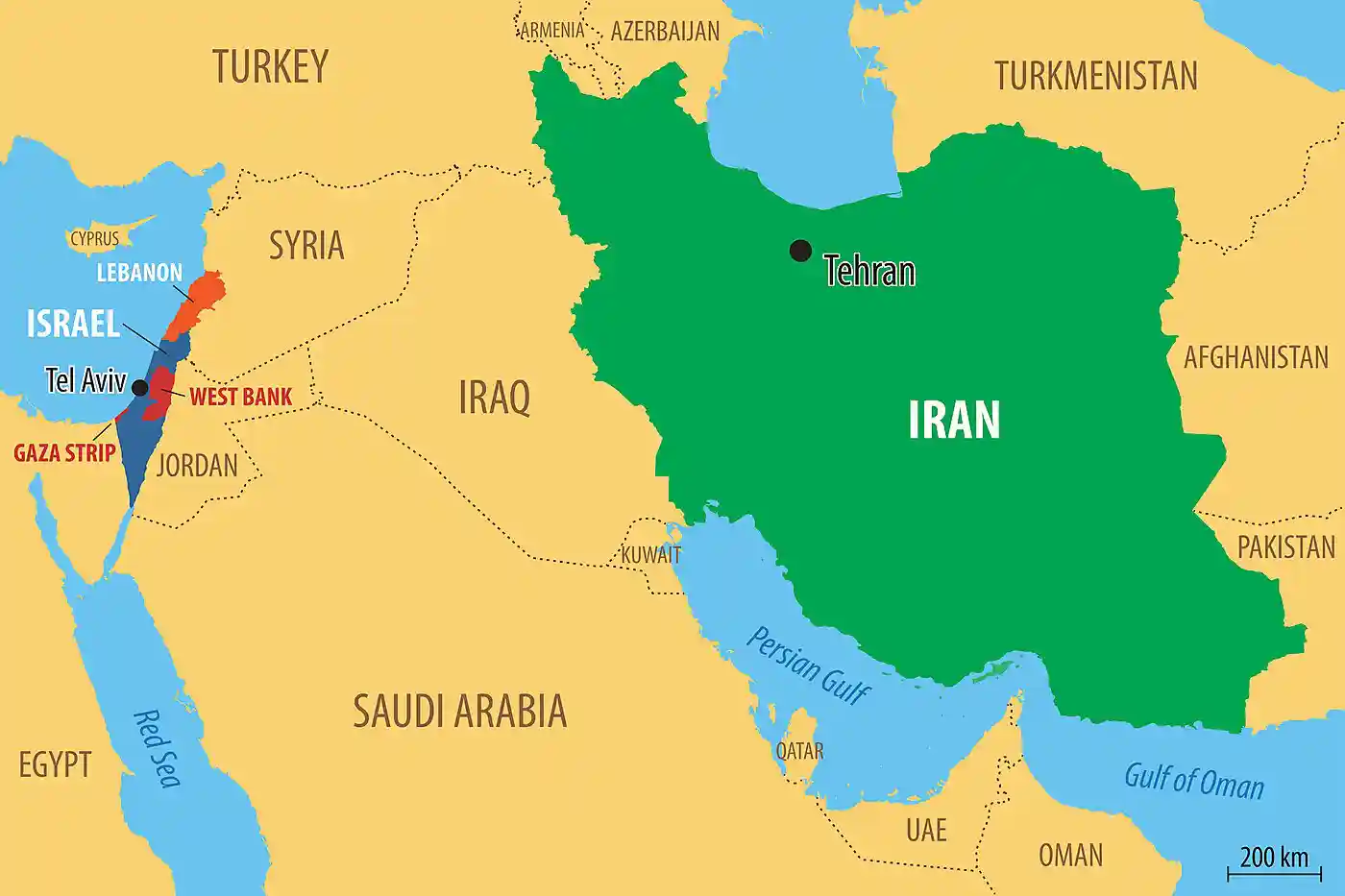
Sanctions have battered its economy. Its currency has collapsed. Key regional allies have fallen or fled. Israeli airpower demonstrated overwhelming dominance during the brief but intense 12-day war of June 2025. On paper, the balance of power between Iran and the combined might of the United States and Israel looks brutally lopsided.
Yet war planners in Washington and Tel Aviv remain cautious.
The reason is not sympathy. It is arithmetic.
Invading Iran would not resemble a precision air campaign over a small adversary. It would resemble a prolonged, region-wide convulsion involving global oil markets, missile saturation, naval choke points, and asymmetric warfare on a scale few modern militaries have faced. Iran’s conventional weaknesses conceal structural advantages that make any invasion prohibitively costly.
Understanding why Iran remains such a difficult target requires stripping away rhetoric and looking coldly at geography, missile inventories, naval doctrine, and strategic depth.
Geography: The Strait of Hormuz and the Global Energy Chokehold
Iran sits astride one of the most consequential pieces of real estate on Earth: the Strait of Hormuz.
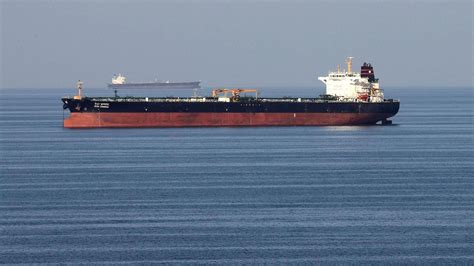
Nearly one-fifth of global oil consumption transits this narrow waterway. It is not merely a shipping lane; it is the circulatory artery of the global economy. The strait narrows to roughly 21 nautical miles at its tightest point. Commercial vessels are funneled into even narrower traffic separation schemes. In wartime, this becomes a vulnerability of staggering magnitude.
Iran does not need to defeat the U.S. Navy outright. It only needs to make transit risky.
Submarine mines, mobile coastal anti-ship missiles, swarm attacks by high-speed boats, shore-launched cruise missiles, and diesel-electric submarines operating in shallow waters could transform the strait into a zone of persistent hazard. Even intermittent disruption would spike insurance premiums, rattle energy markets, and send shockwaves through Asia and Europe.
Regional powers such as Saudi Arabia, the UAE, Qatar, Kuwait, and Iraq depend heavily on this corridor. That dependence constrains their enthusiasm for a prolonged war. No regional capital wants oil exports halted for weeks while missiles arc overhead.
The strategic leverage is obvious: Iran’s geography weaponizes global interdependence.
Strategic Depth: A Nation Built for Defense
Iran is not Iraq circa 2003. It is larger than France, Germany, and Spain combined. Its terrain is mountainous, fractured by deserts, and historically unforgiving to invaders. The Zagros Mountains form a natural defensive spine. Urban centers are dispersed and hardened.
An invasion would require not just air superiority but sustained ground occupation across complex terrain. The logistical tail for such an operation would stretch thin across hostile geography and exposed supply lines.
History is not prophecy, but geography has humbled empires before. The difference between conducting airstrikes and conducting regime change is measured in blood, treasure, and time.
Missile Power: Iran’s True Air Force
Iran’s conventional air force is outdated. Its fighter fleet is aging. Its air defenses were degraded during Israeli operations.
But Iran long ago made a strategic decision: if you cannot dominate the skies, dominate the range equation.
According to the Center for Strategic and International Studies (CSIS), Iran possesses the largest and most diverse missile arsenal in the Middle East. Estimates in 2025 placed its ballistic missile inventory between 2,500 and 3,000 systems before the June conflict. Over 500 were reportedly used during that 12-day exchange.
Production did not stop.
Reports indicate a shift from liquid-fuel systems, which require lengthy preparation, to solid-fuel ballistic missiles that can launch within minutes. That change reduces vulnerability to pre-emptive strikes. It also complicates intelligence detection.
Systems such as the Shahab-3, Kheibar Shekan, and Sejjil series reportedly offer ranges up to 2,000 kilometers. The Khorramshahr is said to carry especially heavy warheads. The much-publicized Fattah variants are described by Iranian sources as hypersonic-capable, designed for maneuverability during terminal flight.
Whether every claim holds under battlefield scrutiny is less important than the aggregate reality: saturation.
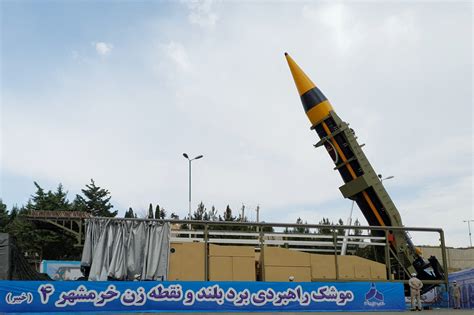
Even advanced, layered air defense networks can be stressed by sheer volume. During the June 2025 conflict, a number of Iranian missiles reportedly penetrated Israel’s defenses. Perfect interception is an engineering fantasy. Defense is always probabilistic.
Moreover, U.S. military bases across the Gulf region lie within range. Approximately 40,000 U.S. personnel are stationed at nearly 18 installations in the broader theater. In a full conflict, these sites would become immediate targets.
Missiles compensate for aircraft. Range compensates for weakness. Volume compensates for technological gaps.
Drone Warfare and the Economics of Attrition
Iran has also invested heavily in unmanned aerial vehicles (UAVs), particularly long-range strike drones such as the Shahed series. These systems are relatively inexpensive compared to advanced fighter aircraft or cruise missiles.
Drones change the cost equation.
Intercepting a low-cost drone with a high-end surface-to-air missile can cost multiples of the attacker’s investment. In sustained conflict, this becomes a war of arithmetic. The side that forces the other to spend more per interception gains leverage over time.
Iran’s drones have seen operational use beyond its borders. Their performance in other theaters has demonstrated that mass deployment, even of relatively simple systems, can overwhelm defenses and strain logistics.
This is not about technological elegance. It is about strategic patience and industrial throughput.
Naval Asymmetry in the Persian Gulf
Iran’s navy is structured around two branches: the conventional Islamic Republic of Iran Navy (IRIN) and the Islamic Revolutionary Guard Corps Navy (IRGCN). The latter specializes in asymmetric tactics.
Iran fields fast-attack boats, anti-ship cruise missiles, coastal batteries, mines, and a fleet of submarines including Kilo-class diesel-electric boats and smaller Ghadir-class midget submarines designed for shallow waters.
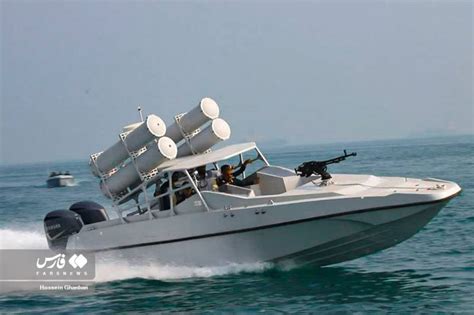
In the confined waters of the Gulf, speed and proximity matter. Large destroyers and carrier strike groups possess overwhelming firepower, but maneuvering space is limited. Swarm tactics—dozens of small, fast vessels converging simultaneously—complicate targeting solutions.
Mine warfare, in particular, remains one of the most cost-effective naval strategies ever devised. Clearing mines is slow, methodical, and dangerous. Even rumors of mine deployment can halt shipping.
Iran does not need to defeat the U.S. Navy in blue-water battle. It needs to make the Gulf inhospitable enough to disrupt operations and trade.
Proxy Leverage and Regional Instability
Iran’s regional network has been weakened in recent years. Hezbollah, Hamas, and Houthi forces have faced sustained pressure. Syria’s political landscape has shifted dramatically.
Yet even diminished proxies retain disruptive capacity.
The Red Sea offers a case study. Houthi forces, operating with limited naval assets, were able to destabilize shipping lanes using drones and rudimentary missiles. The United States reportedly spent significant resources during counter-operations while losing aircraft and drones in the process.
If such disruption can be achieved by a non-state actor with constrained capabilities, the scale of potential disruption from Iran itself is difficult to ignore.
Regional war would not be confined to one border. It would ripple outward—Lebanon, Iraq, Yemen, the Gulf—each front complicating escalation control.
Economic Warfare Cuts Both Ways
Iran’s economy is strained. Inflation is high. The currency has depreciated sharply. Domestic dissatisfaction simmers.
From a superficial perspective, this suggests vulnerability.
But economic fragility does not automatically translate into military collapse. In some cases, prolonged sanctions push states toward self-reliance in key sectors such as missile production and drone manufacturing. When external trade shrinks, internal military industries can expand under centralized control.
Moreover, global markets would not remain insulated. Disruption in the Strait of Hormuz would drive oil prices upward. Energy-dependent economies would feel immediate impact. The economic shock would not be localized to Tehran.
War in the Gulf is rarely confined to one treasury.
The Iraq Precedent and the Psychology of Overconfidence
Strategic caution is shaped by memory.
The Iraq War began with predictions of speed and minimal cost. It evolved into a multi-trillion-dollar endeavor involving prolonged insurgency, regional destabilization, and enduring human consequences.
Iran is demographically larger, geographically more complex, and militarily more prepared for asymmetric resistance than Iraq was in 2003.
Air superiority does not guarantee political victory. Decapitation strikes do not automatically dissolve institutional structures. Regime change operations require sustained stabilization. That is the expensive part.
The lesson is not that war is unwinnable. It is that initial battlefield success does not determine the end state.
China, Russia, and the Limits of Isolation
Iran’s alliances are limited but not nonexistent. Russia’s bandwidth is constrained by other conflicts. China’s support is likely to be diplomatic and economic rather than direct military intervention.
Even limited backing matters.
Diplomatic cover at the United Nations, economic lifelines, and technological transfers can extend resilience. Great powers rarely engage directly in each other’s regional wars, but they shape the economic and informational environment in ways that complicate isolation strategies.
Strategic loneliness is rarely absolute.
Why Iran Remains Too Costly to Conquer
Iran’s strength lies not in matching the United States or Israel platform for platform. It lies in forcing an adversary to calculate unacceptable costs.
Those costs include:
- Sustained missile strikes on regional bases
- Disruption of global energy markets
- Naval attrition in confined waters
- Drone saturation campaigns
- Multi-front regional escalation
- Long-term occupation challenges across difficult terrain
Conquest is not just about defeating an army. It is about stabilizing a nation of nearly 90 million people with deep historical identity and entrenched institutions.
The combined military power of the United States and Israel is formidable. Airpower can strike infrastructure. Precision munitions can eliminate targets. Naval forces can project strength.
But Iran’s strategy is built around endurance, retaliation, and escalation control through pain infliction rather than outright battlefield dominance.
In strategic terms, Iran is not invulnerable. It is costly.
And in geopolitics, cost is often the decisive variable.
The Persian Gulf remains a narrow corridor where geography amplifies risk. Missile production lines continue to hum. Drone swarms rewrite the economics of air defense. Submarines lurk in shallow waters. Energy markets watch nervously.
War planners must therefore confront a sober reality: the question is not whether Iran can be struck. It is whether conquering it would trigger consequences far beyond the battlefield.
The calculus suggests that despite sanctions, air strikes, and regional setbacks, Iran retains the capacity to impose a price so steep that even the most powerful military coalition must think twice.
Power alone does not determine outcomes. Geography, endurance, and strategic asymmetry shape them just as profoundly.
That is why Iran remains, for now, too costly to invade.