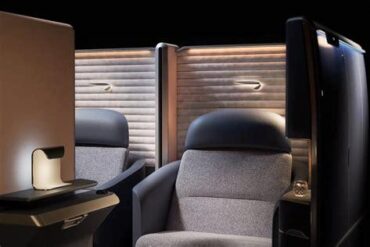
The race for the world’s most luxurious airline seat has quietly transformed into something far more ambitious: the pursuit of absolute privacy. In 2026, the finest first class cabins are no longer designed around prestige alone. They are engineered to feel invisible, insulated, and intensely personal, offering travelers the rare sensation of existing completely apart from the aircraft around them.
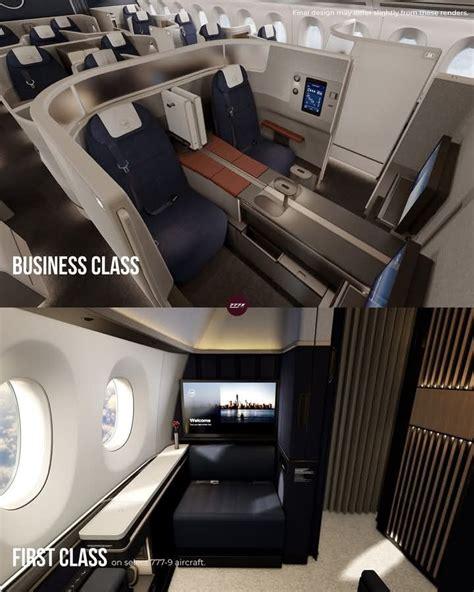
Across the aviation industry, airlines have dramatically reduced first class cabin sizes over the last decade. Aircraft that once carried 12 to 16 first class passengers now frequently accommodate only four to eight travelers. The freed-up cabin space has not simply disappeared; it has been reinvested into sprawling suites with sliding doors, dedicated wardrobes, personal bars, separate beds, and layouts large enough to resemble boutique hotel rooms suspended at 40,000 feet.
Privacy has become the defining currency of modern premium travel. Celebrities, executives, diplomats, and affluent leisure travelers increasingly expect more than flat beds and fine dining. They want silence. They want isolation. They want control over their environment without interruption from neighboring passengers or passing crew traffic. The world’s top airlines have responded by transforming first class into something that often feels closer to a private jet than commercial aviation.
Some carriers emphasize elegant seclusion through minimalist architecture and low passenger counts. Others push the boundaries with fully enclosed floor-to-ceiling suites that erase nearly all visual contact with the cabin. A few go even further, creating multi-room airborne residences complete with bedrooms and showers.
The following five airlines now stand at the very top of that ultra-private hierarchy.
ANA First Class “The Suite” Brings Japanese Precision To Private Air Travel
All Nippon Airways approached luxury from a distinctly Japanese perspective when it introduced “The Suite” aboard its Boeing 777-300ER fleet. Rather than overwhelming passengers with flashy extravagance, ANA focused on functional serenity, refined proportions, and carefully engineered personal space.
The result is one of the most balanced first class products in global aviation.
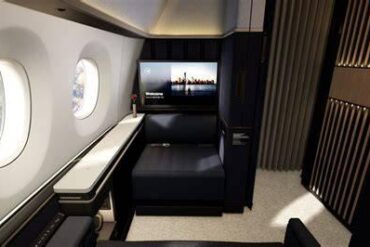
Each cabin typically contains only eight suites, immediately creating a calmer atmosphere than older first class configurations. The suites themselves are exceptionally wide, measuring roughly 33 inches across, allowing travelers to move naturally without the constrained feeling common in many premium cabins.
The privacy doors rise high enough to block almost all direct sightlines from the aisle. While they do not extend fully to the ceiling like Emirates’ enclosed suites, they create an impressive cocoon of isolation that feels remarkably effective during long-haul overnight flights.
ANA’s design language is intentionally understated. Dark woods, muted fabrics, and clean geometric lines create an atmosphere closer to a luxury Tokyo hotel than a theatrical airline cabin. The absence of visual clutter enhances the perception of space, making the suite feel larger than its actual dimensions.
One of the most striking features is the enormous 43-inch 4K entertainment monitor, among the largest screens ever installed in commercial aviation. Combined with the suite’s horizontal layout, passengers can comfortably dine, work, or watch films without feeling compressed into a seat-centric environment.
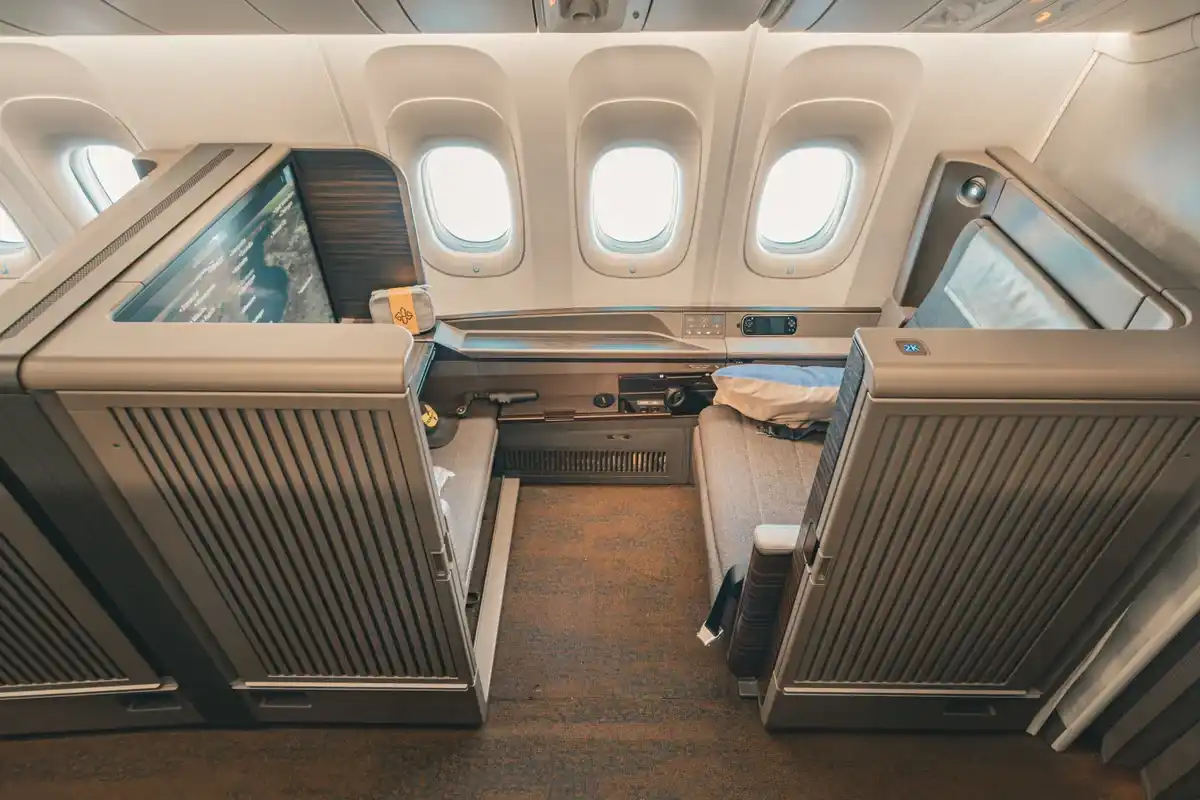
The bed stretches approximately 76 to 78 inches when fully flat, comfortably accommodating taller passengers. Storage compartments are integrated intelligently throughout the suite, ensuring laptops, shoes, headphones, and personal items remain hidden yet easily accessible.
What truly elevates ANA’s first class experience is its atmosphere of quiet discipline. Crew service is attentive without becoming intrusive, reinforcing the sense of privacy rather than interrupting it. Every detail feels intentionally restrained, proving that genuine luxury does not always require excess.
For travelers who value calm sophistication over spectacle, ANA delivers one of the most refined private flying experiences available anywhere in 2026.
Air France La Première Creates Privacy Through Exclusivity And Elegance
Air France takes a completely different approach to first class privacy. Instead of relying on towering walls and sealed compartments, La Première creates intimacy through space, exclusivity, and subtle design intelligence.
The numbers alone are extraordinary.
Most La Première cabins contain just four suites, making it one of the smallest first class cabins operating on any major international airline. With so few passengers onboard, noise levels drop dramatically. Foot traffic nearly disappears. The cabin begins to feel less like shared transportation and more like a private lounge in the sky.
Each suite extends nearly 10 feet in total length, creating a vast personal footprint that allows passengers to shift naturally between dining, lounging, and sleeping positions. Unlike more rigid enclosed suites, La Première embraces openness while still maintaining discretion.
The privacy system relies on thick floor-to-ceiling curtains and carefully angled architecture rather than hard sliding doors. This softer approach avoids the potentially claustrophobic sensation that some enclosed suites create during ultra-long-haul flights.
Natural light becomes a major part of the experience. Each suite spans up to five windows, more than virtually any competing first class product. During daytime flights, the cabin feels flooded with brightness and openness despite its secluded design.
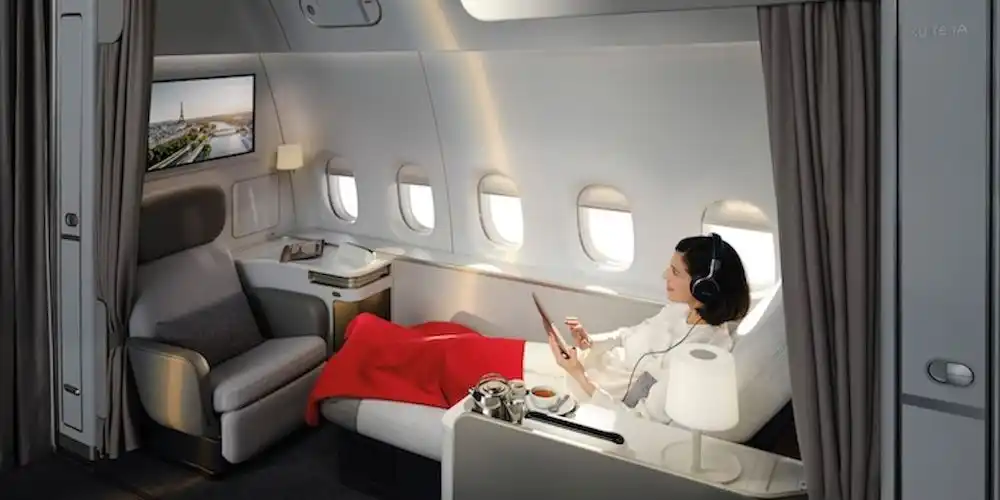
Air France also eliminated overhead bins in the cabin, an unusual design decision that dramatically improves spatial perception. Without bulky storage compartments hanging above passengers, the entire environment feels cleaner, taller, and more residential.
The suite’s chaise lounge converts into a fully flat bed approximately 77 inches long, dressed with elegant bedding that reflects French luxury hospitality traditions. Premium materials dominate every surface, from soft leather upholstery to textured metallic accents.
Where some airlines chase technological novelty, Air France focuses on emotional atmosphere. La Première feels intimate, polished, and deeply Parisian. The privacy does not come from isolation alone but from the deliberate removal of stress, noise, and visual chaos.
For passengers who prefer elegance over enclosure, few first class cabins feel as sophisticated or naturally calming.
Singapore Airlines A380 Suites Deliver Apartment-Style Luxury Above The Clouds
Singapore Airlines fundamentally changed perceptions of first class when it unveiled its redesigned Airbus A380 Suites. Even years after launch, the product remains one of the most ambitious luxury cabin concepts ever placed into commercial service.
The scale is astonishing.
Each suite occupies roughly 50 square feet, approaching the size of a compact hotel room rather than a traditional airline seat. The A380 configuration contains only six suites, dramatically enhancing exclusivity and service personalization.
Unlike most first class products, Singapore Airlines separates the seat from the bed entirely. Passengers receive a standalone leather armchair alongside a fixed bed measuring approximately 82 inches long. This eliminates the tedious seat-to-bed conversion process and preserves a stronger sense of residential comfort throughout the flight.
The suite doors slide closed to create a highly secluded environment, while the high walls block most external visibility from the aisle. Despite the enclosure, the cabin never feels oppressive because the physical footprint is so expansive.
Every suite includes a personal wardrobe capable of storing carry-on luggage, allowing travelers to settle into the space almost like entering a private hotel room. The design encourages passengers to remain entirely self-contained during long-haul journeys.
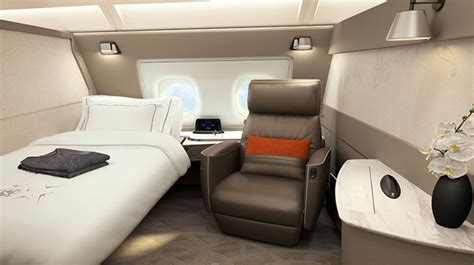
The experience becomes even more remarkable for couples traveling together. Adjacent center suites can merge into a shared private room featuring a genuine double bed. Combined, the connected suites offer approximately 100 square feet of usable space, something unmatched by almost any commercial airline competitor.
Service aboard Singapore Airlines’ Suites remains legendary for its precision and consistency. With only six passengers in the cabin, crew members often provide nearly individualized attention without appearing intrusive.
The emotional impact of the Suites product lies in its balance between grandeur and tranquility. The cabin feels exceptionally spacious yet remarkably peaceful, creating one of the closest approximations to private jet travel available on a scheduled airline.
For travelers prioritizing space above all else, Singapore Airlines continues to operate one of aviation’s most extraordinary first class environments.
Emirates “Game Changer” Suites Push First Class Privacy To The Extreme
If privacy is measured purely by physical isolation, Emirates arguably leads the industry.
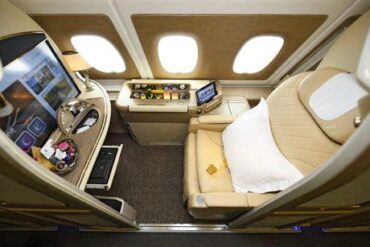
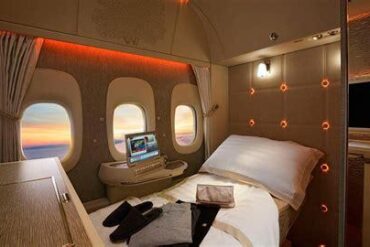
The airline’s “Game Changer” first class suite was designed to eliminate nearly every trace of shared cabin exposure. Installed on selected Boeing 777 aircraft, these suites feature floor-to-ceiling walls reaching approximately 6.5 feet high, creating one of the only truly enclosed first class environments in commercial aviation.
Once the doors close, passengers become almost entirely invisible from the aisle.
The psychological effect is immediate. Unlike semi-open suites where cabin activity remains perceptible, Emirates creates the sensation of occupying a completely separate room. Travelers can sleep, dine, work, or relax without any awareness of surrounding passengers.
The suite’s design borrows heavily from luxury automotive aesthetics, incorporating soft leather textures, metallic trim, and ambient lighting inspired by Mercedes-Benz interiors.
Each suite contains a zero-gravity seat that converts into a fully flat bed approximately 82 inches long. Touchscreen controls allow passengers to manage lighting, seating positions, climate settings, and entertainment functions without assistance from cabin crew.
Middle suites, which naturally lack windows, utilize one of aviation’s most fascinating technologies: virtual windows. Real-time external camera feeds are projected onto high-definition displays, preserving outside visibility despite the fully enclosed architecture.
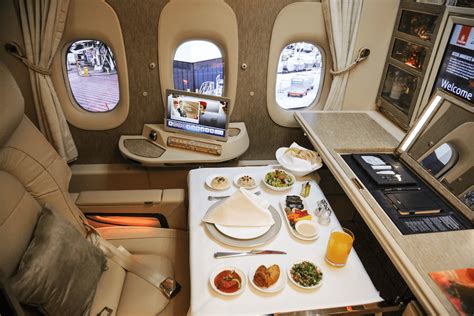
Emirates also reinforces privacy through self-sufficiency. Personal minibars, snack storage compartments, adjustable mood lighting, and extensive entertainment controls reduce the need for passengers to leave the suite or interact frequently with crew members.
Despite the extreme enclosure, clever lighting and digital window technology prevent the space from feeling cramped. Instead, the cabin achieves an atmosphere somewhere between a luxury train compartment and a boutique hotel room.
For celebrities, executives, and high-profile travelers seeking genuine invisibility during international travel, Emirates remains one of the strongest first class options in the world.
Etihad Airways The Residence Remains The Ultimate Private Flying Experience
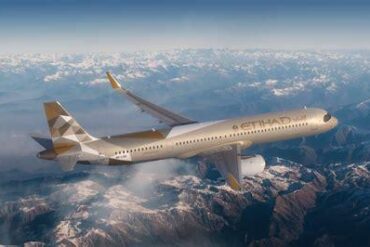
No commercial airline product approaches the sheer scale of Etihad Airways’ The Residence.
Positioned aboard the airline’s Airbus A380 fleet, The Residence occupies approximately 125 square feet — larger than many urban studio apartments. It transforms first class into something closer to a fully private airborne residence.
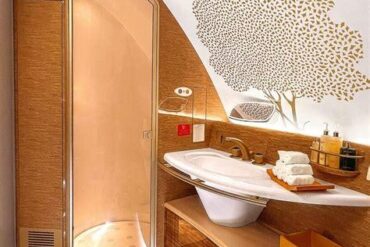
The layout includes three distinct living spaces: a private lounge, a separate bedroom, and an ensuite shower room. Rather than remaining confined to a seat, passengers can physically move between rooms during flight, dramatically changing the psychological experience of long-haul travel.
The bedroom contains a genuine double bed measuring roughly 82 inches long and nearly 48 inches wide, delivering sleeping comfort comparable to upscale hotels rather than traditional airline seating.
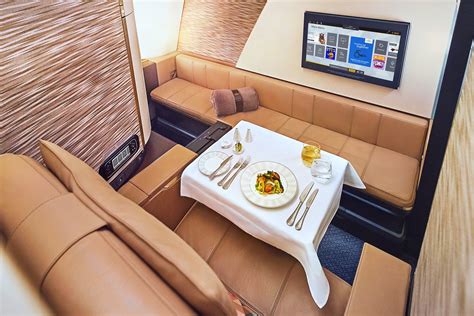
Even the airline’s standard First Class Apartments remain enormously spacious by industry standards. Each apartment includes a reclining armchair paired with a separate sleeping bench, allowing passengers to lounge and sleep independently without constant reconfiguration.
The A380 first class cabin contains only eight apartments alongside The Residence itself, ensuring an exceptionally quiet onboard atmosphere. Low passenger density contributes heavily to the sense of exclusivity.
What separates Etihad from virtually every competitor is the concept of spatial freedom. Most airline suites, regardless of luxury level, still revolve around a single seat. Etihad instead allows passengers to inhabit multiple environments during a flight — relaxing in the lounge, sleeping in the bedroom, or showering privately before landing.
That flexibility fundamentally changes how travelers experience ultra-long-haul aviation. Flights become less physically restrictive and psychologically exhausting because passengers are not trapped in a single confined position for extended periods.
The Residence effectively blurs the line between commercial airline service and private aviation. Even years after its debut, it remains one of the boldest luxury travel concepts ever introduced by a scheduled carrier.
Why Privacy Has Become The New Definition Of First Class Luxury
The evolution of first class in 2026 reveals a major shift in luxury travel priorities. While gourmet dining, premium champagne, and attentive service still matter, they are no longer the ultimate differentiators.
Space has become the true luxury commodity.
Modern high-end travelers increasingly value silence over spectacle, control over interaction, and personal territory over public prestige. Airlines have responded by shrinking cabin sizes, reducing passenger counts, and investing heavily in architecture designed to create emotional separation from the surrounding aircraft.
Whether through ANA’s disciplined minimalism, Air France’s elegant exclusivity, Singapore Airlines’ apartment-style suites, Emirates’ fully enclosed rooms, or Etihad’s multi-room residence, the goal remains remarkably similar: to make commercial aviation feel private.
In the process, first class has evolved beyond transportation entirely. At its highest level, it now functions as a sanctuary above the clouds — one where privacy itself has become the most coveted luxury of all.