The Airbus A380 was once expected to redefine global air travel for decades. Instead, it became something far rarer: a flying monument to an era when airlines competed not merely on efficiency, but on spectacle. While much of the aviation industry has shifted toward dense business-class cabins and profitability-focused layouts, a small group of carriers still uses the Airbus A380 as the ultimate stage for extravagant first-class experiences.
Out of the 159 Airbus A380 aircraft still flying commercially in 2026, only nine airlines continue to offer a genuine international first-class cabin aboard the double-decker giant. That exclusivity has transformed the aircraft into something almost mythical among premium travelers. Behind the iconic curved staircase and whisper-quiet upper deck sits a world of sliding doors, onboard showers, designer bedding, private bars, chauffeur transfers, and some of the most expensive airline tickets ever sold.
For passengers willing to spend five figures on a single journey, the Airbus A380 remains unmatched. Even in an aviation industry obsessed with modernization, the superjumbo continues to deliver experiences no newer aircraft has successfully replicated.
The airlines still operating Airbus A380 first class products in 2026 occupy a shrinking but fiercely competitive luxury niche. Some prioritize privacy. Others focus on culinary excellence or lavish ground services. A few lean into pure theatrical excess. Together, they represent the final frontier of traditional commercial aviation luxury.
Why The Airbus A380 Remains The Ultimate First-Class Aircraft
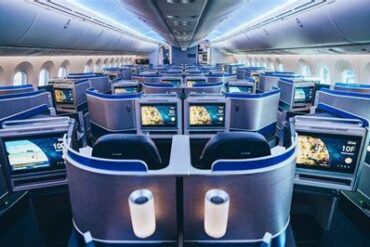
The Airbus A380 possesses one advantage no other passenger aircraft can fully duplicate: space. Its enormous fuselage allows airlines to build cabins that feel less like airline seating and more like boutique hotel rooms suspended 40,000 feet above the Earth.
That physical space changes everything about the onboard experience. Wider aisles reduce cabin crowding. Larger lavatories become possible. Lounges and shower suites can be installed without severely compromising seating density. Noise levels remain astonishingly low compared to twin-engine long-haul jets, particularly on the upper deck forward section where several airlines position their first-class cabins.
The result is an atmosphere that feels detached from ordinary commercial flying.
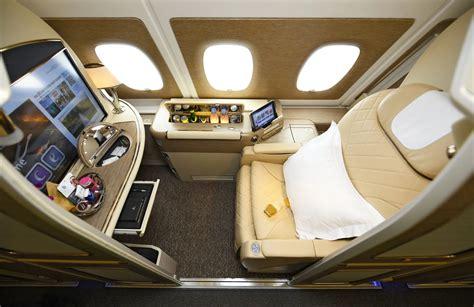
Passengers stepping into an Airbus A380 first-class suite often encounter polished wood finishes, mood lighting, leather armchairs, restaurant-style dining service, and bedding that rivals luxury hotels. Several airlines have transformed the front section of the aircraft into private mini-apartments complete with wardrobes, vanity mirrors, and enclosed walls.
The economics behind these cabins are brutal, which explains why so many airlines abandoned them. First class consumes enormous floor space while serving very few passengers. Yet for the airlines that continue operating the product, the Airbus A380 remains a branding masterpiece capable of generating prestige far beyond ticket revenue alone.
By 2026, flying Airbus A380 first class is no longer simply transportation. It has become an aviation bucket-list experience.
Korean Air Airbus A380 First Class: Elegant Service With Aging Hardware
Korean Air operates six Airbus A380 aircraft featuring its long-running Kosmo Suites first-class cabin. Unlike most competitors that place premium cabins on the upper deck, Korean Air keeps first class downstairs at the front of the main deck.
The cabin consists of 12 suites arranged in a spacious 1-2-1 configuration. Although the product lacks sliding privacy doors found on newer competitors, the seats remain impressively wide at 25 inches and convert into fully flat beds stretching 84 inches long.
What truly distinguishes Korean Air is not the hardware, but the onboard hospitality.
The airline’s cabin crews are widely regarded among the most attentive in global aviation, delivering service with a warmth and consistency increasingly rare in premium travel. The culinary program also stands apart from Western-heavy competitors. Passengers can order the carrier’s celebrated “Hansik Jeongchan” dining experience, an elaborate Korean fine-dining service featuring multiple traditional courses accompanied by premium wines and Korean liquors.
Routes for the Airbus A380 include Seoul Incheon to Los Angeles, New York JFK, Chicago O’Hare, and Atlanta.
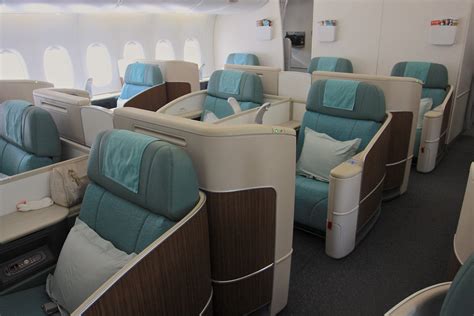
The challenge for Korean Air lies in product age. Compared with enclosed suites now offered by Singapore Airlines, Emirates, and Etihad Airways, the Kosmo Suite feels transitional rather than cutting-edge. Yet many travelers continue choosing it specifically for the refined service culture and strong culinary identity.
Pricing varies dramatically depending on departure point. Flights originating in Seoul often begin around $5,000 one-way, while departures from the United States can exceed $16,000 for the exact same seat.
That enormous fare disparity has become one of the strangest quirks in modern premium aviation pricing.
ANA Flying Honu First Class: Japan’s Most Playful Luxury Experience
All Nippon Airways, better known as ANA, operates one of the most unusual Airbus A380 fleets in the world. Its three superjumbos fly exclusively between Tokyo Narita and Honolulu under the airline’s whimsical “Flying Honu” branding inspired by Hawaiian sea turtles.
Each aircraft carries only eight first-class suites positioned on the upper deck.
The cabins feature sliding privacy doors, oversized entertainment screens, luxurious Japanese-inspired finishes, and fully flat beds extending 81 inches. While the physical product is impressive, ANA’s real advantage comes from its service philosophy.
Japanese precision dominates every element of the experience.
Cabin crews deliver meals with meticulous timing and graceful presentation. Seasonal menus highlight Japanese ingredients alongside carefully selected sake pairings. Even simple interactions feel polished and deeply intentional rather than scripted.
The relatively short six-hour flight duration between Tokyo and Honolulu creates a strange paradox. ANA offers one of the world’s finest first-class products, but passengers have limited time to fully enjoy it.
Still, availability itself is the bigger challenge.
With only three aircraft operating three weekly rotations, seats are scarce even during off-peak travel periods. Ticket prices typically range between $5,000 and $8,000 one-way, making ANA one of the more affordable Airbus A380 first-class experiences despite its exclusivity.
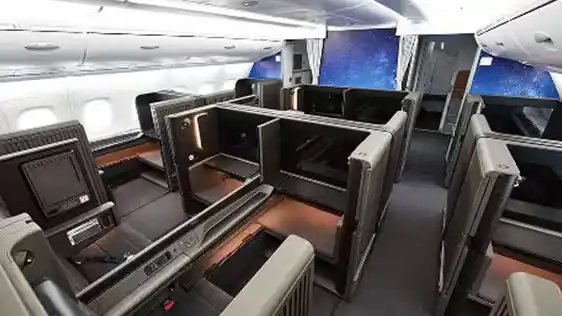
The colorful turtle liveries also give ANA’s A380 operation a personality absent from many luxury-focused competitors. In an industry often obsessed with corporate minimalism, the Flying Honu aircraft feel surprisingly joyful.
British Airways Is Reinventing Airbus A380 First Class
British Airways has spent years operating an Airbus A380 first-class product that lagged behind Middle Eastern and Asian competitors. That situation is finally changing.
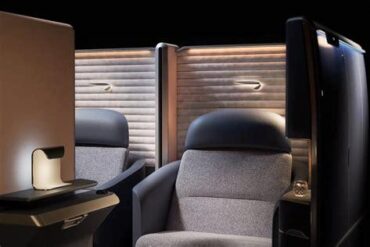
The airline’s existing A380 first-class cabin features 14 open suites arranged in a 1-2-1 layout on the upper deck. While spacious and comfortable, the seats lack enclosed walls and privacy doors. Compared with modern suite products, the cabin increasingly felt tied to an earlier generation of premium aviation.
British Airways recognized the problem.
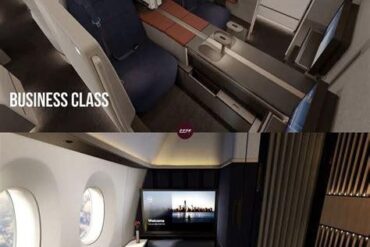
A major retrofit program now underway will completely transform the fleet during 2026. The redesigned “First Suite” introduces fully enclosed cabins with sliding doors, dramatically improved privacy, and sophisticated British-inspired interiors emphasizing handcrafted luxury materials.
The redesign reduces overall aircraft capacity but substantially elevates the premium experience.
Passengers can expect curved cocoon-style suite walls, significantly upgraded bedding, enhanced entertainment systems, and refined cabin aesthetics aimed directly at Emirates and Singapore Airlines.
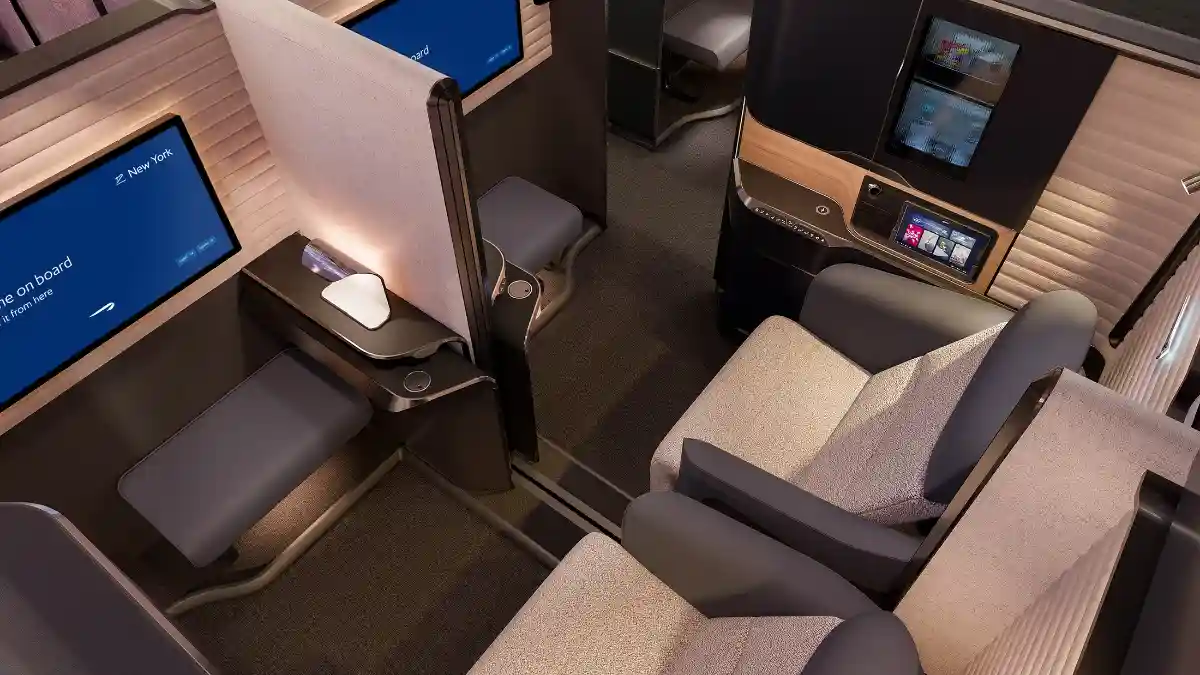
Even before the retrofit, British Airways maintained strengths in dining and lounge access. Travelers departing London Heathrow gain entry to the carrier’s prestigious Concorde Room, while onboard menus emphasize premium British cuisine and extensive Champagne selections.
Routes include London Heathrow to Los Angeles, Miami, and other high-demand long-haul destinations.
The transformation could reposition British Airways as a serious contender in the global first-class race after years of being viewed as merely adequate rather than exceptional.
Qatar Airways Airbus A380 First Class: The Hidden Luxury Product
Qatar Airways built its global reputation around business class, not first class. The airline’s revolutionary Qsuite product became so dominant that many travelers considered it superior to competitors’ first-class cabins.
Yet the Airbus A380 quietly carries one of the airline’s most underrated premium products.
The cabin features eight first-class suites in a 1-2-1 configuration with fully flat beds, large entertainment screens, and direct aisle access for every passenger. The aesthetic is elegant rather than flashy, focusing on understated luxury instead of theatrical extravagance.
That restraint reflects Qatar Airways’ broader premium philosophy.
Service is polished and highly personalized, while onboard dining consistently ranks among the strongest in commercial aviation. Caviar service, premium Arabic mezze, and extensive wine programs elevate the experience without overwhelming passengers with gimmicks.
The major complication is availability.
Qatar Airways deploys its Airbus A380 fleet selectively rather than consistently. Routes can change seasonally, and aircraft substitutions remain common. London Heathrow remains the carrier’s most reliable Airbus A380 destination, though the aircraft also appears periodically on routes like Singapore during peak demand periods.
Pricing begins surprisingly low by Airbus A380 first-class standards.
Shorter long-haul routes can start around $4,500 one-way, while ultra-long-haul itineraries may exceed $15,000 during peak seasons.
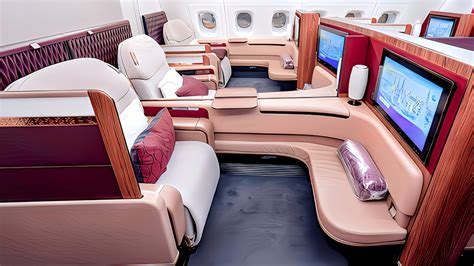
For travelers seeking refined luxury without the overt spectacle of Emirates or Etihad, Qatar Airways offers one of the industry’s most balanced premium experiences.
Qantas Airbus A380 First Class Still Defines Australian Luxury
Qantas approaches first class differently from its Gulf competitors. There are no shower spas. No private apartments. No onboard bartenders theatrically mixing cocktails beside mood-lit lounges.
Instead, Qantas focuses relentlessly on understated premium comfort.
Its Airbus A380 fleet carries 14 first-class suites on the lower deck in a spacious 1-2-1 layout. The seats transform into fully flat beds and provide ample personal storage, though the cabins lack enclosed privacy doors.
The real magic begins before boarding.
Qantas First Lounges in Sydney and Melbourne consistently rank among the best airport lounges in the world. Passengers enjoy spa treatments, restaurant-grade dining, premium Australian wines, and expansive runway views before ever stepping onboard.
That ground experience has become central to the Qantas first-class identity.
Routes include Sydney to London, Los Angeles, Dallas Fort Worth, Johannesburg, and Singapore. Many of these flights rank among the world’s longest commercial journeys, making comfort and service consistency especially important.
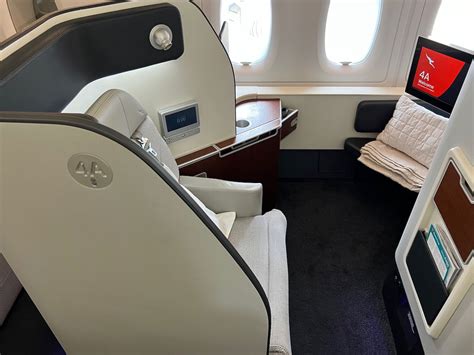
Onboard menus emphasize Australian produce and chef partnerships, while crews deliver service with a relaxed professionalism distinct from the hyper-formality of some Asian carriers.
The cost, however, is staggering.
A one-way Sydney-to-London Airbus A380 first-class ticket can exceed $18,000, making Qantas one of the most expensive airlines on this list.
Passengers are not necessarily paying for groundbreaking suite design. They are paying for the complete end-to-end luxury ecosystem surrounding the flight.
Lufthansa Airbus A380 First Class Delivers Quiet Luxury
Lufthansa’s Airbus A380 first-class cabin lacks enclosed suites and dramatic architectural flourishes. Yet among aviation enthusiasts, it remains one of the most respected premium experiences anywhere in the sky.
The reason is simple: serenity.
Positioned at the very front of the upper deck, Lufthansa’s first-class cabin benefits from extraordinary quietness. The separation from the main deck and minimal passenger traffic create an environment closer to a private jet than a commercial airliner.
The airline operates eight Airbus A380 aircraft from Munich to destinations including Los Angeles, New York JFK, Boston, and Bangkok.
Each aircraft carries eight spacious open suites arranged in a 1-2-1 layout. Beds stretch 81 inches long, while seat widths reach a generous 27 inches.
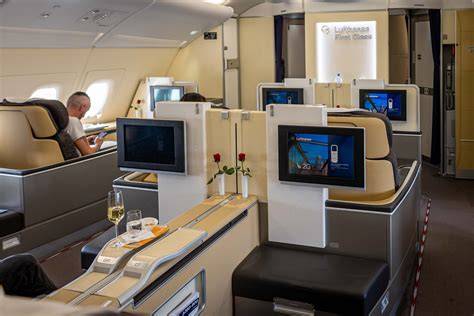
Lufthansa complements the onboard product with one of aviation’s strongest ground experiences. First-class passengers departing Munich receive private terminal access, premium dining, personal assistants, and limousine transfers directly to the aircraft.
The service philosophy emphasizes precision and restraint rather than overt pampering.
Meals arrive on Meissen porcelain. Wines focus heavily on prestigious European labels. Amenity kits and pajamas showcase premium German brands. Nothing feels flashy, yet nearly everything feels meticulously curated.
Prices generally range from $6,500 to $11,000 one-way depending on route and season.
While Lufthansa’s newer Allegris suites are drawing attention elsewhere in the fleet, many travelers still prefer the Airbus A380 precisely because of its uniquely peaceful atmosphere.
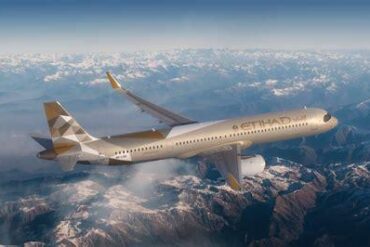
Etihad Airways Created The Most Extraordinary Airbus A380 Cabin Ever Built
Etihad Airways did not merely design a first-class cabin for the Airbus A380. It attempted to redefine what commercial aviation could become.
The result was astonishing.
At the front of the upper deck sits “The Residence,” a three-room private suite unlike anything else in scheduled airline service. It includes a living room, separate bedroom with a double bed, and private en-suite shower bathroom complete with personal butler service.
Nothing else in commercial aviation matches it.
Behind The Residence are nine First Class Apartments, each enclosed with sliding doors and featuring separate armchairs and beds. The alternating forward- and rear-facing layout creates an unusually spacious environment that feels radically different from traditional airline seating.
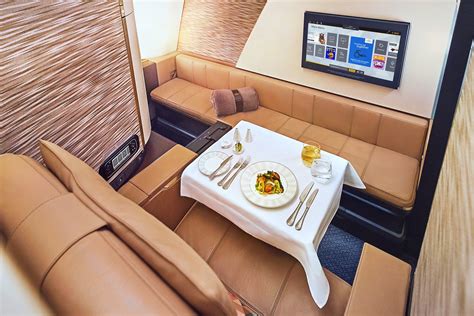
The architecture alone transformed Etihad into an aviation icon during the mid-2010s luxury travel boom.
After pandemic-era fleet reductions, the airline has gradually rebuilt its Airbus A380 network. Current routes include Abu Dhabi to London Heathrow, Paris, Singapore, Toronto, and Tokyo Narita.
Remarkably, Etihad’s First Class Apartments are often priced lower than competitors with less ambitious products. Many routes fall between $3,500 and $6,500 one-way.
The Residence operates differently.
Passengers must first purchase a First Class Apartment before paying an additional upgrade fee that can range from roughly $1,600 to nearly $4,000 depending on route length.
Despite years of industry evolution, The Residence still feels futuristic.
No airline has successfully attempted anything more extravagant since.
Emirates Airbus A380 First Class Became Aviation’s Most Famous Luxury Experience
No airline is more closely tied to the Airbus A380 than Emirates.
With more than 100 superjumbos in service, the Dubai-based carrier transformed the aircraft into a global luxury symbol. For millions of travelers, Emirates first class represents the ultimate aspirational flight experience.
The cabin itself is already spectacular.
Each Airbus A380 features 14 fully enclosed suites equipped with sliding doors, mood lighting, personal minibars, and lie-flat beds. Center suites even use virtual window technology to simulate outside views.
Yet what truly elevated Emirates into aviation legend lies beyond the suites.
Two onboard Shower Spas allow first-class passengers to shower mid-flight using heated floors, luxury toiletries, and full vanity areas. At the rear of the upper deck, a lavish onboard lounge serves cocktails and premium spirits to both business- and first-class travelers.
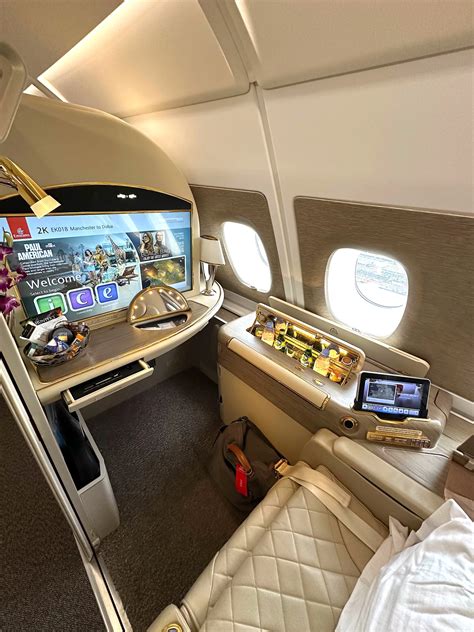
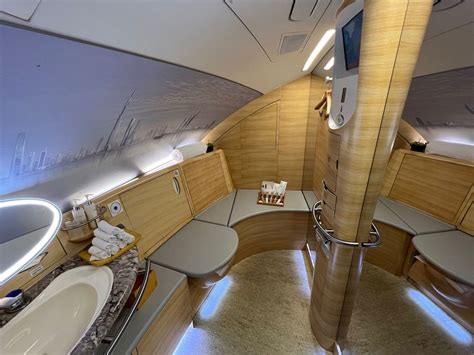
The combination created one of the most photographed airline products in history.
Routes span six continents, including flagship services between Dubai and London Heathrow, New York JFK, Los Angeles, Sydney, and dozens of other destinations.
The scale of Emirates’ Airbus A380 operation also creates unusually broad pricing flexibility. Long-haul first-class fares generally range between $8,000 and $17,000 one-way, but shorter fifth-freedom routes can be shockingly affordable.
Flights such as Bangkok to Hong Kong occasionally offer the complete Emirates Airbus A380 first-class experience — showers included — for little more than $600.
That accessibility helped democratize one of aviation’s most extravagant products.
For many travelers, Emirates remains the definitive Airbus A380 first-class experience because it understands something fundamental: luxury should feel memorable, theatrical, and unapologetically excessive.
Singapore Airlines Suites Remains The Pinnacle Of Airbus A380 Luxury
Singapore Airlines approached Airbus A380 first class differently from every competitor.
Rather than designing better seats, it designed rooms.
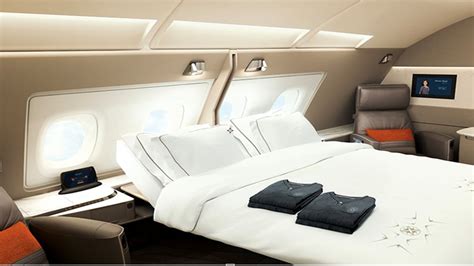
Its Suites product occupies the front section of the upper deck and consists of only six fully enclosed cabins spread across three rows. Each suite includes a separate leather armchair and standalone flat bed dressed with Lalique linens.
The experience feels less like flying and more like inhabiting a luxury hotel room floating through the night sky.
Passengers traveling together can combine select suites into double cabins featuring genuine double beds. No competitor has replicated the concept with equal elegance or sophistication.
Everything aboard Singapore Airlines Suites is calibrated toward refinement rather than spectacle.
The lighting feels soft and residential. Service unfolds quietly and precisely. Dining resembles fine restaurant presentation more than airline catering. Even the wardrobes and vanity mirrors are integrated seamlessly into the suite architecture.
Routes include Singapore to London Heathrow, Sydney, Auckland, Shanghai, Mumbai, Delhi, and Hong Kong.
Importantly, all 12 Singapore Airlines Airbus A380 aircraft feature the same updated Suites cabin introduced in 2017, eliminating the inconsistency issues common at some competing airlines.
The product’s reputation has become almost mythical among frequent flyers and aviation enthusiasts.
At the Skytrax World Airline Awards, Singapore Airlines repeatedly dominates categories including best first-class seat and best first-class catering. Social media and YouTube have further amplified the cabin’s legendary status, turning it into one of the most recognizable luxury travel experiences on Earth.
Prices reflect that prestige.
Long-haul Suites fares generally range between $12,000 and $14,000 one-way. Demand remains extraordinarily strong despite the cost, particularly for the coveted double-suite configurations.
For travelers chasing the absolute pinnacle of commercial aviation luxury, Singapore Airlines Suites continues to set the global benchmark.
The Airbus A380 Has Become The Last Great Palace In The Sky
The modern airline industry increasingly prioritizes efficiency, standardization, and density. Against that backdrop, Airbus A380 first class feels almost rebellious.
These cabins were created during a different era of aviation optimism — a time when airlines believed luxury itself could become a competitive weapon powerful enough to define entire brands.
Many carriers abandoned that philosophy after the pandemic. Others shifted resources toward highly profitable business-class products capable of serving larger passenger segments.
Yet the nine airlines still operating Airbus A380 first class cabins continue preserving something unique.
They preserve spectacle.
Whether it is Emirates’ onboard shower spas, Etihad’s private apartment in the sky, Lufthansa’s cathedral-like quietness, or Singapore Airlines’ extraordinary Suites, these cabins remind travelers that flying can still feel glamorous rather than transactional.
The Airbus A380 may no longer dominate global aviation growth strategies, but in first class, it still reigns supreme.
For the passengers fortunate enough to experience it, the superjumbo remains the closest thing commercial aviation has ever produced to a true flying palace.