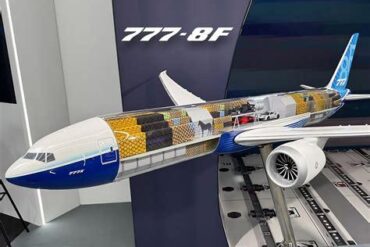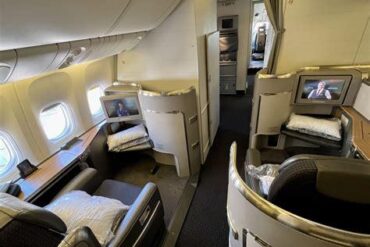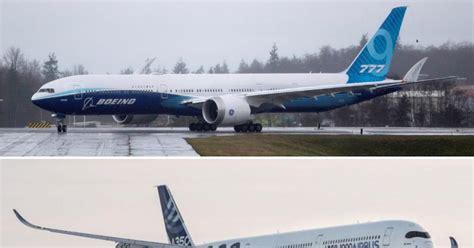
Scandinavian Airlines is approaching one of the most consequential fleet decisions in its modern history. At the center of the discussion is the Boeing 777X, an aircraft designed to dominate the world’s busiest intercontinental corridors with immense capacity, extraordinary range, and cutting-edge efficiency. Yet for SAS, the question is not whether the aircraft is technologically impressive. The real question is whether a Scandinavian carrier built around frequency, flexibility, and relatively modest population centers can realistically support a jetliner carrying more than 400 passengers day after day.
The debate arrives at a pivotal moment for the airline. SAS is no longer simply rebuilding after years of financial instability. The carrier is actively redefining itself under new ownership and strategic direction. With Air France-KLM preparing to increase its stake in the airline, SAS is transitioning into a broader European network strategy tied closely to SkyTeam’s long-haul ecosystem. Every fleet choice now carries implications far beyond Copenhagen, Stockholm, and Oslo.
That reality makes the Boeing 777X both fascinating and dangerous for SAS. On paper, it unlocks routes, cargo opportunities, and economies of scale previously unavailable to the airline. In practice, it could also become an oversized asset mismatched to the airline’s historical traffic profile.
The tension between ambition and operational reality explains why aviation analysts across Europe are watching the situation so closely.
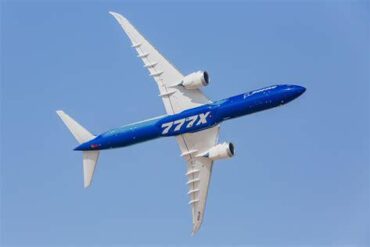
After all, the Boeing 777X is not merely another widebody aircraft. It represents an entirely different philosophy of long-haul flying.
By considering it, SAS may be signaling that it wants to transform from a regional long-haul operator into a true global connector.
SAS Faces A Radical Shift In Long-Haul Strategy
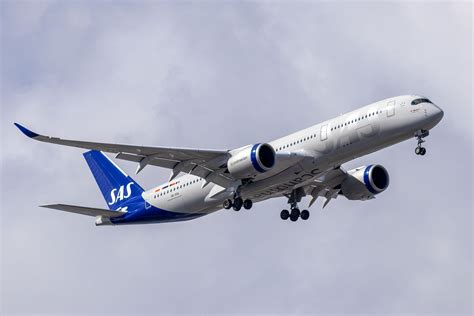
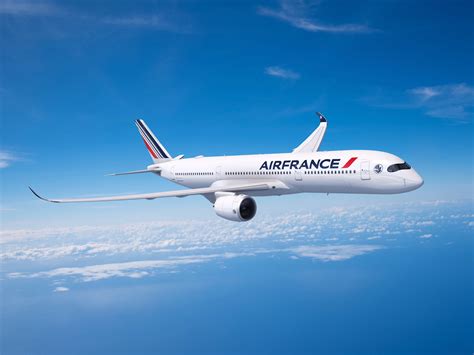
For decades, SAS structured its long-haul operation around moderate-capacity aircraft capable of balancing seasonal Scandinavian demand with premium business traffic. The airline’s current Airbus A350-900 fleet fits that formula almost perfectly. Seating roughly 300 passengers depending on cabin configuration, the aircraft provides excellent economics without forcing the airline to chase unsustainable load factors.
The Boeing 777-9 changes that equation dramatically.
With seating capacity potentially exceeding 425 passengers in dense layouts, the aircraft belongs to a category traditionally dominated by mega-hub airlines such as Emirates, Qatar Airways, and Singapore Airlines. These carriers feed enormous numbers of transfer passengers through centralized hubs that operate almost continuously around the clock.
SAS does not operate such a system.
Copenhagen functions efficiently as a Northern European gateway, but it lacks the massive transfer volumes generated by Dubai or Doha. Stockholm and Oslo are even smaller in terms of long-haul connectivity. The Scandinavian market itself is affluent and premium-heavy, yet relatively limited in population size compared with the catchment areas supporting the world’s largest airlines.
That creates a difficult operational puzzle.
To justify the economics of the 777X, SAS would need to consistently fill hundreds of seats across transatlantic and Asian routes while maintaining profitable yields. Empty seats on a jet this large quickly become financially painful, especially during weaker seasonal periods common in Northern Europe.
The airline could theoretically compensate by reducing frequencies and consolidating passengers onto fewer departures. However, that approach carries its own risks. Premium travelers often prioritize schedule flexibility over aircraft size. A business passenger flying between Copenhagen and New York may prefer two daily departures on smaller aircraft instead of one giant flight aboard a 777-9.
Reducing frequency to accommodate larger aircraft could therefore weaken one of SAS’s traditional strengths in the corporate market.
The Economics Of Size Could Work Against SAS
The Boeing 777X promises substantial efficiency improvements compared with older-generation aircraft. Its massive GE9X engines, advanced composite wing design, and aerodynamic refinements are intended to reduce fuel burn per seat significantly.
But airline economics are rarely that simple.
The aircraft only achieves peak efficiency when operated close to its intended capacity range. A half-full 777-9 becomes extraordinarily difficult to justify financially, especially on routes where smaller aircraft can deliver similar revenue with lower trip costs.
This is where the Airbus A350 and Boeing 787 become highly attractive alternatives for SAS.
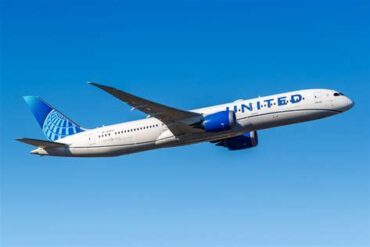
Both aircraft provide excellent long-haul economics while offering far greater flexibility in capacity deployment. The Boeing 787-9, for instance, typically seats around 290 passengers and has become one of the industry’s preferred aircraft for thinner long-haul routes. The Airbus A350-900 already fits seamlessly into SAS’s existing operation while maintaining strong cargo capability and passenger comfort.
The 777X occupies a very different niche.
It thrives in markets where demand is almost guaranteed year-round. Airlines operating from giant population centers or massive connecting hubs can leverage its scale effectively. SAS operates in a market defined more by stability and consistency than explosive passenger volume.
That distinction matters enormously.
Aviation history is filled with examples of airlines acquiring oversized aircraft based on optimistic growth forecasts, only to discover that demand failed to materialize at the required pace. The Airbus A380 became the most famous modern example of this problem. Although beloved by passengers, the aircraft struggled commercially because too few airlines could consistently fill so many seats profitably.
The Boeing 777X is more flexible than the A380, but the underlying challenge remains similar.
Large aircraft create tremendous upside when demand is strong. They become expensive liabilities when markets soften.
Boeing’s Giant Jet Was Designed For Mega-Hub Dominance
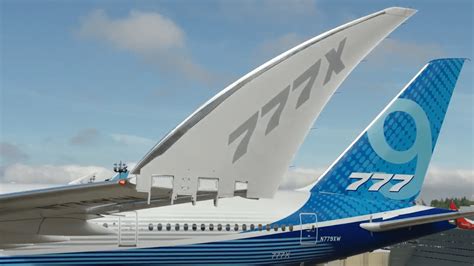
The Boeing 777X is one of the most ambitious commercial aircraft ever developed. Featuring the largest turbofan engines in aviation history and folding composite wingtips engineered to reduce airport compatibility issues, the aircraft represents Boeing’s attempt to preserve the high-capacity twin-engine market after the decline of four-engine giants.
Technically, the aircraft is remarkable.
The GE9X engines generate immense thrust while improving fuel efficiency by roughly 10% compared with previous-generation powerplants. The aircraft’s range of approximately 8,745 nautical miles enables nonstop operations connecting virtually any two major cities on Earth.
For SAS, that capability opens intriguing possibilities.
Direct Scandinavian flights to Southeast Asia, deeper Chinese markets, or even parts of South America suddenly become technically feasible with meaningful cargo payloads. Such routes could help the airline bypass crowded Western European hubs while strengthening Copenhagen’s relevance within the SkyTeam network.
Yet technical possibility does not automatically translate into commercial viability.
The aircraft was fundamentally optimized for ultra-high-density long-haul missions. Its enormous engines and structural design are best utilized on lengthy sectors where fuel efficiency gains compound over many hours of cruise flight.
Using the aircraft on shorter transatlantic routes could reduce many of those advantages.
A route from Copenhagen to New York, for example, may not fully exploit the aircraft’s range and efficiency profile. In those cases, smaller aircraft often produce superior overall economics because they carry less structural weight and require lower operating costs per departure.
This becomes particularly important during off-peak travel periods when demand weakens.
SAS would effectively be betting that its future network can support sustained high-density flying across multiple continents for decades to come.
That is a bold assumption for a carrier emerging from years of restructuring.
Fleet Complexity Could Create Major Operational Challenges
SAS currently enjoys the benefits of relative simplicity in its long-haul fleet. Its Airbus A350s integrate smoothly with existing Airbus operational systems, pilot training frameworks, maintenance procedures, and spare-parts logistics.
Introducing the Boeing 777X would fracture much of that commonality.
The airline would need to invest heavily in new pilot certifications, engineering infrastructure, maintenance contracts, spare engine inventories, and specialized ground equipment. Even the aircraft’s folding wingtips introduce additional maintenance considerations unfamiliar to SAS technicians.
For a global giant operating dozens or hundreds of widebody aircraft, these costs can be spread efficiently across a massive fleet.
For SAS, the math is less forgiving.
Industry analysts frequently note that airlines generally require a relatively large fleet subcategory to justify the fixed infrastructure costs associated with introducing a completely new aircraft type. If SAS were to acquire only a small number of 777Xs, operating expenses per aircraft could become disproportionately high.
That raises another strategic issue.
Would SAS purchase enough 777Xs to justify the investment?
Doing so would require a major financial commitment and a substantial long-term shift toward larger-capacity operations. Yet ordering only a handful of aircraft risks creating an expensive boutique fleet with limited operational flexibility.
Either path involves considerable risk.
Air France-KLM Changes Everything
The evolving relationship between SAS and Air France-KLM may ultimately become the single most important factor in the 777X debate.
Under independent circumstances, the aircraft might appear excessively large for the Scandinavian market alone. Within the context of a broader European airline group, however, the equation changes substantially.
Air France and KLM collectively manage enormous long-haul transfer flows through Paris Charles de Gaulle and Amsterdam Schiphol. By integrating more deeply into this ecosystem, SAS gains access to feeder traffic from across Europe and beyond.
Suddenly, filling a 400-seat aircraft becomes more realistic.
Passengers from secondary cities throughout Scandinavia and the Baltic region could funnel through Copenhagen onto long-haul departures operated by larger aircraft. In theory, the 777X could help relieve congestion at major Western European hubs while strengthening SkyTeam’s northern presence.
That possibility explains why the aircraft remains under serious consideration despite its apparent size mismatch.
The strategy would effectively transform SAS from a point-to-point Scandinavian carrier into a northern extension of a larger European network machine.
Still, integration alone does not eliminate the risks.
Competing against Gulf carriers and major Asian airlines on premium long-haul routes remains intensely difficult. Emirates, Qatar Airways, and Turkish Airlines already dominate many connecting flows between Europe and Asia with enormous scale advantages.
SAS would need a compelling reason for travelers to choose Copenhagen over established mega-hubs.
Direct flights, shorter travel times, premium Scandinavian service standards, and efficient transfers could help create that appeal. Yet success would depend on flawless execution and sustained demand growth.
Delivery Delays Make The Decision Even Harder
One of the most overlooked aspects of the 777X discussion involves timing.
The program has faced years of delays, certification challenges, and rising development costs. Boeing originally envisioned a much earlier entry into service, but technical hurdles and regulatory scrutiny repeatedly pushed the timeline backward.
For SAS, timing is critical.
The airline’s aging Airbus A330-300 fleet cannot remain economically competitive forever. Maintenance costs continue rising as the aircraft age, while fuel efficiency increasingly lags behind newer-generation alternatives.
SAS needs replacement aircraft relatively soon.
The Airbus A350 and Boeing 787 are available, proven, and already operating successfully worldwide. The 777X, by contrast, still carries lingering uncertainty surrounding certification schedules and production ramp-up timelines.
Waiting too long creates operational danger.
If additional delays emerge, SAS could face a capacity shortfall precisely when long-haul competition intensifies across Europe. Extending the life of older A330s would require additional maintenance investment and potential cabin modernization work, increasing costs further.
This creates a classic aviation dilemma.
Does the airline prioritize immediate reliability and operational certainty, or gamble on a more ambitious aircraft designed for future growth?
The answer depends largely on how aggressively SAS believes the Scandinavian long-haul market will evolve over the next decade.
The Boeing 777X Could Reshape European Aviation Strategy
The implications of an SAS order would extend far beyond Scandinavia.
European airlines have largely shifted toward smaller, highly efficient twin-engine aircraft optimized for flexibility rather than sheer scale. The Airbus A350 and Boeing 787 dominate modern fleet strategies because they allow carriers to maintain frequency while reducing financial risk.
A major 777X order from SAS would challenge that trend.
It would suggest that at least some mid-sized European airlines still believe high-capacity flying has a future outside the world’s largest hubs. That would represent a significant endorsement for Boeing at a time when the manufacturer desperately needs broader confidence in the program.
Airbus would also feel the impact.
Although the A350-1000 competes strongly in the large widebody segment, Airbus currently lacks a direct equivalent to the sheer size of the 777-9. If airlines begin embracing larger twin-engine aircraft again, Boeing could regain strategic ground in the upper end of the long-haul market.
Yet skepticism remains widespread for good reason.
Post-pandemic aviation trends have generally favored flexibility over concentration. Airlines increasingly prefer operating more frequencies with smaller aircraft rather than consolidating passengers onto giant jets. Travelers often value convenience and schedule choice, while airlines appreciate the reduced financial exposure associated with mid-sized widebodies.
The 777X runs somewhat counter to that philosophy.
Its success depends on airlines believing that large-scale hub connectivity will remain dominant well into the future.
SAS Is Deciding What Kind Of Airline It Wants To Become
Ultimately, the Boeing 777X debate is not really about engines, seats, or range figures.
It is about identity.
SAS must decide whether its future lies in remaining a disciplined regional premium carrier or evolving into a far more aggressive global network airline integrated deeply into the Air France-KLM ecosystem.
The 777X symbolizes expansion, scale, and long-term ambition. It signals confidence in sustained passenger growth and the power of consolidated long-haul traffic flows.
Smaller aircraft symbolize caution, adaptability, and operational flexibility.
Neither philosophy is inherently wrong.
But for SAS, the margin for error is relatively thin after years of financial pressure and restructuring. A successful 777X strategy could elevate Copenhagen into a much stronger intercontinental hub while transforming the airline’s competitive position across Northern Europe.
Failure, however, could leave the carrier operating oversized aircraft in markets unable to support them consistently.
That is why this decision matters so deeply across the aviation industry.
The Boeing 777X may ultimately become the aircraft that redefines Scandinavian aviation for a generation. Or it may prove that even the world’s most advanced airliner cannot overcome the economic realities of market size and passenger demand.
For SAS, the difference between those outcomes will determine far more than the shape of its fleet.