American Airlines is making a striking bet on Dallas/Fort Worth International Airport: spend roughly $4 billion expanding the physical hub while deliberately making the operation less concentrated. On paper, that sounds like a contradiction. A growing hub normally tries to push more flights through its busiest connection windows, maximizing aircraft utilization and giving passengers as many connection choices as possible. At DFW, however, American is moving from nine large schedule banks to 13 smaller ones, adding more scheduled flight time, and investing in remote deplaning equipment and staffing. The message is increasingly clear: the airline wants DFW to become bigger without making every disruption bigger with it.
That strategy matters because DFW is not simply another airport in American’s network. It is the carrier’s largest hub and one of the most important connection points in its entire system. American says more than 30% of its daily connecting customers and connecting checked bags pass through DFW, meaning that an operational problem in North Texas can quickly affect passengers and flights far beyond the airport itself. When thunderstorms, air-traffic restrictions, or gate shortages interrupt the schedule, the challenge is not merely getting one aircraft moving again. It is recovering an enormous, tightly connected machine.
For years, the traditional answer was to concentrate traffic into major banks. A bank is a coordinated wave of arriving and departing flights designed to bring passengers into the hub and send them onward within a relatively short period. The approach is efficient because it creates a huge number of possible connections, but it also creates synchronized pressure on gates, ramps, baggage systems, crews, aircraft, and terminals. American’s new plan accepts that some concentration is useful, but argues that extreme concentration is increasingly expensive when weather or another disruption hits.
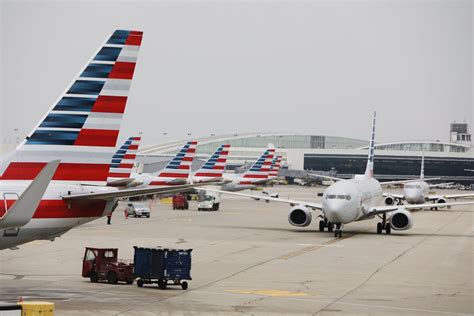
American Airlines Is Spreading DFW Flights Across 13 Banks
The move from nine major banks to 13 smaller banks is the heart of American’s operational redesign at DFW. The airline is not simply withdrawing capacity from its hometown hub. Instead, it is distributing much of the same enormous daily operation across more periods, reducing the number of aircraft, passengers, bags, and connections that have to be processed simultaneously.
American says the revised schedule is intended to give greater certainty to roughly 100,000 peak daily customers traveling through DFW and more than 930 average peak daily departing flights. Those numbers explain why even a modest improvement in the way traffic is distributed can have a meaningful effect. At this scale, a few minutes of congestion are not isolated inconveniences. They can become hundreds of missed connections, delayed aircraft, misplaced bags, and displaced crews.
The arithmetic illustrates the basic idea. If roughly 930 peak departures were conceptually divided among nine banks, the average would be about 103 departures per bank. Spread across 13 banks, the equivalent average falls to approximately 72 departures. The actual schedule is not divided into perfectly equal blocks, so these figures are useful for understanding the scale rather than describing every individual wave. Still, they show why the new structure can reduce the amount of simultaneous pressure by roughly 30% per average bank.
That matters most during irregular operations. A thunderstorm does not care how efficient a timetable looks on paper. When DFW has to slow or pause departures and arrivals, aircraft can accumulate around the airport, passengers can miss connections, and gates can remain occupied longer than planned. Once operations resume, a large number of aircraft may arrive in a compressed period, creating a second crisis precisely when the airline is trying to recover from the first.
By creating more, smaller opportunities to connect, American is effectively building more space into the recovery process. The airline says it can maintain nearly all existing connection opportunities while reducing the concentration of extremely short connections. The new schedule also aims to provide more attractive early-morning departures and fewer early-morning arrivals into DFW, helping distribute customer traffic more evenly through the airport.
Why Smaller DFW Banks Can Improve Weather Recovery
The real test of a hub is not how elegantly it operates on a normal day. It is what happens when the normal day disappears.
DFW is particularly exposed to this problem because severe thunderstorms can disrupt the airport’s operations quickly. A temporary interruption can create a backlog of aircraft that has to be resolved after the weather improves. If American’s schedule is heavily synchronized, the recovery wave can be almost as difficult as the original disruption. Hundreds of aircraft may need gates, ramp workers, baggage handling, fueling, passenger processing, and crews at nearly the same time.
A less concentrated schedule changes the shape of that problem. Instead of having enormous groups of aircraft arrive and depart in tightly packed waves, American can allow more time between peaks. That does not make DFW immune to delays, but it gives the operation additional opportunities to absorb them before the next major wave arrives.
There is an important distinction here: American is not necessarily making DFW smaller; it is making each individual peak smaller. That is a subtle but significant change in hub design. The commercial purpose of the airport remains enormous, while the operational rhythm becomes less extreme.
More Block Time Gives American Another Reliability Buffer
The bank changes are only one part of the plan. American is also adding block time to flights to and from DFW and elsewhere across its network.
Block time is the scheduled period from an aircraft leaving its departure gate to reaching the destination gate. Airlines have an obvious incentive to keep that number tight because shorter scheduled times can make routes look faster and allow aircraft to complete more flying within a day. But an aggressive schedule can become fragile when real-world taxi times, congestion, weather, gate delays, and other operational variables repeatedly consume the margin.
American’s decision to add block time represents a direct trade-off between theoretical efficiency and schedule resilience. A flight may have a longer published schedule, but the aircraft has more opportunity to arrive within the promised window. That distinction can be especially valuable at a hub, where one late aircraft can affect an entire chain of subsequent flights.
Consider a typical connecting itinerary. If an arriving aircraft reaches DFW only a few minutes late, a passenger may suddenly have too little time to cross the terminal and board the next flight. The same compressed window can leave checked baggage behind. Meanwhile, the aircraft itself may be scheduled for another departure, and the crew may be approaching the limits of what the original timetable anticipated.
Adding realistic time does not eliminate those problems, but it gives the system more room to absorb them. American is essentially acknowledging that a schedule that looks efficient on paper can be less efficient in practice when it repeatedly breaks down.
Remote Deplaning Tackles DFW’s Gate Bottleneck
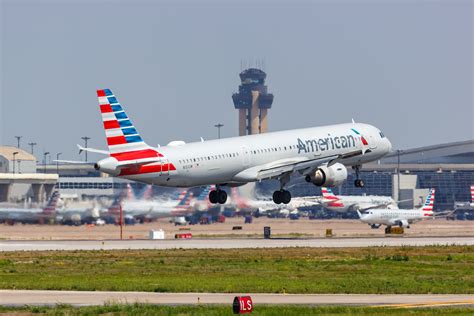
American is also spending millions of dollars on additional remote-deplaning capabilities at DFW. This is a less visible investment than a new terminal, but it could become particularly important when the airport is under severe operational pressure.
The problem is straightforward. When a large number of aircraft arrive after a disruption, the airport may not have enough conventional gates immediately available. An aircraft can land successfully and still be unable to unload passengers. If it waits on the ground for a gate, the aircraft occupies valuable airport capacity while passengers remain onboard and the next flight in its schedule is pushed later.
Remote deplaning creates another option. Instead of waiting for a conventional terminal gate, an aircraft can be handled at a remote position while passengers are transported to the terminal by bus. That requires equipment, employees, and coordination, but it turns an otherwise rigid gate requirement into a more flexible process.
The value is bigger than simply getting passengers off one airplane. Keeping an aircraft at DFW can help American preserve the aircraft’s position in the network, maintain crew continuity, and avoid creating another problem at a diversion airport. When flights are diverted, the receiving airport can become congested too, and the aircraft may be far away from the passengers, crews, and aircraft it needs to operate its next assignment.
Remote deplaning therefore acts as an operational escape valve. It does not replace gates, and it is unlikely to be the preferred way of handling a normal arrival. Its importance comes from those unusual periods when conventional infrastructure is overwhelmed.
The goal is not to make disruption disappear, but to stop one delay from dictating rhythm of the entire hub.
The $4 Billion Terminal F Expansion Makes the Strategy More Interesting
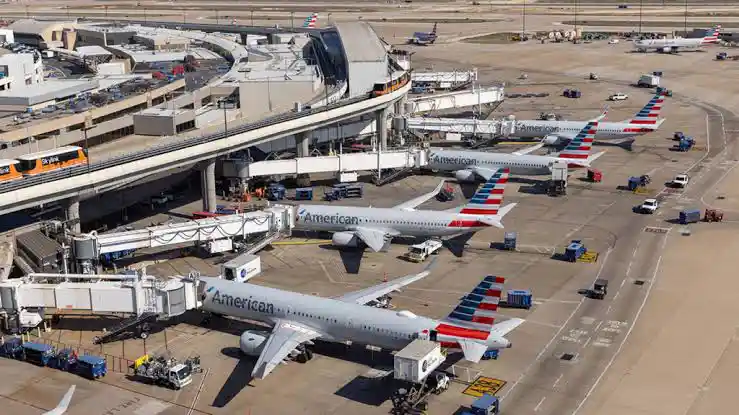
The most fascinating part of American’s DFW strategy is that the airline is simultaneously investing heavily in more physical capacity.
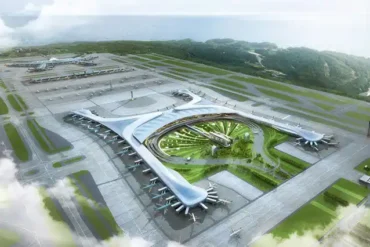
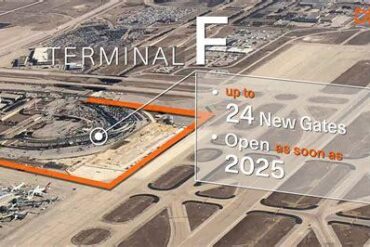
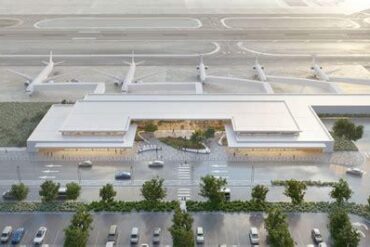
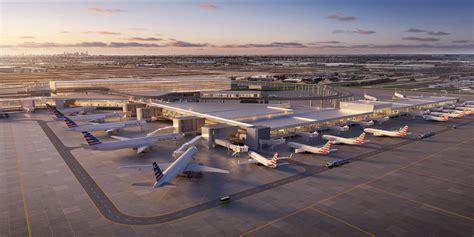
In May 2025, American and DFW announced an expanded plan for Terminal F, increasing the project from 15 planned gates to 31 and raising the estimated investment to around $4 billion. American will operate all 31 gates, giving the carrier a substantial new block of capacity at its largest hub.
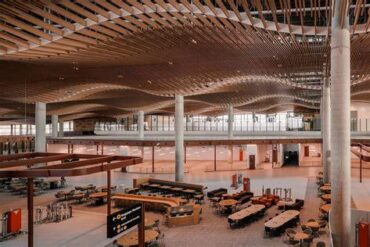
The project is designed to support more than simply additional gates. DFW says the expanded terminal will include facilities for growing international operations, wider customer amenities, check-in and ticketing infrastructure, security screening, baggage facilities, and additional capacity for widebody aircraft. The plan also includes expanded lounge and premium space, a dedicated parking garage, and a centralized Skylink station.
The distinction between capacity growth and peak concentration is crucial. A hub can have more gates, more aircraft, and more destinations without necessarily putting all of that traffic into the same narrow connection windows. American appears to believe that this is the better way to grow DFW over the long term.
American’s DFW Investments Go Beyond Terminal F
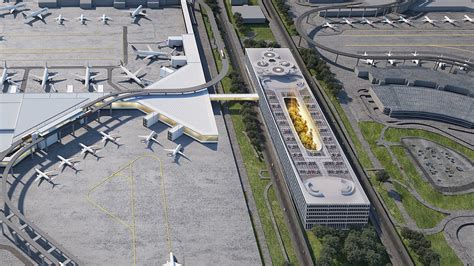
Terminal F is not the only physical investment underway. American also expanded its existing DFW footprint with a new Terminal C pier featuring nine gates, opened in 2026 as part of a broader multibillion-dollar plan to transform its hometown hub.
More terminal space creates additional physical capacity. Smaller banks reduce simultaneous demand. More block time provides schedule protection. Remote deplaning adds flexibility when gates become scarce. Better baggage handling helps preserve the connections that the hub exists to create in the first place.
DFW Shows How American Is Rethinking the Mega-Hub
DFW presents a different challenge from American’s other major hubs. The airport already has extraordinary scale, and American does not need to prove that it can create a massive schedule there. Instead, it needs to make that schedule more resilient. Philadelphia is another example of the airline adjusting its hub strategy around local infrastructure and international gate opportunities rather than simply copying the DFW model.
The most productive schedule is not always the one with the highest theoretical number of aircraft movements inside the shortest period. At a mega-hub, the ability to recover after a disruption can be just as valuable as the ability to maximize connections during perfect conditions.
For passengers, the benefits may be subtle. A traveler may notice a slightly longer scheduled flight time or a connection that is not quite as aggressively short. What may be less visible is the possibility that the same itinerary is more likely to survive a minor delay without collapsing.
The Real Test Will Come When Terminal F Fills Up
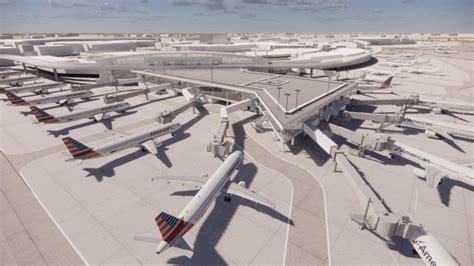
Terminal F is ultimately expected to deliver 31 American-operated gates, with new international and widebody capability and additional passenger facilities. The project is targeted for the period around 2030, with the final configuration designed to connect with the wider DFW terminal system through Skylink and a future walking connection to Terminal D.
The difficult question is what happens when those gates are fully utilized.
If American fills the new capacity while maintaining the 13-bank structure, realistic block times, and expanded remote-deplaning capability, DFW could become an important example of a different kind of mega-hub. Instead of measuring success primarily by how much traffic can be compressed into a connection wave, the operation could be judged by how much traffic it can process while retaining enough flexibility to recover when something goes wrong.
That would represent a meaningful shift in hub philosophy. The classic hub-and-spoke model depends on concentration because concentration creates connections. But concentration also creates vulnerability. The more passengers, aircraft, bags, and crews that are synchronized into the same short window, the more damaging a disruption can become.
American’s DFW strategy is an attempt to separate those two concepts. The airline wants to preserve connectivity without preserving unnecessary operational concentration.
That is why the $4 billion Terminal F investment and the 13-bank schedule are not actually contradictory. They solve different sides of the same problem. One expands the amount of infrastructure available to the airline; the other changes how intensely that infrastructure is consumed at any given moment.
In the end, American may be betting that the future of the mega-hub is not about making every peak larger. It may be about creating enough capacity to make every peak smaller while keeping the total operation enormous. DFW will remain one of the most important airports in American’s network, but its next stage of growth could depend on learning how to behave less like a giant airport at its busiest moments.
That is the intriguing part of the experiment. American is building a bigger DFW while deliberately making the operation feel less compressed. If the strategy works as intended, the airline will have found a way to grow one of the world’s largest hubs without allowing every storm, gate shortage, or late arrival to turn into a system-wide event.