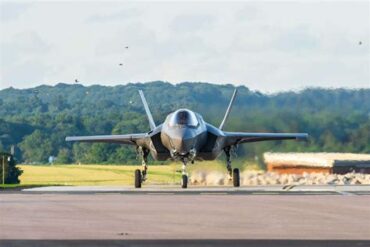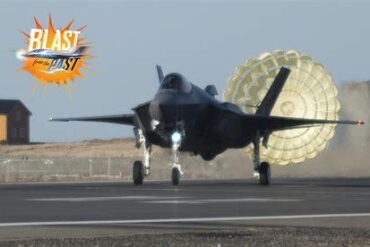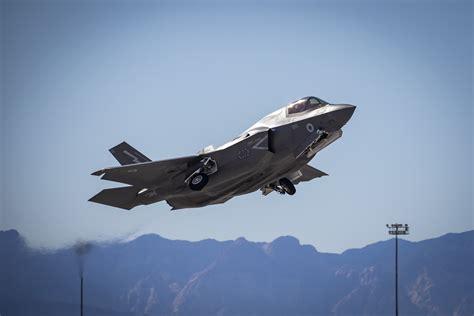
The United Kingdom’s decision to acquire at least 12 F-35A Lightning II stealth fighter jets signals a bold step in modernising the Royal Air Force’s strike capability, particularly in the nuclear domain. However, beneath the headlines of advanced technology and expanded NATO commitments lies a critical vulnerability that threatens the operational credibility of these cutting-edge aircraft: the RAF currently lacks the means to refuel them in mid-air.
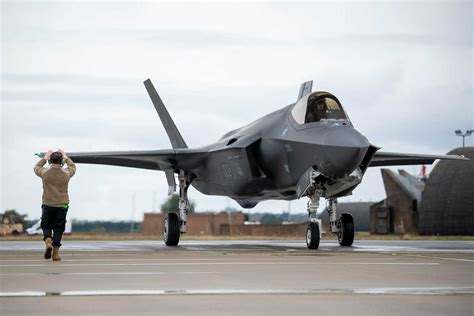
The F-35A variant, built by Lockheed Martin, offers clear advantages over the F-35B short takeoff and vertical landing (STOVL) jets already in RAF service. With a greater operational range of 679 miles (1,093 kilometres) compared to the F-35B’s 517 miles (833 kilometres), the F-35A improves mission flexibility and endurance. It is also cheaper to acquire and operate, while offering compatibility with a wider array of weapons, including the nuclear-capable B61 gravity bomb, contingent on U.S. agreement.
Yet, this greater range is still insufficient for extended operations across Europe or beyond, especially given that London to Eastern Europe spans approximately 1,150 miles (1,852 kilometres) — nearly double the aircraft’s unrefuelled range. In theory, in-flight refuelling should solve this problem. In practice, the UK lacks the specific refuelling infrastructure needed to support the F-35A in such missions.
The Refuelling Gap: Flying Boom vs Probe-and-Drogue
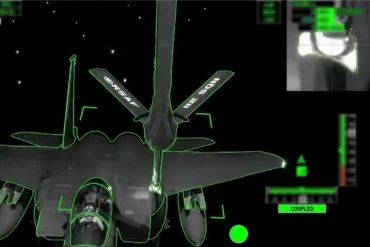
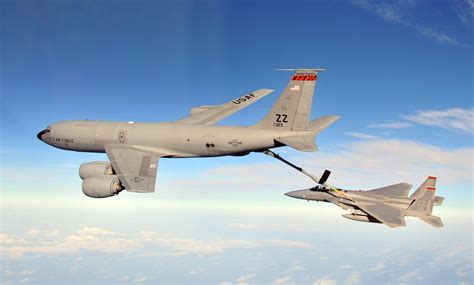
The challenge stems from the F-35A’s exclusive reliance on the “flying boom” refuelling method, a system favoured by the United States Air Force. This technique uses a rigid, telescopic tube extending from the tanker to deliver fuel at a high rate, reducing refuelling time and generally being easier for the receiving pilot to operate.
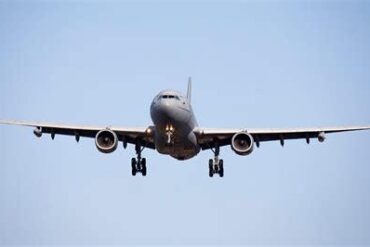
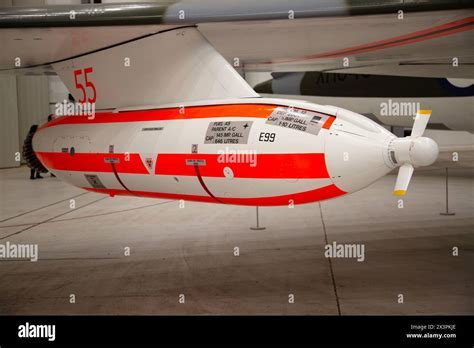
In contrast, the UK’s current aerial refuelling capability revolves entirely around the probe-and-drogue system, utilising flexible hoses and basket attachments. While effective for aircraft such as the F-35B, this method is incompatible with the F-35A. The Royal Air Force’s Voyager tanker fleet, derived from the Airbus A330 platform, was designed with the option to incorporate both systems. However, due to cost-cutting decisions made under the last Labour government, the flying boom capability was omitted during procurement.
This strategic oversight was not immediately problematic. At the time, few UK military aircraft required flying boom refuelling. But as the RAF and other branches of the UK military have gradually expanded their fleet with American-made platforms like the C-17 Globemaster III (strategic transport), RC-135W Rivet Joint (intelligence gathering), E-7 Wedgetail (airborne command and control), and P-8A Poseidon (maritime patrol aircraft) — all of which depend on flying boom refuelling — the gap in refuelling capability has become a glaring operational weakness.
Nuclear Deterrence Undermined by Logistics
The F-35A’s value to the UK’s defence posture is intimately tied to its potential nuclear role. The aircraft’s stealth profile is essential for penetrating contested airspace to deliver unguided B61 nuclear bombs, a mission that cannot rely on conspicuous external fuel tanks, which would degrade its radar-evading capabilities.
Without assured access to in-flight refuelling via flying boom-equipped tankers, the F-35A’s range limitations restrict Britain’s ability to deploy nuclear or conventional strikes over extended distances. The strategic irony is striking: even as London enhances its frontline combat fleet with high-end, NATO-interoperable assets, it lacks the logistical backbone to maximise their utility independently.
Dependence on Allies: Risky in a Shifting Geopolitical Landscape
The RAF’s current dependence on allied tanker support, primarily from the United States, represents a calculated but increasingly fragile gamble. In a period marked by shifting geopolitical priorities, the UK cannot assume guaranteed access to American logistical assets.
This predicament is compounded by Washington’s evolving strategic outlook. The upcoming 2025 Strategic Defence Review already acknowledges that the “security of Europe is no longer [America’s] primary international focus”, reflecting increased U.S. attention on the Indo-Pacific and global competition with China. In a crisis scenario where American resources are stretched or withheld, the RAF’s frontline capabilities — including the prized F-35A fleet — could find themselves operationally grounded.
Though some NATO members and Australia have invested in a multinational flying boom tanker fleet, the UK has yet to secure participation in such arrangements. This leaves British military planners with two costly and politically sensitive options: retrofitting the existing Voyager tankers with flying boom capability or procuring entirely new tanker aircraft compatible with the F-35A’s requirements.
Retrofitting Voyager Tankers: A Complex and Expensive Endeavour
Upgrading the RAF’s Voyager fleet, though theoretically feasible, presents a host of challenges. Structural modifications to incorporate a flying boom system would demand significant time, resources, and engineering expertise. The process is neither swift nor cheap, with cost estimates running into hundreds of millions of pounds.
Moreover, integrating flying boom capability onto the existing fleet would likely reduce aircraft availability during the modification period, temporarily exacerbating the very capability shortfall it seeks to resolve. For a cash-strapped Ministry of Defence already facing competing demands — from submarine programmes to cyber warfare investment — retrofitting represents a politically contentious choice.
New Tanker Acquisition: A Strategic Opportunity or Budgetary Headache?
Alternatively, Britain could opt to purchase a new fleet of flying boom-capable tankers, such as the KC-46 Pegasus, currently in service with the U.S. Air Force. Such an acquisition would immediately bridge the capability gap and offer future-proof flexibility as more RAF and Royal Navy aircraft potentially adopt the flying boom standard.
However, the financial and political implications are significant. Defence budgets are under immense pressure, and the optics of purchasing expensive foreign-made aircraft amid domestic economic challenges may deter policymakers. Yet, failing to act leaves the UK reliant on allies for critical missions — an uncomfortable position for a nation aspiring to retain global military influence.
Conclusion: Airpower Without Fuel is Fantasy
Britain’s F-35A acquisition highlights the complexity of modern defence planning, where cutting-edge platforms are only as effective as the supporting infrastructure that sustains them. In pursuing these advanced stealth fighters, the UK risks fielding an air force that cannot fully exploit its capabilities due to a self-imposed refuelling blind spot.
As global tensions rise and NATO faces renewed challenges, the ability to project power independently is more vital than ever. The F-35A enhances Britain’s strike capability on paper, but without compatible tanker aircraft, its operational value remains compromised.
The RAF’s future effectiveness hinges not only on acquiring formidable jets but also on building the enablers — like flying boom refuelling capacity — that turn theoretical firepower into real-world strategic advantage. Until that investment is made, the UK risks fielding a fighter force unable to reach its targets, undermining deterrence and relegating British airpower to a supporting role when national interests demand otherwise.