In a significant and secretive collaboration, Israel and the United States have made a covert modification to Israel’s fleet of F-35 warplanes, enabling them to strike Iran without the need for mid-air refuelling. This modification marks a pivotal moment in both air combat technology and geopolitics, as it extends the operational range of the F-35 fighter jets, making them a more formidable tool for military operations in the region.
The Secret Modification of F-35s
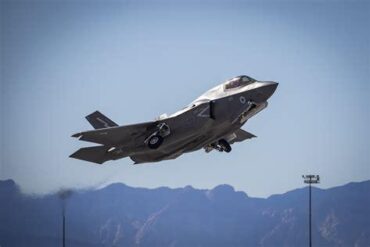
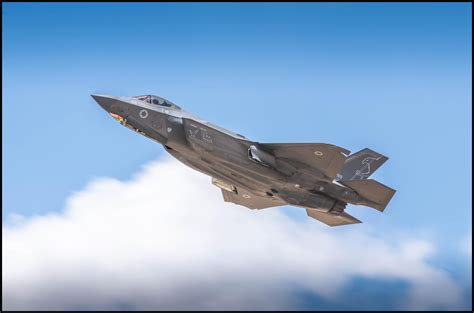
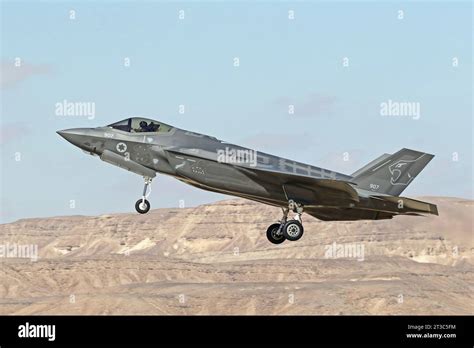
The Israeli Air Force’s F-35I Adir, a unique variant of the F-35, was altered with the help of the United States to enable the warplanes to carry additional fuel without compromising their stealth features. The modification, which has been kept under wraps, was a critical enabler of Israel’s recent surprise attack on Iran, an operation that involved flying from Israel’s airspace to strike targets in Iran without requiring refuelling during the operation.
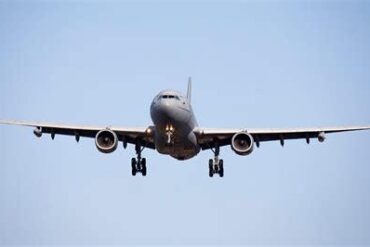
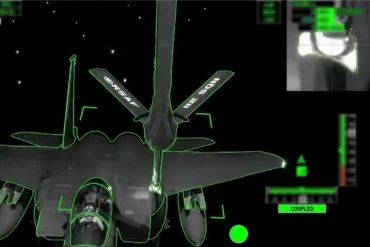
According to US officials who spoke on the condition of anonymity, the modification was carefully designed to maintain the F-35’s radar-evading capabilities while still providing the necessary fuel capacity to extend the aircraft’s combat radius. Instead of relying on the typical mid-air refuelling systems or landing in nearby countries for fuel replenishment, Israel opted for an innovative solution that involved adding external fuel tanks to the aircraft.
The Stealth Dilemma: Modifying the F-35 without Sacrificing Stealth
One of the most significant challenges in this modification was maintaining the F-35’s stealth capabilities. The aircraft is renowned for its ability to evade detection by radar and infrared sensors, thanks to its special design and use of radar-absorbing materials. Any modification that affected its external structure could potentially expose the aircraft to enemy detection, which would be catastrophic for a stealth fighter.
Experts in the field, including Richard Aboulafia, an aerospace analyst, described the modification as “impressive.” He noted that adding external fuel tanks without compromising stealth would require meticulous engineering, including creating custom attachment systems that wouldn’t interfere with the aircraft’s radar-absorbing features. This is particularly important as the F-35’s external modifications, such as fuel tanks, need to be integrated in a way that doesn’t leave the aircraft vulnerable when those tanks are dropped.
External Drop Tanks: The Solution for Extended Range
The solution employed by Israel involved attaching external drop tanks to the F-35I Adir. These tanks provide additional fuel, extending the range of the aircraft significantly. This modification is particularly critical given the strategic objectives in the Middle East, where Israel has long sought ways to project military power beyond its borders while avoiding detection.
While the publicly stated combat range of an F-35 is around 700 miles, the shortest distance between Israel and Iran is approximately 620 miles. In theory, the F-35s could reach Iran without refuelling, but the mission would be extremely challenging and risky without modifications to increase fuel capacity. The use of drop tanks allows the Israeli Air Force to carry out long-range strikes with enhanced operational flexibility.
However, the engineering challenge was far from simple. Adding external tanks to an aircraft that is specifically designed to be invisible to radar involves several key hurdles. When the tanks are dropped, the points where they were attached could potentially expose other parts of the aircraft to radar. These areas are not covered by the F-35’s Radar Absorbent Materials (RAM), which is a critical factor in the jet’s ability to avoid detection.
US and Israel Collaborate on the Modification
The collaboration between Israel and the United States to modify the F-35s was crucial in the success of the operation. The US played a key role in assisting Israel with the design and implementation of these modifications, ensuring that the F-35s could carry additional fuel without compromising their ability to evade enemy radar. This is not the first time that the US has supported Israel with advanced military technology, but this modification represents a significant leap forward in terms of capabilities and strategic impact.
According to one US defense official, the modification was a “game changer,” not only for Israel but for the broader military dynamics in the Middle East. The enhanced F-35s will undoubtedly serve as a model for other nations in the region, particularly those seeking to acquire the stealth fighter for their own military arsenals.
Strategic Implications of the Modification
The successful modification of the F-35 is likely to have far-reaching consequences in both military and geopolitical contexts. On a military level, the modification allows Israel to conduct more precise and far-reaching strikes against regional adversaries without worrying about refuelling or relying on foreign airbases. This gives Israel a distinct advantage in terms of operational flexibility, enabling it to execute surprise strikes at longer ranges with minimal preparation.
Geopolitically, this move could alter the balance of power in the Middle East. Israel’s new F-35 capabilities send a clear message to Iran and its allies about Israel’s ability to carry out operations at greater distances, potentially shifting the calculus of military engagements in the region. Additionally, the success of this modification may prompt other Middle Eastern countries to invest in similar upgrades or to acquire F-35s with these capabilities.
International Reaction and the Broader Arms Race
The modification of the F-35 to carry more fuel without refuelling is also likely to spur reactions from global powers, particularly Israel’s regional adversaries such as Iran, as well as global players like China and Russia. Both countries are likely to be analyzing the performance of Israel’s modified F-35s closely, as they may see similar modifications as a way to enhance their own military capabilities.
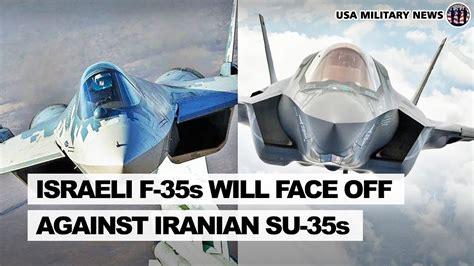
China, in particular, has been working on developing its own stealth fighter jets, such as the J-20, which could one day compete with the F-35. Russia, meanwhile, has its own fleet of advanced fighter jets like the Su-57, which could potentially counter the advantages offered by the F-35. The success of Israel’s modification of the F-35 could therefore serve as a key reference point for future military innovations and arms races between these powers.
A Closer Look at the F-35’s Capabilities
The F-35, built by Lockheed Martin, is widely regarded as one of the most advanced fighter jets in the world. It is a multi-role stealth fighter designed for a variety of missions, including air superiority, strike missions, intelligence gathering, and close air support. The aircraft’s stealth technology is its most prized feature, allowing it to evade radar detection and strike targets with a high degree of precision.
One of the key features of the F-35 is its low observability. The aircraft uses a combination of stealth coating, advanced radar-absorbing materials, and cutting-edge avionics to remain undetected by enemy radar systems. The F-35 is also equipped with advanced sensors and weapons systems, making it highly versatile and capable in a wide range of combat scenarios.
The F-35’s range, however, has been a topic of concern for many nations seeking to use the aircraft for long-range strike missions. While the F-35’s combat range is sufficient for many regional conflicts, certain operations — particularly those involving distant adversaries like Iran — require extended range capabilities. This is where the modification of the F-35 to carry additional fuel becomes essential.
Conclusion: The Future of Military Aviation
The modification of Israel’s F-35s to enable attacks on Iran without refuelling is a significant milestone in the evolution of military aviation. It represents a blend of advanced engineering, strategic foresight, and international cooperation that has enhanced the operational capabilities of one of the world’s most advanced fighter jets. This modification not only strengthens Israel’s military position but also sets a precedent for future advancements in stealth technology and long-range operations.
The implications of this modification go beyond Israel and Iran, as it will undoubtedly influence the strategies of other countries in the Middle East and around the world. As countries continue to innovate and adapt their military capabilities, the demand for more advanced and flexible fighter jets like the F-35 will only increase, ensuring that stealth technology remains at the forefront of modern warfare.