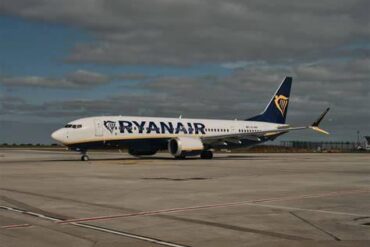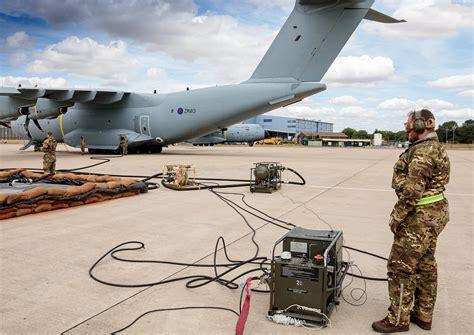
The Royal Air Force (RAF) is undergoing a strategic transformation in response to increasing global security demands, operational pressures, and finite military resources. As detailed in the UK’s most recent Strategic Defence Review (SDR), the RAF will begin integrating civilian charter aircraft into its logistical and aerial refuelling operations. This shift marks a significant evolution in the UK’s defence posture, offering the RAF enhanced flexibility, capacity, and operational endurance in both peacetime and crisis conditions.
Strategic Imperative Behind Civilian Integration
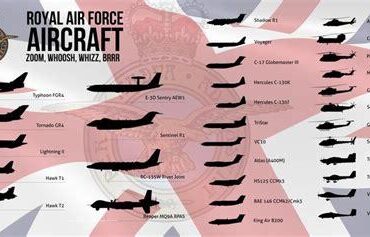
The SDR outlines a clear recognition: the existing RAF fleet of Voyager tankers, C-17 Globemaster heavy-lift transports, and A400M Atlas aircraft cannot independently meet all potential operational scenarios, especially during sustained engagements or rapid deployment situations. While these aircraft are highly capable, they are also few in number and expensive to operate. In an age where multi-domain operations and readiness are critical, the ability to scale logistics support rapidly is paramount.
The proposed use of civilian platforms will not replace military assets but rather augment them in non-contested airspace, allowing core military fleets to focus on combat-critical missions. Civilian aircraft would primarily handle logistics such as:
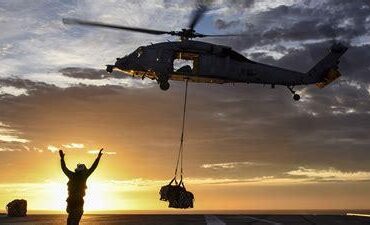
- Troop movements to forward operating bases
- Cargo transport of non-sensitive equipment
- Aerial refuelling for training, long-haul repositioning, and peacetime operations
Learning from NATO Allies: The CRAF Model
The RAF’s move mirrors existing practices among key allies, particularly the United States. The Civil Reserve Air Fleet (CRAF) programme in the U.S. has long been a cornerstone of American strategic air mobility, enabling the Department of Defense to activate civilian carriers during crises or large-scale deployments. CRAF allows for a surge in global reach without maintaining an oversized permanent fleet, which would be financially unsustainable.
By aligning with this model, the UK is not merely copying a concept but tailoring it to its national needs, particularly in the post-Brexit context where sovereignty and independent defence posture are central themes. The RAF’s integration of commercial partners signals a more agile, hybrid logistics capability that reflects modern warfare’s complexity and the UK’s commitment to force multiplication without excessive capital expenditure.
Operational Advantages of Civilian Refuelling Support
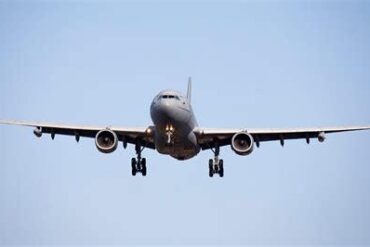
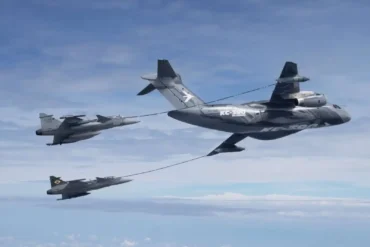
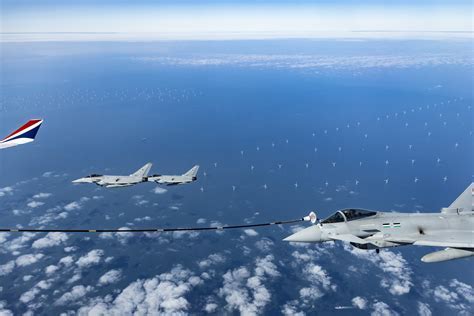
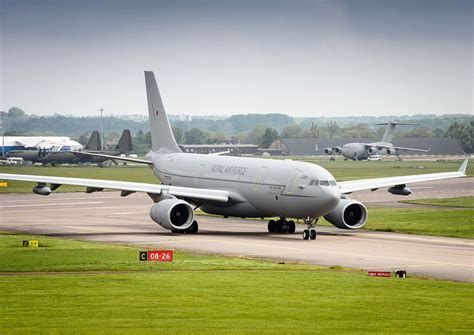
The RAF’s fleet of Voyager KC2/KC3 tankers is a critical enabler for force projection, especially for fast jets and long-range deployments. However, the SDR indicates that increasing demand has already begun to stress this fleet. Introducing civilian-operated aerial refuelling platforms—likely through specially configured wide-body aircraft—would address several key challenges:
- Relieving pressure on the Voyager fleet during peacetime
- Supporting multi-national exercises and long-range ferry missions
- Facilitating training operations without expending military tanker flight hours
- Enhancing availability of military tankers for high-threat deployments
These aircraft would likely be used in low-risk airspace, possibly supporting NATO partners or joint training environments. In such settings, the use of contracted refuelling would be cost-efficient and mission-effective, allowing for better fleet management and strategic reserve maintenance.
Logistics in the Era of Global Tension and Complex Threats
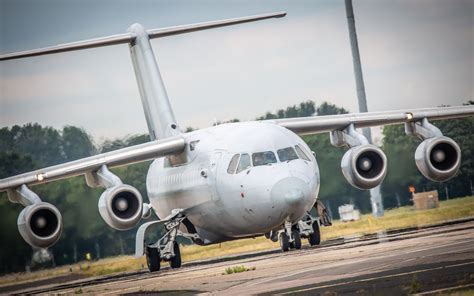
As geopolitical uncertainty rises—from Eastern Europe to the Indo-Pacific—the UK’s ability to respond rapidly and globally is under scrutiny. This shift to civilian support assets is not just logistical; it is strategically defensive and pre-emptive. The RAF is effectively building a scalable logistics back-end that can flex in crisis scenarios.
Consider operations in locations such as the Middle East, the Falklands, or Eastern Europe—the RAF must maintain the ability to sustain forward bases, conduct rotation of personnel, and resupply high-tempo operations. Civilian augmentation offers the following strategic benefits:
- Rapid upscaling of airlift in humanitarian or kinetic deployments
- Avoidance of bottlenecks in core aircraft fleet usage
- Improved mission reliability through diversified fleet composition
This model is already viable in environments with secure air corridors and reliable logistical hubs, where civilian operations face minimal threat from hostile anti-access/area denial (A2/AD) systems.
Industry and Government Collaboration
Implementing this capability requires close coordination between the Ministry of Defence (MoD) and private sector partners. While the UK does not currently operate a formalized civilian reserve airlift program akin to CRAF, several UK- and Europe-based carriers operate aircraft capable of military-spec conversion, particularly in the wide-body and long-haul categories.
The next phase will likely involve the certification of certain aircraft types and operators, ensuring they meet security, safety, and performance benchmarks. This will also necessitate infrastructure upgrades at key RAF bases, such as Brize Norton, to accommodate mixed-fleet operations with both military and civilian assets.
Economic and Resource Efficiency
Beyond military benefit, the move presents a compelling cost-efficiency argument. Chartering commercial aircraft allows the MoD to avoid long-term acquisition costs and expensive through-life sustainment contracts. Aircraft can be activated as needed, reducing overhead and maintenance burdens. The flexibility of this approach becomes especially valuable when facing budget constraints or when investing in other critical capabilities like cyber defence, ISR platforms, and unmanned systems.
Moreover, leasing civilian aircraft reduces the wear and tear on high-value military platforms, effectively extending their operational lifespan and reducing lifecycle support costs.
Risk Management and Limitations
While the benefits are clear, this approach does come with inherent limitations. Civilian aircraft are generally not equipped to operate in contested or high-threat environments, and their use would be confined to areas with air superiority or low risk of interception. Additionally, in moments of high global demand, the availability of suitable charter aircraft may become constrained, especially if other NATO members are pursuing similar strategies.
Another risk is dependency on commercial operators, which could be subject to labour actions, financial instability, or regulatory constraints. As such, the MoD will need to structure contracts with performance and availability guarantees, possibly incentivising long-term partnerships with select aviation providers.
Future Development and Technological Adaptation
As this hybrid model matures, it is likely to incorporate technologically advanced platforms, such as dual-use tankers and cargo aircraft equipped with modular refuelling systems. There may also be opportunities for AI-assisted logistics planning, predictive maintenance via big data analytics, and blockchain-secured cargo tracking—further enhancing the efficiency, transparency, and agility of RAF logistics.
Moreover, the RAF may pursue co-development opportunities with NATO allies to harmonise standards, refuelling protocols, and crew training programs, ensuring interoperability and streamlined coalition support.
Conclusion: A Strategic Pivot in Modern Warfare Logistics
The RAF’s decision to supplement its core fleets with civilian aircraft marks a transformational moment in UK defence logistics. By embracing a hybrid operational model, the RAF is reinforcing its commitment to readiness, resilience, and rapid response, without overextending its permanent fleet or budget. While risks must be managed through stringent oversight, certified standards, and strategic foresight, the benefits—in both operational agility and economic prudence—are substantial.
In a world where future conflicts may erupt with little warning and demand rapid force projection, the RAF’s civilian augmentation strategy positions the UK for greater strategic depth and enhanced global reach. The implementation of this model, if executed with precision and partnership, could redefine how modern air forces plan, deploy, and sustain operations far into the 21st century.