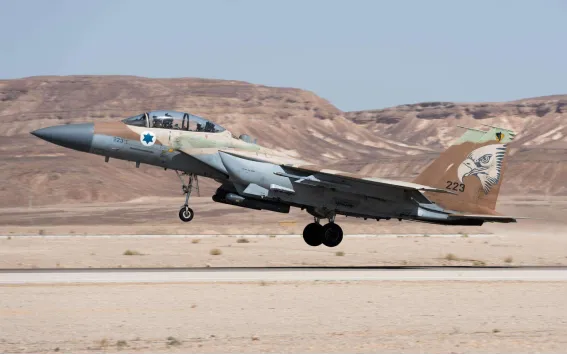
The Israel Defense Forces (IDF) have long been known for their formidable military prowess, with the Israeli Air Force (IAF) standing as one of the most advanced and efficient aerial forces in the world. Among the IAF’s most trusted and versatile assets is the F-15, a fighter aircraft that has proven time and time again to be a cornerstone of Israel’s air defense and strategic military operations. With its exceptional capabilities, the F-15—especially the F-15I variant—has consistently played a crucial role in maintaining Israel’s regional air superiority and executing precision strikes against key targets. This article explores the many facets of Israel’s F-15, from its core role in long-range strike capabilities to its technological advancements, strategic importance, and its ongoing evolution in the face of emerging threats.
The Core Role of the F-15 in the Israeli Air Force
Long-Range Strike Capability
The Israel F-15I—also known as the “Ra’am” (Thunder)—is arguably the backbone of Israel’s long-range strike capabilities. With a range exceeding 1900 miles (around 3058 kilometers), the F-15I is designed to conduct precision strikes deep within enemy territory. This range allows it to carry out strikes against high-value targets like nuclear facilities in adversary nations, such as the infamous airstrikes against Iraq’s nuclear reactor in 1981.
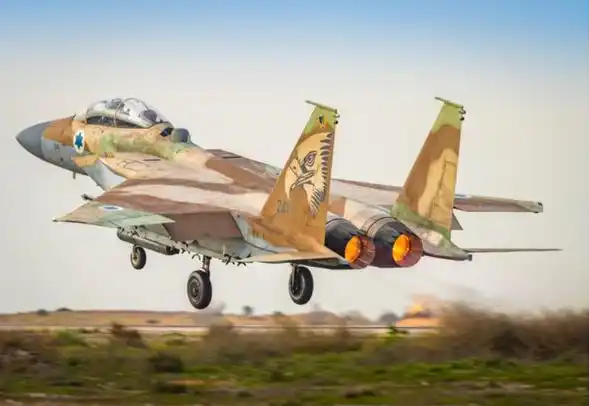
Equipped with a massive weapons payload, the F-15I can carry up to 13.5 tons of bombs and missiles. This includes an array of precision-guided munitions (PGMs), laser-guided bombs (LGBs), and air-to-air as well as air-to-ground missiles. For example, in December 2023, the F-15I conducted a successful strike against Houthi rebel weapon depots in Yemen. The mission, supported by aerial refueling, saw the Israeli aircraft destroy ballistic missiles and drones, showcasing its ability to conduct long-range surgical strikes with pinpoint accuracy.
Strategic Deterrence and Tactical Strikes
The F-15I plays a critical role in Israel’s strategy of deterrence. By maintaining a powerful and effective airstrike capability, Israel sends a clear message to its adversaries that any aggression will meet with a swift and overwhelming response. One notable example is the 1981 bombing of the Iraqi Osirak nuclear reactor. This mission, which involved F-15s, was a bold demonstration of Israel’s resolve to defend its interests, particularly in regard to nuclear proliferation in the Middle East. In recent years, the F-15I has been used in counter-terrorism operations, often targeting Iran’s military assets in Syria and Lebanon.
In addition to precision strikes, the F-15I has been used to neutralize some of the most advanced anti-aircraft systems in the world, including Iran’s S-300 defense systems. The use of GBU-28 bunker buster bombs has enabled Israel to destroy hardened underground structures, ensuring that critical defense systems are neutralized before they can be used against Israeli forces.
Technological Superiority and Upgrades
Weapons Load and Multi-Role Capability
The F-15I is more than just a heavy hitter; it is a versatile multi-role aircraft. Capable of carrying up to 22 missiles, the F-15I can deploy a variety of air-to-air and air-to-ground weaponry. Among these are the AMRAAM (Advanced Medium-Range Air-to-Air Missile), Sidewinder short-range missiles, and even air-launched cruise missiles like the Blue Sparrow. The aircraft also carries laser-guided bombs, such as the GBU-28, and has the ability to conduct both air-to-air combat and ground attack missions.
Additionally, the F-15I is equipped with advanced avionics and sensors, including radar systems capable of detecting and tracking enemy aircraft over vast distances. The inclusion of cutting-edge electronic warfare (EW) systems gives the F-15I a significant advantage in jamming enemy radar and communication systems, allowing it to neutralize threats before they even have a chance to retaliate.
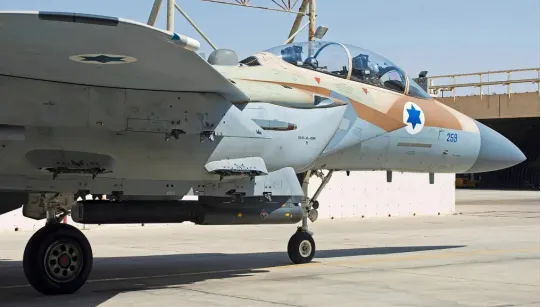
Future Upgrades: Enhancing Capability
Looking to the future, Israel’s F-15I fleet is expected to undergo a series of upgrades aimed at enhancing its capabilities. Drawing inspiration from the U.S. F-15EX Eagle II, the upgrades are likely to include more powerful electronic warfare systems, advanced digital cockpit displays, and helmet-mounted display systems. These improvements would further boost the F-15I’s effectiveness in countering fifth-generation fighters, including the F-35.
Additionally, Israel’s partnership with the U.S. ensures access to the most advanced aviation technologies, including aerial refueling systems and satellite-guided munitions that extend the reach and lethality of the F-15I.
Real-World Combat Experience and Tactical Innovation
Precision Strikes Against Iranian Proxies
The F-15 has been deployed in numerous real-world combat operations, often against Iranian-backed militias and proxies operating across the Middle East. In October 2024, an F-15I launched a precision strike using a bunker-busting bomb to destroy a hideout belonging to the Lebanese Hezbollah group’s new commander. The precision and speed of this attack exemplify the aircraft’s ability to neutralize high-value targets swiftly and with devastating effect.
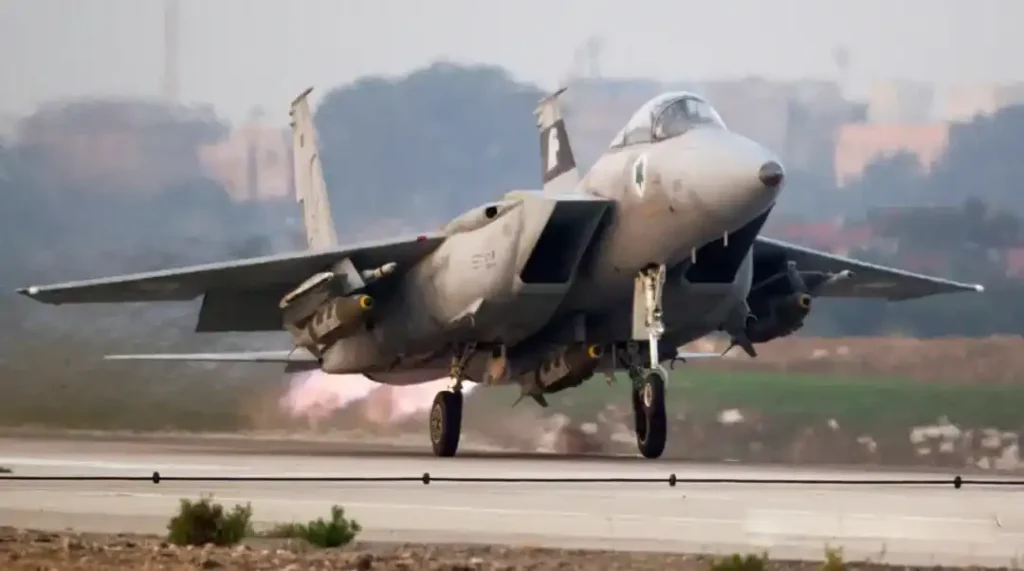
Moreover, the F-15 has proven its worth in extremely harsh conditions, with remarkable survivability in combat scenarios. For instance, in 1983, a F-15 was involved in a training collision with an A-4 Skyhawk. Despite losing its right wing in the incident, the F-15 was able to land safely thanks to its robust design, which allows for redundant flight control systems and emergency landing capabilities.
Operations Against Iranian Air Defenses
Perhaps one of the most strategic uses of the F-15 has been in neutralizing Iran’s air defenses. The F-15I has frequently been used to launch air-to-surface missiles and precision-guided bombs against Iran’s S-300 missile systems and other advanced defense platforms, diminishing Iran’s ability to defend itself against aerial threats. This electronic warfare capability is a key component of Israel’s strategy to maintain air dominance in the region.
Regional Cooperation and International Support
Joint Operations with the U.S. Air Force
The close military cooperation between the Israeli Defense Forces and the U.S. Air Force has also enhanced the operational effectiveness of Israel’s F-15s. For example, U.S. F-15E Strike Eagles have been deployed in joint missions with Israel during times of heightened tensions, such as the Gaza conflict and when dealing with the threat posed by Iran. These joint operations not only bolster Israel’s air superiority but also provide additional logistical support, such as air-to-air refueling, which is crucial for long-range missions.
Refueling and Extended Range Operations
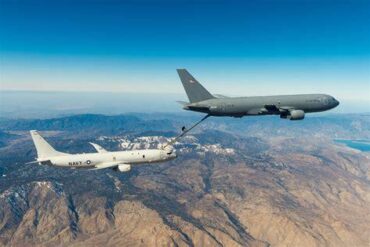
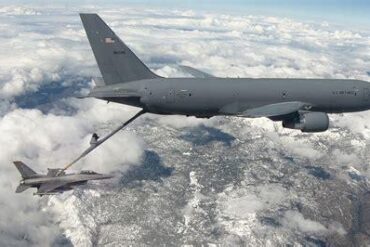
The need for air-to-air refueling during long-range operations means that Israel must rely on limited tanker fleets. However, with the assistance of U.S. aerial refueling capabilities, the F-15I can operate across vast distances, ensuring that Israel can maintain its military presence and deterrent capabilities far beyond its borders.
Israel’s Military Balance with Iran
Countering Iran’s Aging Air Force
One of the key advantages Israel holds over its regional adversaries, particularly Iran, is the technological superiority of its aircraft. While Iran operates aging F-14 Tomcats—a fleet originally designed in the 1970s—Israel’s F-15I has the advantage of modern avionics and combat systems, enabling it to engage and neutralize Iranian aircraft long before they can launch an effective counterattack.
While Iran continues to rely heavily on proxy forces like Hezbollah for asymmetric warfare, it struggles to challenge Israel’s advanced air power in direct combat. The F-15I’s electronic warfare capabilities, combined with its long-range strike and multi-role flexibility, have given Israel a distinct upper hand in the region’s ongoing military dynamics.
Conclusion: The F-15 as Israel’s Air Superiority Pillar
The F-15 is far more than just a fighter jet in the arsenal of the Israeli Air Force. It is the backbone of Israel’s air dominance and strategic power projection across the Middle East. From its remarkable long-range strike capabilities to its technological superiority and battlefield versatility, the F-15I continues to play an indispensable role in shaping Israel’s military posture.
As Israel faces emerging threats from regional adversaries, including Iran’s nuclear ambitions and its support for proxy forces, the F-15 will remain a cornerstone of Israel’s deterrence strategy and military preparedness. Through continuous upgrades and international cooperation, Israel’s fleet of F-15s will maintain its status as one of the world’s most advanced and effective air forces for years to come.