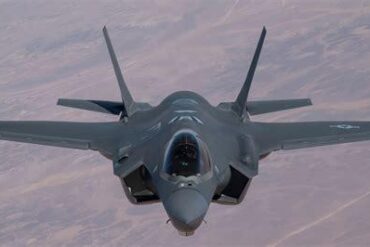
The F-35 Lightning II, hailed as the world’s most advanced multirole stealth fighter, is not merely a marvel of aeronautical engineering. At its core lies a complex, deeply embedded digital infrastructure known as the Autonomic Logistics Information System (ALIS) — a system that has redefined modern military aviation logistics while simultaneously raising geopolitical concerns. Designed by Lockheed Martin, ALIS was created to manage everything from mission data processing and aircraft diagnostics to global fleet operations and predictive maintenance. However, its operational footprint stretches far beyond logistics, becoming a controversial tool of strategic control, data dependency, and digital sovereignty.
Understanding ALIS: The Nervous System of the F-35
Unlike legacy aircraft systems, where maintenance and mission planning are decentralized and hardware-centric, ALIS serves as a centralized, cloud-integrated logistics platform that synchronizes the entire operational lifecycle of the F-35. Every flight performed by an F-35 generates vast datasets—engine status, radar performance, electronic warfare behavior, and more—which are uploaded post-mission via portable memory devices into ALIS.
The uploaded data is transmitted to centralized servers in Fort Worth, Texas, where Lockheed Martin processes, analyzes, and redistributes it through the network. From tracking the lifespan of individual components to managing mission data files (MDFs) that embed classified threat intelligence, ALIS essentially becomes the mission-critical middleware between pilot and battlefield, between hardware and command structure.
Mission Planning and the Role of Data
A major ALIS deliverable is its support for dynamic mission planning. This involves generating custom MDFs embedded with the latest intelligence on hostile radar systems, surface-to-air missile batteries, and electronic countermeasures. These data files enable the F-35 to design low-observability ingress and egress routes and share this intelligence across squadrons in real-time. In the absence of ALIS, the aircraft’s stealth profile optimization and tactical awareness degrade rapidly, transforming it from an apex predator into a mere fourth-generation platform in combat effectiveness.
Such planning isn’t merely a convenience — it’s an operational necessity. In dense anti-access/area denial (A2/AD) environments, milliseconds matter, and pre-loaded adversary data shapes kill chain decision-making. Without updated ALIS input, the aircraft’s survivability diminishes, exposing it to enemy lock-on and neutralization.
Supply Chain Dependency and Maintenance Fragility
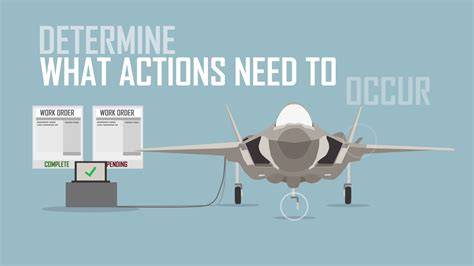
ALIS is also responsible for orchestrating the global logistics matrix of the F-35 program. It tracks parts inventory, schedules preventative maintenance, and monitors the usage rate of components such as engines, stealth coatings, and radar arrays. Yet, this centralization has proven double-edged. Several critical suppliers remain non-integrated, meaning not all component lifecycle data enters ALIS in real-time. As a result, logistical bottlenecks emerge, causing delays in repairs, part replacements, and full mission capability status.
This inefficiency even impacts the U.S. Air Force, where operational readiness has hovered around 50%, partially due to ALIS-related delays and fragmented supply synchronization. For partner nations, the situation is worse — especially those whose air forces lack autonomous repair rights or software override capabilities.
Data Sovereignty and Security Concerns
The most explosive debate around ALIS stems not from technical design flaws but from data sovereignty and surveillance anxieties. Each F-35’s mission data — including flight routes, engagement logs, sensor recordings, and communications metadata — is ultimately transmitted to and processed in the United States, often without granular control by the host nation. This has raised red flags among U.S. allies.
Countries like Germany, Belgium, and Canada fear that such architecture provides Washington with unilateral access to sovereign air force operations, enabling not only strategic oversight but potentially coercive leverage. Although the U.S. introduced the Sovereign Data Management System (SDMS) to allow nations some discretion over what data is transmitted, the system’s lack of transparency and inability to audit backend access has done little to quell suspicions of embedded backdoors.

Cybersecurity and the Shift to ODIN
ALIS was plagued early on by design flaws, particularly its failure to separate encrypted and unencrypted communications, leading to multiple vulnerabilities to cyber intrusion. Recognizing these systemic issues, the U.S. Department of Defense decided to phase out ALIS in favor of a newer platform — the Operational Data Integrated Network (ODIN).
However, ODIN is not a radical departure but an evolutionary upgrade, focused on faster data transmission, edge computing, and improved user interfaces. Critically, ODIN still does not handle classified data — meaning it cannot independently manage mission-critical operations without supplementary platforms. The core issues of centralized control and data access persist under a different label.
Strategic Leverage and Digital Weaponization
What makes ALIS (and now ODIN) geopolitically disruptive is the degree of strategic asymmetry it introduces into international defense relationships. Unlike traditional hardkill systems, where control lies with the trigger, ALIS gives the U.S. the ability to digitally paralyze a foreign fleet without firing a shot. If Lockheed Martin or the Pentagon revokes access, restricts spare parts delivery, or withholds MDF updates, the grounded F-35s become glorified hangar queens.
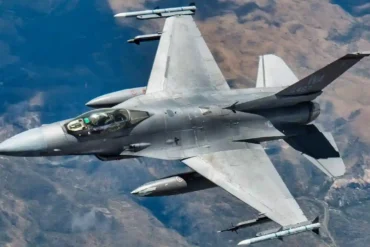
This soft coercion method is not speculative. During the early days of the Ukrainian conflict, U.S. support restrictions effectively neutralized local F-16 combat readiness. The precedent has driven European defense planners to seek independence, exemplified by France’s push for a European Sixth-Generation fighter under the Future Combat Air System (FCAS) banner.

The Israeli Exception
Among all F-35 users, Israel stands alone in receiving the autonomy it demanded. Its customized F-35I “Adir” variant runs on Israeli-developed mission software, entirely detached from ALIS, enabling independent mission data loading, radar calibration, and tactical override. While still dependent on U.S. for spare parts, Israel can operate its fleet without transmitting sensitive data back to U.S. servers, underscoring the possibility of sovereign operation — but only when geopolitical leverage permits it.
ALIS, Deterrence, and the Future of Digital Warfare
The inclusion of ALIS as a default infrastructure in the F-35 program redefines what constitutes lethality and dominance in fifth-generation warfare. Not only do nations acquire a weapons platform, but also a data tether — one that can shape operational tempo, limit force projection, and determine autonomy. With the slow rollout of ODIN and persistent security and control issues, the F-35 paradox remains: the world’s most advanced aircraft is also the most dependent.
For countries looking to modernize their air forces while maintaining sovereignty, the trade-off is stark. Do they accept the superiority of American aerospace engineering at the cost of digital autonomy, or do they invest billions and wait decades for indigenous alternatives that may never catch up?
Conclusion
The ALIS platform, while revolutionary in its scope and ambition, reflects the intersection of digital logistics, strategic control, and international diplomacy. It highlights the risks of outsourcing mission-critical autonomy to external providers and exposes how data has become a weaponized asset in modern warfare. As the global defense ecosystem transitions toward multi-domain operations, the tension between efficiency and sovereignty will only grow. Whether ODIN succeeds where ALIS faltered remains uncertain — but what is clear is that the F-35’s greatest strength may also be its most profound vulnerability.
FAQs
What is ALIS and why is it critical to the F-35 program?
ALIS, or Autonomic Logistics Information System, is the centralized digital backbone that manages mission planning, diagnostics, supply chains, and aircraft health for the F-35 fleet. Without ALIS (or its successor ODIN), the aircraft’s stealth, targeting, and maintenance capabilities are significantly degraded, affecting combat readiness.
Why are countries concerned about ALIS and data sovereignty?
Countries using the F-35 worry that ALIS transmits sensitive flight and maintenance data back to the United States, potentially giving Washington strategic insight or even leverage over their air operations. This raises issues of digital sovereignty, surveillance, and unilateral control.
Is ALIS being replaced, and will ODIN solve its issues?
The U.S. Department of Defense is replacing ALIS with ODIN, a newer system promising faster performance and better interfaces. However, ODIN still does not handle classified data and remains under centralized U.S. control, meaning the core issues of sovereignty and trust remain unresolved.